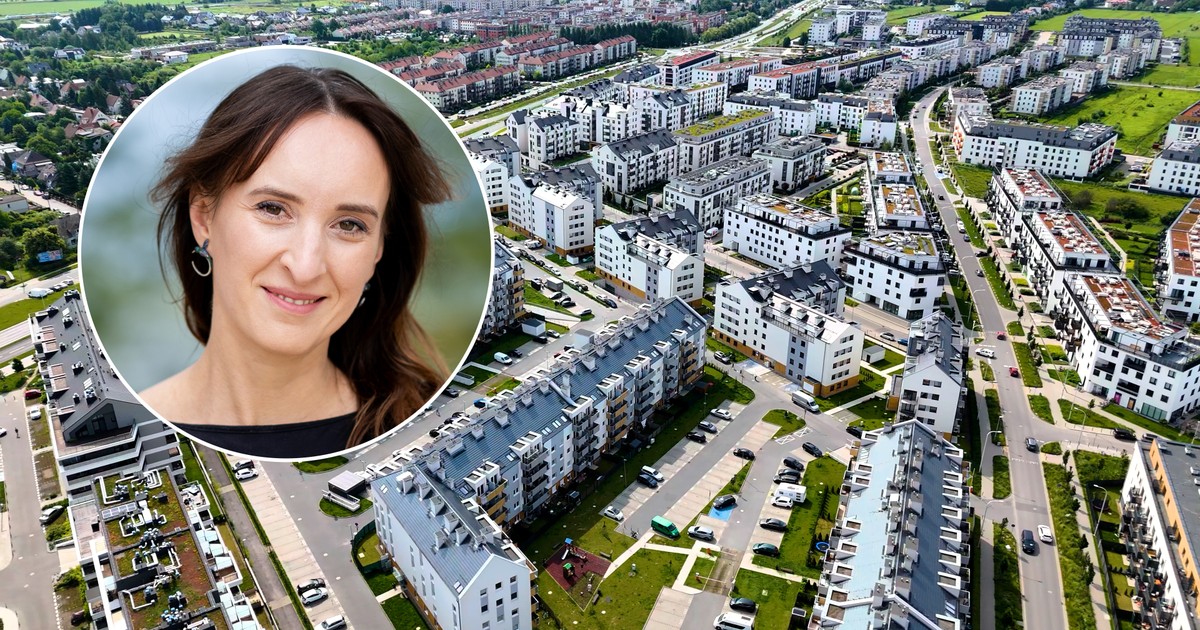
Ewa Wielgórska, president of Fairy Flats, a company specializing in the management of medium-term apartment rentals, believes that current tenancy regulations in Poland require urgent rebalancing. In her opinion the system, which was supposed to protect tenants, in practice increases the uncertainty of owners and limits the supply of apartments for rent.
The expert emphasizes that the key problem is not the idea of tenant protection itself, but the way in which it was designed and implemented. In her opinion the state has transferred too much of the burden of implementing social policy onto private apartment owners.
— Private owners of rental apartments most often have one apartment that protects their assets. They feel very uncomfortable with the fact that the state has equalized them with large entities and obliged them to bear the burden of social policy. Such a landlord is in a losing position compared to a tenant with bad intentions, says Ewa Wielgórska.
Tenant law: legal risk discourages apartment owners
Polish regulations, including the Act on the Protection of Tenants' Rights, introduce broad mechanisms to protect tenants against losing their apartment. In practice, this means, among others: restrictions on evictions in certain situations and the need to provide social housing in some cases.
Polish regulations introduce broad mechanisms to protect tenants against losing their apartment
|
Pawel Michalowski / Shutterstock
Read also: Mistakes in the real estate market cost a fortune. What can't be seen
As Wielgórska points out, the problem occurs when the tenant stops paying rent or violates the terms of the contract, and the owner does not have effective tools to recover his property for a long time.
— Court and bailiff procedures are very lengthy and can drag on for years. During this time, the owner must still bear all the costs of maintaining the premises, and often also finance renovation after regaining it, he emphasizes.
In the expert's opinion, this means real financial risk, especially for individuals who do not have a large real estate portfolio. Unlike mutual funds private landlords have no way to spread the risk, so even one problematic lease can have serious financial consequences.
Rental market: landlords limit long-term rentals
According to the president of Fairy Flats, this is a consequence of the current regulations changing the behavior of apartment owners. They are increasingly limiting their activity in the long-term rental segment or choosing alternative models.
Wielgórska points out that owners increasingly often:
- shorten rental periods,
- use more restrictive tenant selection criteria,
- transfer apartments to medium-term rental,
- or completely withdraw premises from the rental market.
As he points out, this is it rational response to growing legal risk. Owners are increasingly analyzing not only the potential rate of return, but also the level of investment security.
The expert points out that the asymmetry of risk between the leasing parties directly affects the decisions of individual investors. If a landlord is unsure whether he or she will be able to reclaim the property within a reasonable time, the natural reaction is to reduce exposure to this segment of the market.
See also: Short-term rental under the microscope. From 2026, new regulations and high penalties
Availability of apartments for rent: fewer offers and greater requirements
In Wielgórska's opinion limiting the activity of owners translates directly into the availability of apartments for rent. Less supply means more competition and a more selective tenant selection process.
In practice this means that owners prefer people with stable income and predictable professional situation. The greatest difficulties may be encountered by young people working under civil law contracts, foreigners and families with children.
The expert emphasizes that this is it one of the paradoxes of the current system. Regulations that were supposed to increase the safety of tenants, in her opinion, indirectly limit the availability of apartments for some of them.
Medium-term rental: an alternative gaining importance
One of the visible effects of the current situation is dynamic development of medium-term rentals, covering periods from several weeks to several months.
As Wielogórska says, this one the model allows owners to reduce risk and increase control over the property, while providing greater flexibility for tenants.
Housing policy: Poland lags behind Western models
According to the expert the problem also results from insufficiently developed state housing policy. In many Western European countries, tenant protection is balanced by an extensive social housing sector and financial support systems.
In Poland, as the expert notes, the social housing sector remains limitedand the burden of providing housing for people in difficult situations rests mainly with private owners.
Wielgórska also points to the need to introduce additional mechanisms to stabilize the market, such as state guarantees in the event of non-payment of rent or more effective systems for verifying the credibility of tenants.
Evictions and regulations: clarification of regulations needed
The expert emphasizes that the aim of the changes should not be to reduce tenant protection, but to create a more sustainable system.
— If the tenant is really in a difficult life situation, he or she should have access to institutional support. However, in cases of abuse, the owner should be able to quickly recover his property, Wielgórska points out.
In her opinion the current regulations require clarification and simplificationto increase the legal security of both parties to the lease.
— It's also worth remembering that current regulations, including occasional rentals, do not always provide real protection for owners. In many cases, it is more formal than actual, says the expert.
According to the president of Fairy Flats Without introducing more sustainable regulations, the rental market in Poland may gradually lose private owners. As a result, the availability of apartments for rent will decrease and the tenant selection criteria will become even more restrictive.
In her opinion A stable rental market requires a system that simultaneously protects tenants and provides owners with real investment security. Without such a balance, the problem of availability of apartments for rent may deepen in the coming years.