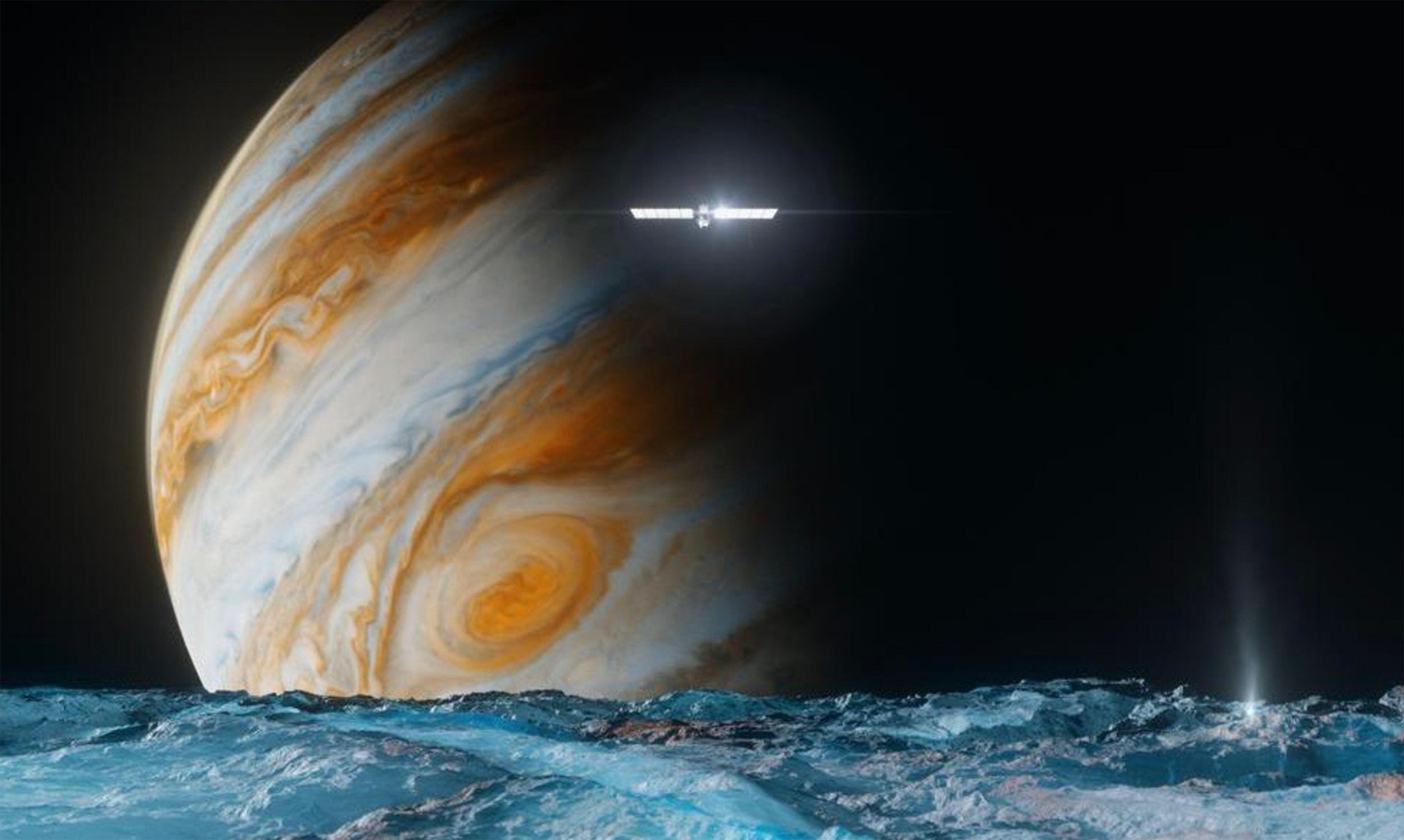
New observations by NASA's Juno spacecraft have revealed that storms on our solar system's largest planet are much stronger and more complex than previously thought.
Jupiter is known for its powerful storms, but a new study published by the University of Berkeley shows that lightning there can be 100 times more powerful than on Earth
Juno, which orbits Jupiter studying the planet and some of its moons, uses an instrument that detects microwaves produced by lightning. This allows for more reliable measurements than simple optical observations.
Why are storms so strong?
The main difference from Earth is the composition of the atmosphere. On Earth, air is mostly nitrogen, and moist air rises easily. On Jupiter, the atmosphere is rich in hydrogen and the “moist” air is heavier, so it needs more energy to rise. This means that when thunderstorms form, they release huge amounts of energy, creating strong winds and intense electrical activity.
On Earth, a lightning bolt releases about 1 billion joules, enough to power 200 homes for an hour. On Jupiter, lightning can reach 500 to 10,000 times that energy.
Studying storms on other planets sheds light on storms on our planet that are still not fully understood, said lead author Michael Wong of UC Berkeley's Space Science Laboratory.
“We don't know that much about lightning on Earth,” he said, noting that in the past decade scientists have discovered several new types of “transient light events” associated with storms on Earth.
On Jupiter, lightning “tells us about convection, which is how the atmosphere stirs and transports heat from the bottom up,” Wong said. “Convection works a little differently on Earth and Jupiter because Jupiter has a hydrogen-dominated atmosphere, so moist air is heavier and harder to bring up.”
According to Wong, nearly every spacecraft that has passed Jupiter has detected lightning
Although stronger lightning implies greater stresses between clouds, the details of how they are generated on Jupiter versus Earth remain a mystery, Wong said.
“This is where the details start to get interesting,” he said, adding that storms on Jupiter are more than 100 kilometers high, compared to 10 kilometers on Earth.