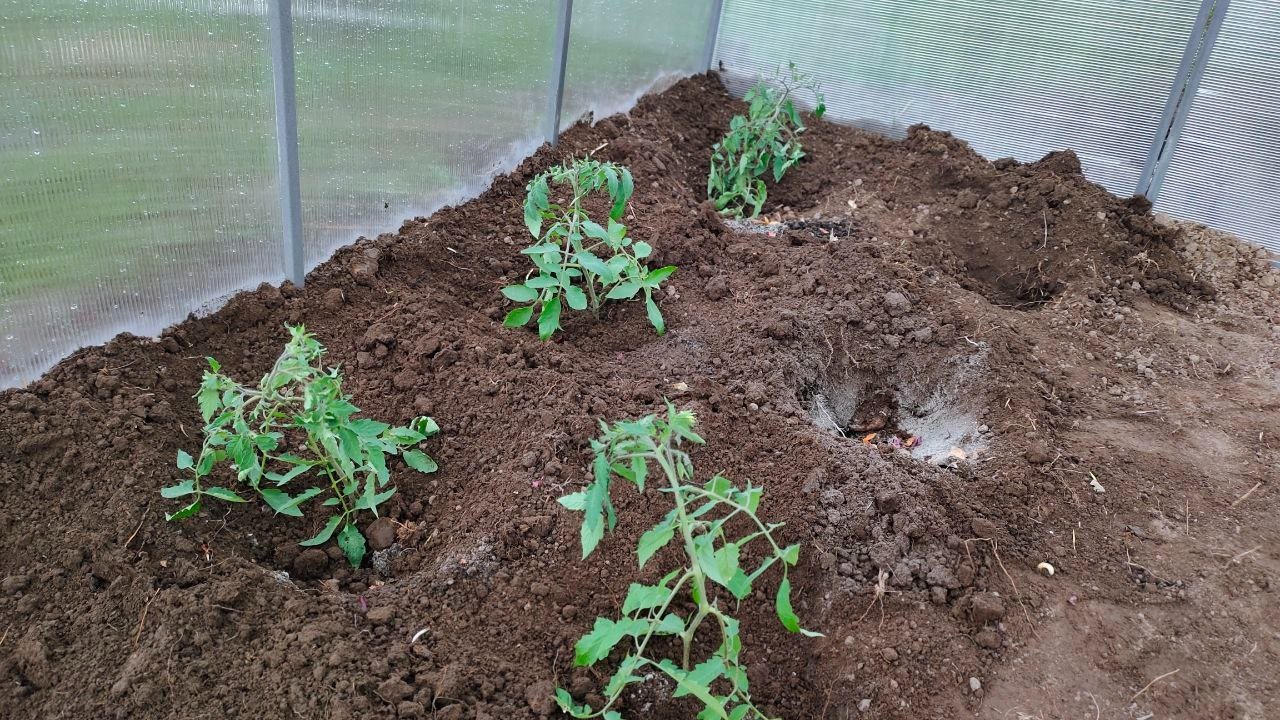
Many summer residents dream of getting powerful tomato bushes and a good harvest. However, for this it is necessary to properly fill the planting hole.
Some gardeners put “conflicting” additives into the hole, which block nutrition and negate all efforts, reports an experienced gardener and author of the blog “The Ideal Vegetable Garden” (18+).
Main mistakes
It is strictly forbidden to mix ash with ammonium fertilizers. The alkali from the ash instantly blocks phosphorus, and the roots simply cannot absorb it.
Here is a list of what is guaranteed to destroy seedlings in the first days:
- Planting in cold soil. Until the soil at the depth of the shovel bayonet warms up to +14 degrees, the roots “sleep” and do not absorb fertilizers.
- Overfeeding with nitrogen. If you overdo it with organic matter, the bush will turn into greasy tops, and the brushes will not form.
- New film without protection. Under the fresh film, a lens effect is created, so the leaves get burned in a couple of hours. Old film is much safer.
The first addition to the hole is ash.
Wood ash contains calcium against blossom end rot, potassium for immunity, and phosphorus and magnesium. Take light gray ash from clean wood, not dark coal ash (it has practically no benefits). Place 1 tablespoon per hole and mix with soil.
Other additives in the hole are fishmeal and borophosphate.
After the ash, add fishmeal. This is a long-lasting organic matter that decomposes by microbes and feeds the bush for weeks. Add 1 tablespoon to 1 well.
Then we put borophosphate in the hole. Just 1 spoon of the drug will provide a powerful start to the roots and ovaries.
“I add all three components in exactly this order: first, ash – I mix it with the soil of the hole, then fish meal, then borophosphate – I mix it again. I plant the seedlings and water them with warm water, not cold,” the summer resident noted.
This “cushion” will be enough for the tomatoes to last exactly 6 weeks until the roots get stronger. Then you can add regular fertilizers.