
Why was the Russian drone that crashed in the city of Galati not detected. What I see and especially what escapes the Army's radars: “You can't cover all the space”

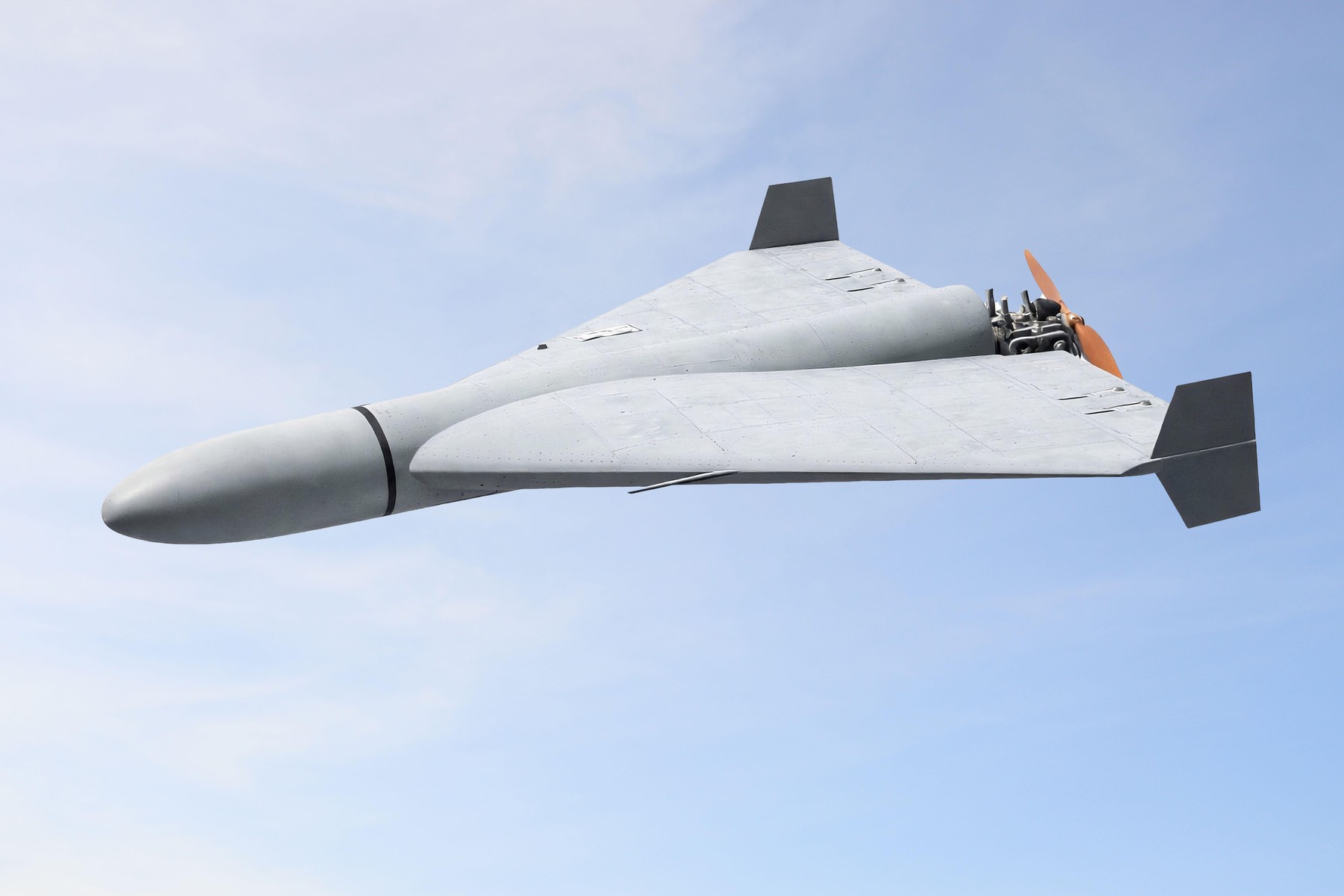
The Army's radar systems detected on the night of Friday to Saturday several drones that came from the sea and flew over the territory of Ukraine, but the radar signals were intermittent, the targets flying at very low altitudes, several MApN sources told HotNews.
Russian drones were tracked over Ukraine, but then dived and ground radars could no longer track them. The drone that flew and crashed in Galati flew very low and was not detected at all.
The military has two options: either the drone was jammed by Ukraine's electronic warfare systems, or it was damaged by Ukrainian anti-aircraft and then veered off course, but it was not tracked on radar.
“You can't watch everywhere from so low”
“High-performance radars have a very large detection range, but as the targets fly closer and closer to the ground, blockages appear in the path of the antenna's waves – buildings, trees, interference occurs, you can't track everywhere from so low,” an MApN official explained to HotNews on condition of anonymity.
He says that in addition to the large, fixed-position radars of the national tracking system, mobile radars are also used for detection, and many such devices have been moved to the Danube Delta area that usually see and track the drones used by Russia in attacks on Ukrainian ports.
But even for such radar units it is quite difficult sometimes because Geran 2 (Shahed 136) drones are small, low-flying and slow-flying targets and are made of materials that do not reflect radar waves very well.
In addition, it also matters where the radar systems are deployed on the ground, with the Army choosing to cover areas where there have so far been several incidents of unauthorized entries into national airspace.
“There is no way to cover the whole area. There are also Gepard systems deployed in the area, but they also have a limited detection range and an even more limited target engagement range. We would need hundreds of such radars to spread them along the Danube to be able to effectively cover every area,” said the ministry source.
Why didn't the Eurofighter planes see the drone either
The group of intermittently monitored drones was flying over Ukrainian airspace when British Eurofighter Typhoon fighter jets deployed from Mihail Kogălniceanu Air Base arrived in the area.
According to HotNews sources, the Russian drones appeared for a very short time on the radars of the planes, and as they descended further they disappeared altogether: “They dived into the Reni area, in Ukraine, that's where the attack was.”
The radars on board the Eurofighter planes, although more efficient than those on the Romanian F-16 planes, are not as powerful as the radars on the ground and sometimes have problems detecting drones like Geran 2 or Gerbera.
Last year, a Romanian F-16 pilot explained to HotNews that, indeed, there are situations when drones are not detected by the aircraft's radars, but they are most often detected by ground radars and the information is also shared with the planes on mission.
“We receive the situation from the ground, from the radars, we know where they are, we know what we are looking for, we also try to spot them through our radars. We don't always see them, either because we don't spot them on the radar, or because they have already fallen or been shot down,” said the Romanian pilot.
Shahed 136 (Geran 2) drones are relatively small and difficult to “see” on radar, especially since they fly quite slowly and at quite low altitudes. In addition, they also represent a type of asymmetric threat: they are relatively cheap and unsophisticated systems that you don't really want or can afford to shoot down with expensive, multimillion-euro missiles.
“These drones are mainly built of non-metallic elements and then their reflective surface is small. This means that we see them, very likely we see them, only there is a reasonable probability that we cannot track them permanently”, explained General Viorel Pană, then the Chief of Staff of the Air Force, in 2023.
How Romania monitors its airspace
Since the beginning of the war in Ukraine, but especially after the drone attacks intensified in the Delta area, NATO brought to Romania several radar systems that it deployed – some were presented publicly, others were only talked about without giving specific details.
Radar units from Spain, the US, Italy are just a few that have been moved out of the area, beyond the radar of France's Mamba anti-aircraft battery deployed at Cape Midia.
In addition to these radar systems, Romania relies on the national airspace monitoring system which has several types of radar, 2D and 3D, fixed and mobile, which can scan and track the airspace over very long distances.
The most modern and basic radars are the fixed 3D AN/FPS-117 of which Romania operates 5 such systems, as well as the mobile TPS-77 (all 5 in operation). Added to these are numerous older, Soviet radars, as well as mobile TPS-79 Gap Filler systems.
To better monitor the Delta area and the border with Ukraine, mobile radar systems have been deployed in the area to better “see” at low altitudes, where Russian drones fly.
The most suitable radar for such a mission is the Gap Filler / TPS-79 radar, a mobile 3D radar capable of operating in a hostile electromagnetic environment with extreme jamming.
The TPS-79 radar is one that tracks 360 degrees, can monitor airspace up to 10,000 meters altitude and has a range of over 190 km.
The radar is very mobile, can be installed in less than 60 minutes, and is the perfect solution to monitor the Delta area, without being located in the immediate vicinity of dangerous areas where Russian attacks take place.
Another radar that could be moved to the area is the mobile three-dimensional TPS-77.
TPS-77 operates within a radius of 470 kilometers and up to an altitude of 30.5 kilometers, on the frequency 1215-1400 MHz (D/L).
The radar, however, only covers part of the sky, it does not provide 360 coverage.


