Bolojan's education adviser announced that Romania had met all the objectives for joining the OECD, but then deleted the message. What does the Government say?


Luciana Antoci, state adviser in Prime Minister Bolojan's team, announced on Facebook that “Romania has received the green light for joining the OECD.” Both the Government and two officials responsible for meeting the accession objectives contradict it. Romania has officially fulfilled 19 of the 25 objectives assumed for accession.
“One of the best news of the beginning of the year comes from Paris, where the international experts evaluating Romania have found that all the objectives assumed by our country in the candidacy process have been achieved, and Romania is ready to join the OECD in 2026”, Luciana Antoci, state advisor in the field of education in Ilie Bolojan's team, wrote on Facebook.
After this announcement, HotNews contacted both the spokesperson of the Government, Ioana Dogioiu, and two representatives responsible for Romania's accession to the OECD. They contradicted Antoci, saying that the accession process is still ongoing and that Romania has not reached all 25 goals.
After a few hours, Antoci deleted his message on Facebook. HotNews attempted to contact her shortly after that message was posted, but has not yet received a response.
“19 out of 25”
In reality, according to Luca Niculescu, secretary of state in the Ministry of Foreign Affairs and national coordinator for Romania's accession process to the Organization for Economic Cooperation and Development, he said on Tuesday that 19 of Romania's 25 objectives have been achieved: “19 out of 25. It's very good news from our road to the OECD – and it comes from one of the most difficult committees”.
He also explained that Romania received the formal opinion of the OECD Committee for Environmental Policies, which is one of the most complex committees of the OECD.
Contacted by HotNews, Violeta Alexandru, USR senator who is also the head of the committee for accession to the OECD in the Parliament, says the same thing – that Romania has not yet managed to meet all the objectives: “Almost a third of the standards we need to achieve in order to join are related to the environment”.
Spokesperson for the Government, Ioana Dogioiu, told HotNews that “accession to the OECD in 2026 appears as an objective in the government program” and that so far Romania has met 19 of the 25 objectives. “At the same time, the Secretary General of the OECD, Mathias Cormann believes that this goal is ambitious and, at the same time, achievable,” Dogioiu said.
Moreover, she said that “the whole administration is mobilized for the conclusion of all the Committees and the accession in 2026”.
Who is Luciana Antoci?
Before occupying the position of prefect, Luciana Antoci was the general school inspector in Iași in the period 2021-2025, according to her CV, published on the website of the Iași Prefecture.
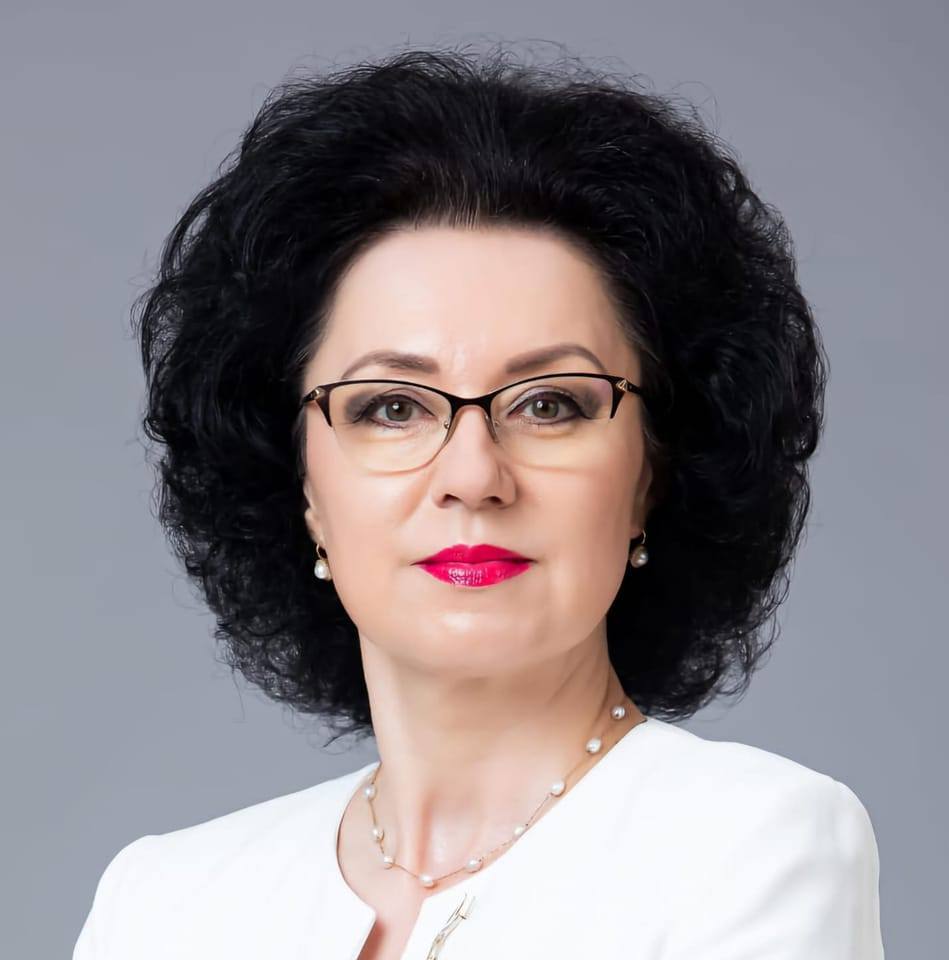 Ilie Bolojan changes the prefect of Iași to appoint her advisor to the Government in the field of education. Who is Luciana Antoci?
Previously, he was also deputy general school inspector for one year. Since 2003, she has been a teacher of Romanian language and literature at the “Grigore Moisil” Theoretical Computer Science High School in Iași.
Luciana Antoci has a doctorate in the field of educational sciences, obtained at “AI Cuza” University in Iași.
She was among the two names considered to replace Daniel David at the Ministry of Education, along with Marilen Pirtea, as HotNews wrote, citing political sources, since Daniel David's resignation.
What is the OECD? Romania wants to join since 2004
Romania's accession to the OECD is a strategic objective of foreign policy, which met the cross-party support of Romania's post-December governments. Our country officially submitted its candidacy for membership to the OECD in April 2004, a candidacy that was reiterated several times.
More precisely, according to information from the Ministry of Foreign Affairs (MAE), Romania officially submitted its application for membership to the OECD during the previous enlargement exercises, respectively in April 2004 and November 2012 and renewed it in 2016 and 2017.
“Romania's candidacy was appreciated in 2013 for the opening of the Romanian state to the Black Sea region, the considerable size of the national economy, the ability to apply austerity measures to reduce the effects of the crisis, the potential for economic growth and the participation in the meetings of a significant number of OECD structures. Aspects sensitive at the time were also mentioned, such as the unstable economic and political situation, syncope in the fight against corruption”, according to the MAE.
Romania's accession to the OECD depends on the fulfillment of the following criteria:
- the existence of a market economy and a functional democracy;
- the size and economic importance of the candidate state;
- the principle of mutual benefit for the OECD and the candidate state, benefit resulting from its accession to the organization;
- global considerations, related to ensuring the geographical balance between the members of the organization.
These criteria are evaluated on the basis of quantifiable parameters, recently adopted (June 2017) and stipulated in the framework document on OECD enlargement (http://www.oecd.org).
The political consensus of OECD members on the Romanian candidacy (the political support of the organization's members for Romania's accession).
What would be the main advantages of Romania's possible accession to the OECD
The benefit of Romania's membership in the OECD would be:
the benefit of public policy assistance from OECD members through periodic evaluations of Romania's policies in specific areas (peer reviews) and issuing recommendations regarding their improvement.
access to the restricted club of developed economies and the implicit recognition, at the global level, of its status as a functional market economy and consolidated democracy, with an impact on the country's rating and the attraction of foreign investments;
the benefit of the example: Romania's favorable image both towards the world's major economies (USA, China, Japan, etc.), and towards the states in the region with European aspirations (the Republic of Moldova, Macedonia, Albania, Serbia, etc.);
the benefit of expertise: access to the necessary information in priority areas for Romania (governance framework, legislative reform, anti-corruption, fiscal policy, transport infrastructure, agriculture, education, etc.);
the benefit of Romania's access to the economic decision-making tools and centers of the OECD and the possibility of contributing to global economic governance;