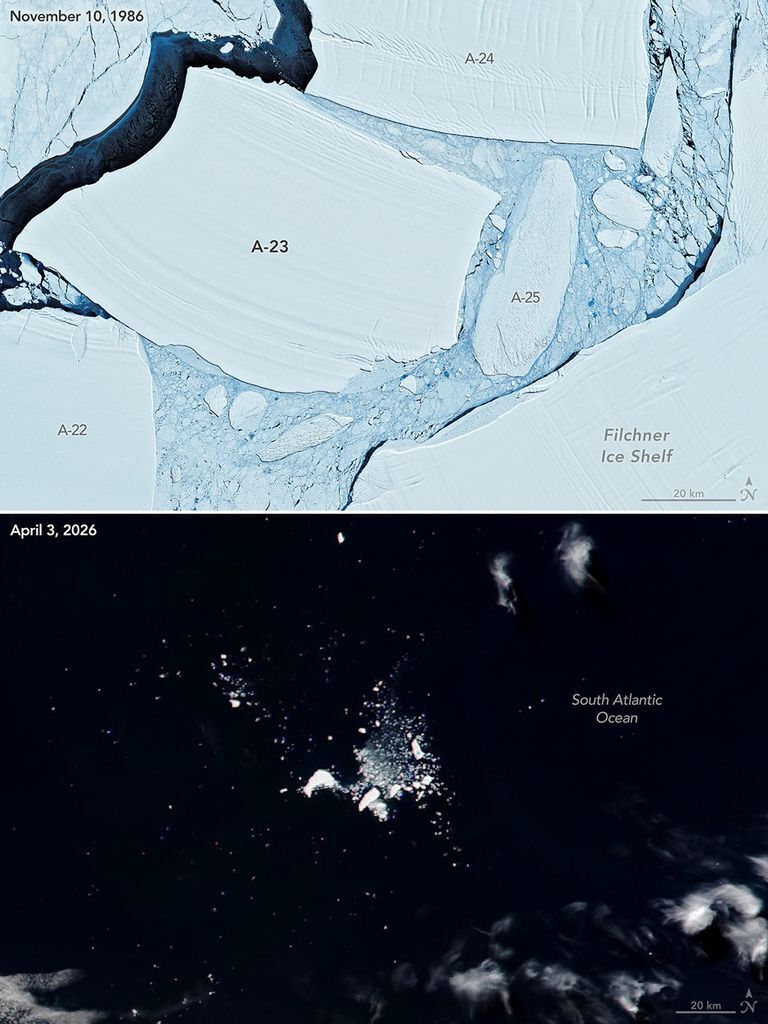
Iceberg A-23A, which was considered the largest in the world, finally collapsed in the South Atlantic Ocean, ending its almost 40-year existence. This is evidenced by satellite images, NASA reported on April 13.
The iceberg broke off from the Filchner Ice Shelf in Antarctica in 1986. Initially, its area exceeded 6 thousand km², which made A-23A one of the largest icebergs recorded in the satellite era. Over decades of drift, it outlived all the other icebergs that formed along with it.
By April 2026, just over 170 km² of ice remained from the A-23A. The iceberg drifted more than 2.3 thousand km north of the place of formation – into warmer waters near the islands of South Georgia and the South Sandwich Islands, where it began to rapidly melt and collapse.
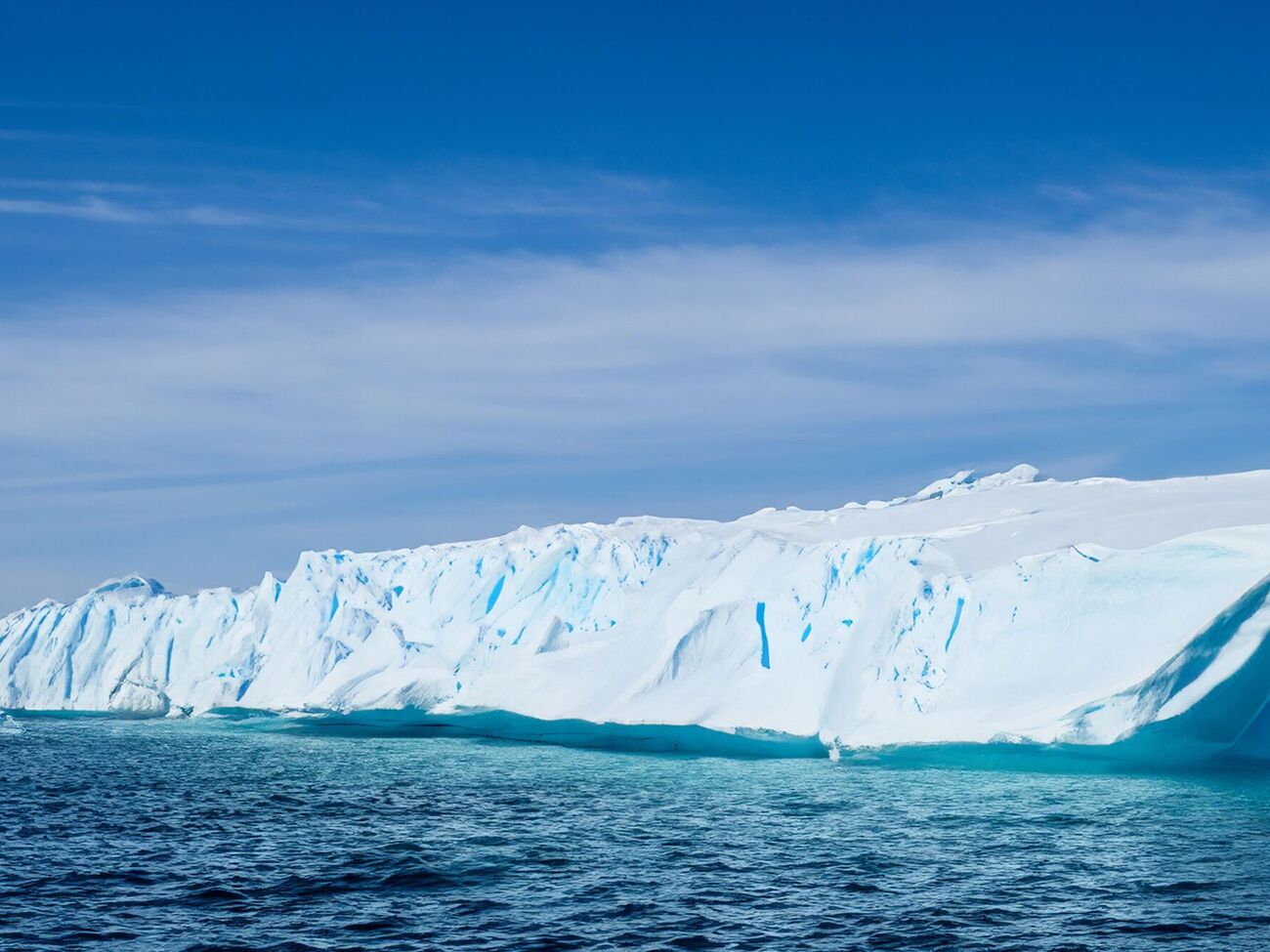
Scientists note that in recent months the iceberg has been actively breaking up, and large lakes of melt water have formed on its surface, which has accelerated the destruction. Satellite images from the end of March 2026 recorded the final stage of the collapse of the ice mass.
Researchers from the University of Maryland and the Australian Bureau of Meteorology said the A-23A's story has helped scientists better understand the movement of icebergs and the influence of ocean currents. At the same time, experts emphasize that many processes affecting the drift and destruction of large icebergs still remain poorly understood.