From Attila the Hun to Donald Trump. A short history of the confrontation between popes and world leaders


The war in Iran joins the fall of the Roman Empire and the French Revolution, historical flashpoints that have sparked disputes between popes and some of our civilization's most iconic political figures.
Trump responded by claiming that the pope is “WEAK at fighting crime and terrible at foreign policy” — while members of his administration insist that the conflict in the Middle East is a “just war” fought “in the name of Jesus Christ.”
The dispute between the pope and the president may raise surprise, but This is nothing new for the Catholic Church. In fact, Leo may be taking cues from his predecessors, who over the past 2,000 years have argued with chancellors and prime ministers, kings and emperors… and even some true barbarians.
Pope Leo I (440–461) became famous for clashing with a figure who was undoubtedly more feisty than Trump: Attila the Hun.
After plundering Europe, the barbarian leader entered Italy and plundered the cities in the north of the Peninsula. Rome, then nominally under the control of the weak Western Roman Emperor Valentinian III, seemed doomed to fall in the face of the terrifying hordes of the Huns until Leo was sent to stop it in 452.
With no army to repel the barbarians, the pope opted for dialogue — and the threat of divine punishment. According to the Greek historian Priscus, who once dined with Attila, the Hun leader was so intimidated by Leo that he ordered his tribes to retreat from Italy to Germany, where he died less than a year later.
Defeat Napoleon
French Emperor Napoleon Bonaparte had a notoriously turbulent relationship with the leaders of the Catholic Church.
While still a novice general, he invaded Italy, quickly defeated the troops guarding the Papal States and proclaimed the Roman Republic. When 80-year-old Pope Pius VI (1775–1799) opposed this provocative gesture, he was imprisoned and deported to the French fortress city of Valence, where he died a few months later.
His successor, Pius VII (1800–1823), was aware of what had befallen those who opposed the militant Corsican. After his election, he immediately began negotiating a treaty that would allow the Catholic Church to coexist peacefully with the French Republic. As an additional gesture of goodwill, he agreed to travel to Paris to be present at Napoleon's coronation as emperor – and graciously refrained from commenting when the French leader provocatively crowned himself.
Napoleon and Pope Pius VII at Fontainebleau in 1809. Painting by JB LaurensGetty Images / Bettmann / Contributor / Getty Images
However, relations deteriorated after the Pope refused to support Napoleon's continent-wide embargo on British goods. Like his predecessor, Pius was imprisoned. However, as a much younger man, he was able to wait out the emperor, whose political career finally came to an end in 1815 at Waterloo. Shortly thereafter, the pope returned triumphant to Rome, hailed as a living martyr who defeated Napoleon.
Discreet diplomacy
Few popes served during a period of greater global significance than Pius XII (1939–1958), and few clerics left a more complex legacy.
Before being elected pope, he negotiated the 1933 treaty between the Vatican and Germany, which gave legitimacy to Adolf Hitler's emerging regime and obliged the local clergy to remain silent when the Nazis began to persecute Jews and other minorities in Germany. As pope, Pius XII was further criticized for failing to condemn Nazi atrocities.
His defenders, however, say the pope opted for public restraint in order to conduct more discreet diplomatic actions that saved thousands of people. After fascist leader Benito Mussolini introduced race laws aimed at expelling Jews from Italian universities, Pius XII hired many of the unemployed scientists in positions at the Vatican. He also negotiated an agreement with Brazil to accept Jewish refugees and hid thousands of people in monasteries throughout Rome.
After his death, then Israeli Foreign Minister Golda Meir described Pius XII as a “servant of peace” who “raised his voice to condemn the persecutors and express sympathy for the victims.” Despite these praises, the pope's strategy of balancing public silence with behind-the-scenes intervention — an approach still favored by the Vatican's diplomatic apparatus — remains controversial.
A look to the East
After the world came to the brink of nuclear war during the Cuban Missile Crisis, Pope Paul VI (1963–1978) adopted a policy of engagement known as Ostpolitikwhich focused on dialogue with the Eastern Bloc.
After decades of staunch opposition to communist rule around the world, the pope welcomed Soviet leaders to the Vatican and sent emissaries to contact authorities in Poland, Hungary and Romania. This strategy was controversial within the Catholic Church, but it provided better conditions for the faithful behind the Iron Curtain.
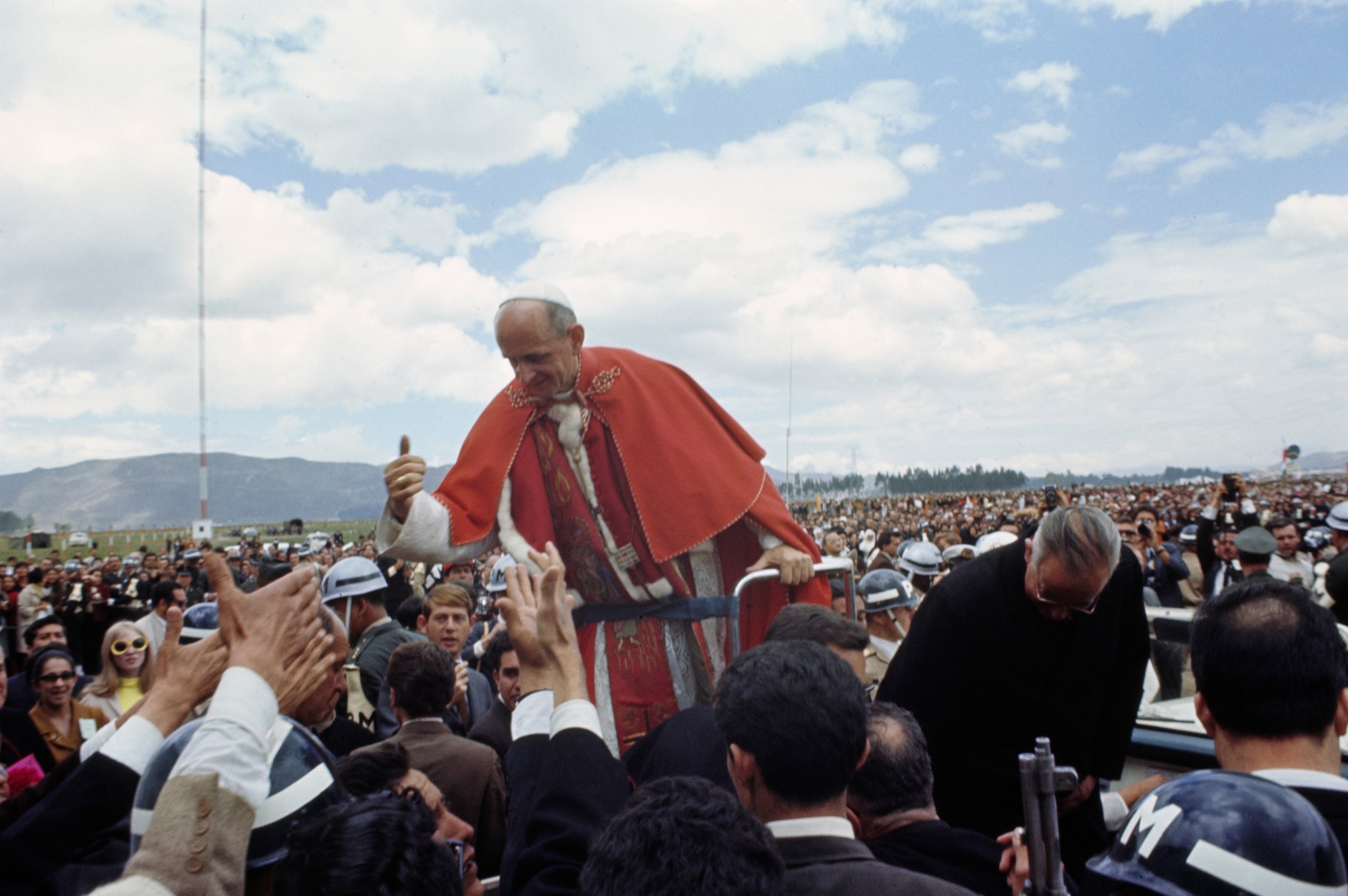
Surrounded by military police and bodyguards, Pope Paul VI waves to the crowd from the backseat of a car during a 1968 visit to the suburbs of Bogotá, Colombia.UPI/Bettmann Archive/Getty Images/Getty Images
This tactic was continued, although in a more confrontational style, by Pope John Paul II (1978–2005), who worked to forge ties with Soviet leader Mikhail Gorbachev while providing moral support to the Polish Solidarity movement.
These efforts reaffirmed the global importance of the Catholic Church—even in parts of the world officially espousing atheism.
Not for the wall
In dealings with Trump during his first term in the White House, Leo XIV's immediate predecessor, Pope Francis (2013–2025), chose to attack politics rather than the president himself.
This pattern repeated itself throughout Francis's pontificate. The pope has taken strong stances on Trump's policies — one example being his passionate defense of climate action when the United States withdrew from the Paris Agreement — but carefully avoided direct confrontation with the occupant of the White House.
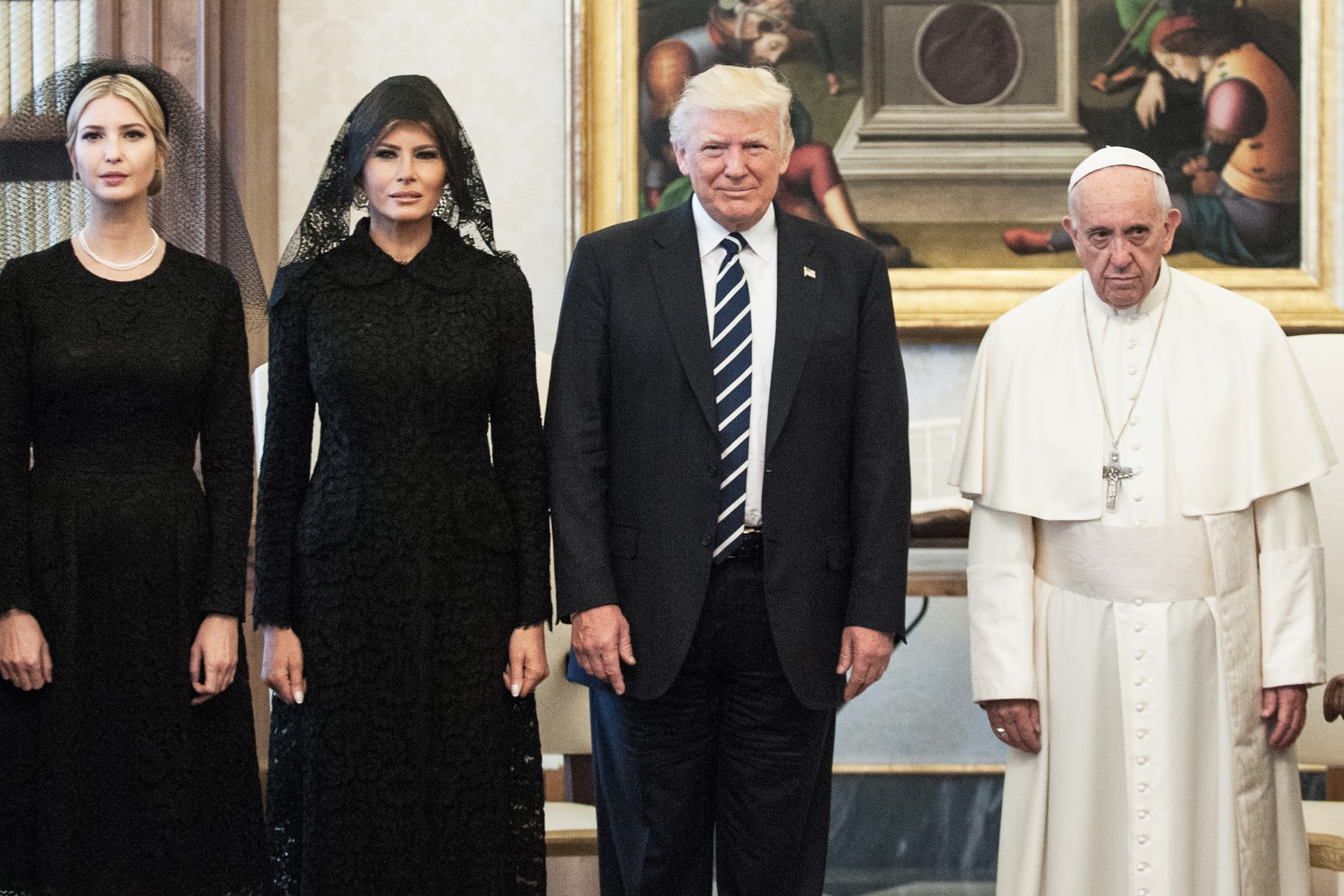
US President Donald Trump, his wife Melania and daughter Ivanka meet with Pope Francis at the Vatican, May 22, 2017.Vatican Media/Vatican Pool – Corbis/Corbis via Getty Images / Getty Images
The iconic photo of the two leaders serves as a visual metaphor for this strategy. The photo shows Trump smiling happily during his visit to the Vatican. The pope, however, looks ahead, grimly accepting his obligation to maintain good relations with the president — if only for the sake of world peace.