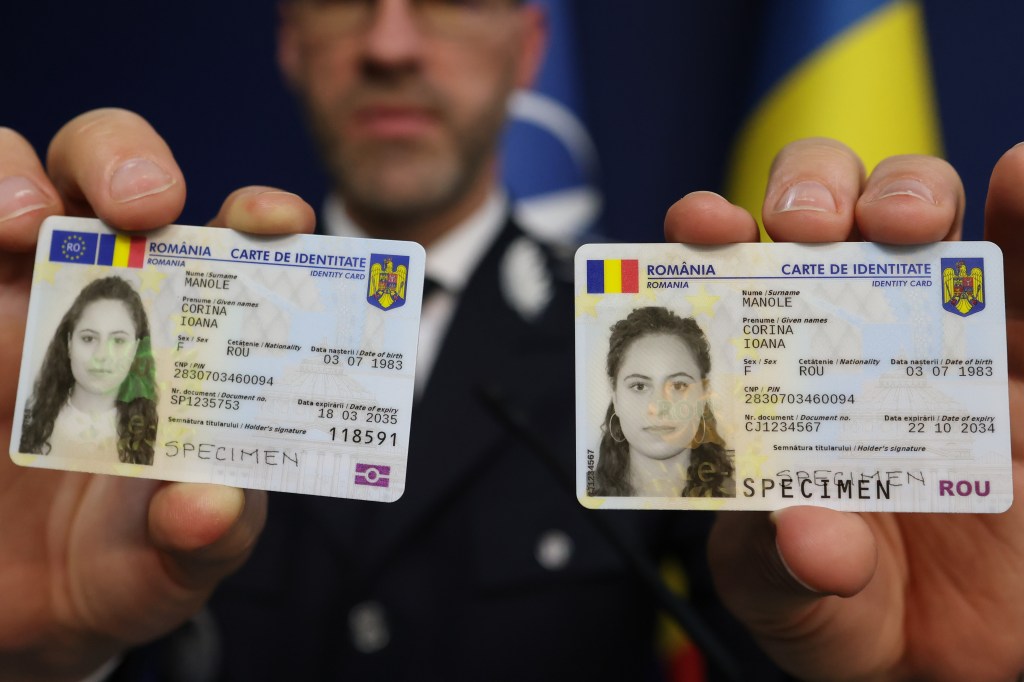
The electronic identity card, promoted by MAI with almost 2 million euros. What is the campaign for which “artificial intelligence solutions” will be used for which will be used


On October 1, the Ministry of Internal Affairs (MAI) awarded a contract for the promotion of the electronic identity card on TV, radio, online and cinemas and shopping centers, totaling without VAT of 9.85 million lei (almost 2 million euros), funds allocated by PNRR. MAI received only one offer at this auction, from an association of four companies in front of Complete Media Grup, according to data from the electronic public procurement system (SEAP).
The new electronic identity card (those) began to be issued in Cluj County in March 2025, and at national level was available later, including in Bucharest from April 2025 and at the level of the whole country since August 2025.
The conduct of a sensitization campaign that encourages the large -scale use of the new electronic identity card, and implicitly, of the related electronic services, benefits from PNR financing, according to negotiations with the European Commission.
How will the promotion campaign be held
The contract awarded also involves the creation and dissemination of video and audio stations to promote those and electronic services in the online environment, media and outdoors, as well as organization and carrying out of information/information actions.
The target audience is divided into three categories:
- Romanian citizens between the ages of 18 and 45 in Romania;
- Romanian citizens over 45 years old in Romania;
- Romanian citizens over the age of 18 in the diaspora
The promotion services will be carried out for 3 months and will consist of video and audio spots adapted for each of the categories of target audiences, as follows:
- Campaign in the online environment: Promoting those and encouraging the use on a large scale by publishing promotion materials, especially in video format, on social networks and through Google Ads on sites and platforms with high visibility
- Media TV campaign: Making a minimum of 3 information spots
- Radio Media Campaign: Making a minimum of 3 information spots
- Media campaign through cinemas and plasma networks in shopping centers and cinemas: the development of at least 2 video spots. The audio-video spots that will be broadcast in the cinemas will be of maximum 30 seconds, and on the plasmas in the shopping centers and cinemas the spots will be of types and will be subtitled, as the case may be. An exposure of at least 2,000,000 citizens will be ensured, in the 3 months of campaign through cinemas and plasma networks from shopping centers and cinemas.
- Organizing at least two events/conferences and making promotional objects, including 10,000 flyers.
The online campaign will be “strong”
“The campaign carried out in the online environment will be the strongest component of the sensitization campaign to encourage the widespread use of the electronic identity card and, implicitly, of electronic public services,” writes in the specification.
It also requires minimum 6 posts to be developed, as follows: minimum 2 posts per month, for three months, on social media and through Google Ads, each post with at least two million views, until the end of the three months.
The company will have to prove that the number of two million was reached following the view by real users.
The communication will have to be an integrated one, so that there is consistency and consistency between all the media in the communication mix (TV, radio, through the cinemas and plasma nets from shopping centers and cinemas and online).
“Thus, the online campaign will take over the messages from the other environments and propagate them, but it will also develop a number of other messages adapted to its own types of broadcast media (eg specific for Tiktok, specific to YouTube). Some of the materials will be made including a use of artificial intelligence, and after the campaign,” the document states.
After carrying out the promotion campaign, the property rights will be transferred to the Ministry of Internal Affairs for free and without any obligations.
Which companies have won the promotion contract
The contract for the promotion of the electronic identity card was awarded since October 1 for a total value of 9.85 million lei (almost 2 million euros), to an association from four companies complete media group. The initial contract was auctioned at the end of June this year for an estimated value of 9.93 million lei (excluding VAT).
The only offer was submitted by the association between the companies: Complete Media Grup (leader), having as subcontractors: The Plan B concept SRL, Best Advertising Worldwide and Mercury360 Communications SRL.
Complete Media Grup, the media agency fully owned by Roxana Necula, according to terms.ro, will subcontract 82% of this contract, the equivalent of over 8 million lei, to the other companies for the realization and production of promotion materials, the data from the SEAP shows.
Complete Media Grup has carried out several media promotion campaigns for the MIA, such as for the integrated computer system for issuing civil status documents (SIIASC) or six national information and awareness campaigns. The Agency also carried out the first national communication campaign in the judicial system for the Superior Council of Magistracy (CSM).
Millions of Romanians will no longer receive the Identity Electronic Book for free
The government approved on August 14, the decrease of the PNR target regarding the number of beneficiaries who will receive the free identity card, from 5 million citizens to 3.5 million citizens.
This is under the conditions in which the Ministry of Internal Affairs (MAI) proposed the reduction of 21 million euros of the PNRR money for this project. One of the causes invoked is the low level of interest of citizens for the new documents, but also the variable administrative capacity of the local authorities.
Over 662,000 citizens have obtained the new electronic identity cards, according to the latest data published by the Ministry of Foreign Affairs.
 Millions of Romanians will no longer receive the electronic identity card anymore. How did it get here
Problems with reading the domicile from the chip. May launched an app
On the other hand, some Romanians who have entered the possession of the new electronic identity cards have had difficulty making a subscription to the library, accessing banking services or crossing the border, given that the home address is no longer in sight, but is stored on the CIP, and certain institutions or banks have no readers for this document24.
Subsequently, MAI launched at the end of September Rocăireader, an application that reads the home of the new ID card (those).
By using the application for those, citizens, but also public authorities and private institutions, they can see the home address, eliminating the bureaucracy and reducing the processing time.
The ministry gives assurances that Rocereireader “meets the highest standards of cyber security, ensuring full protection of personal data”. The application is available for free on Google Play and soon in the App Store.
 Romanians can use today the application that reads the home data from the Identity Electronic Book