Can Nicușor Dan refuse a PSD-AUR premier? A constitutional judge clarifies: “He doesn't have much room to maneuver if there is a majority”

The withdrawal of ministers by the Social Democratic Party could trigger a constitutional dispute, in the context in which Ilie Bolojan would have 45 days from that moment to propose new people to occupy these positions. The former president of the Constitutional Court, Augustin Zegrean, explains for “Adevărul” the fact that this term cannot be ignored, and the executive is obliged to complete its structure through ministers validated by the Parliament. However, the procedure does not equate to a new investiture vote for the entire cabinet.
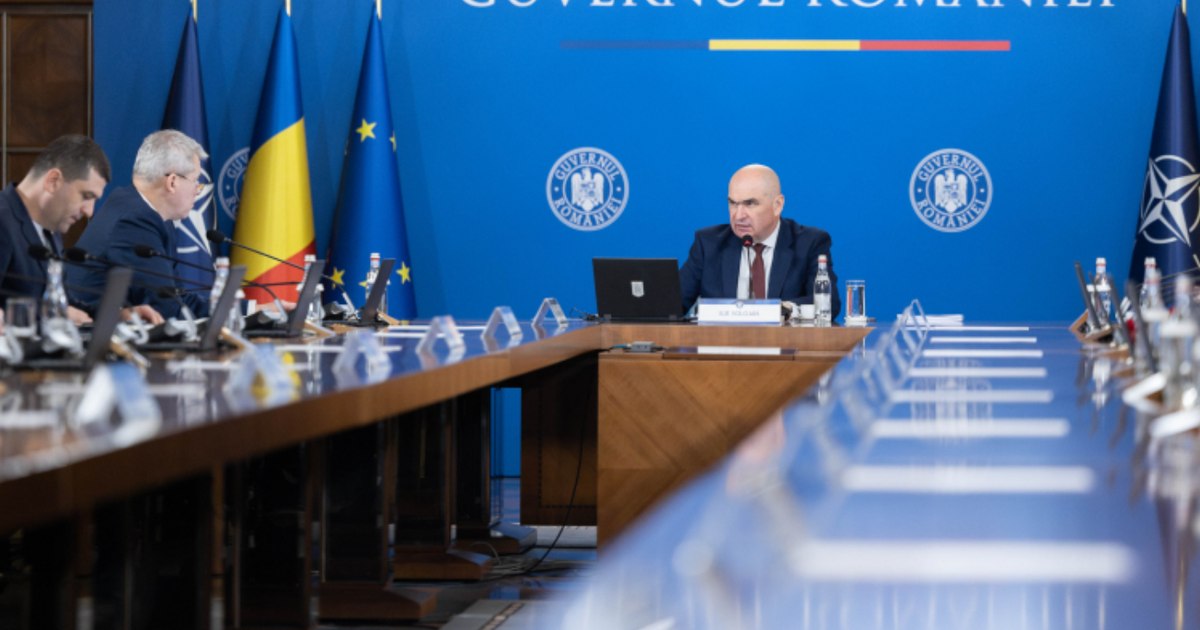
Ilia Bolojan. PHOTO: Government of Romania
The withdrawal of PSD ministers from the Bolojan government does not automatically trigger the downfall of the executive, nor does it force the prime minister to return to Parliament for an investiture vote. However, Article 85, paragraph (3) of the Constitution provides that any reshuffle that changes the structure or political composition of the government requires the approval of the Parliament.
“Dissolution of Parliament
(1) After consulting the presidents of the two Chambers and the leaders of the parliamentary groups, the President of Romania can dissolve the Parliament, if it has not granted the vote of confidence for the formation of the Government within 60 days from the first request and only after the rejection of at least two requests for investiture.
(2) During a year, the Parliament can be dissolved only once.
(3) Parliament cannot be dissolved during the last 6 months of the Romanian President's mandate, nor during a state of mobilization, war, siege or emergency.” provides Article 85 of the Constitution.
Concretely, it means that Ilie Bolojan must propose titular ministers for the vacant seats, and they must go through committee hearings and plenary voting. However, the procedure does not equate to a new investiture vote for the entire cabinet. Augustin Zegrean, former president of the Constitutional Court, clarifies the situation.
“If, by appointing one or more ministers, the political structure or composition of the Government changes, then it is mandatory to go to Parliament to ask for a vote of confidence. But this vote is not for the entire Government, but only for the proposed ministers. The President can only appoint them after they receive this favorable vote. Basically, it is the same procedure as for the investiture of the Government, only it is applied punctually”explained Augustin Zegrean for “Adevărul”.
The appointment of interims, only a temporary solution
Another option that the prime minister has is the appointment of interim ministers, without going to Parliament. The constitution allows this solution, but limits it to 45 days. The question now is whether Bolojan could endlessly bypass the parliamentary vote by simply rotating the interim at the end of each term. In Augustin Zegrean's opinion, the change of interims does not change the 45-day term in any way.
Ciprian Ciucu says that the liberals will not negotiate with AUR for political support. “We are not here because of PNL”
“Changing interim ministers in this interval does not change the situation at all. It does not extend the term and does not eliminate the obligation to go to Parliament. The only uncomplicated option would be to maintain the same political structure”mentions Augustin Zegrean.
Moreover, the former constitutional judge emphasizes that even the successive rejection of the candidates does not reset the constitutional term.
“Very important: the rejection of some ministers does not mean that a new 45-day term begins. The term continues to run. It cannot be extended by changing proposals or their interims,” emphasizes Zegrean.
And if the term expires without a solution, the Government does not automatically fall, but the Constitutional Court could be referred for legal conflict, explains the former CCR judge.
“Government is not a game. The Prime Minister cannot indefinitely postpone these procedures. If the Constitution is not respected, a constitutional conflict between the Government and the Parliament can be reached, which can be referred to the Constitutional Court, including by the president”, Zegrean points out.
Can Nicușor Dan refuse a prime minister proposed by the majority?
President Nicușor Dan publicly declared that he will not appoint a prime minister supported by PSD and AUR. However, the statement raises a constitutional issue. If the two parties together have a parliamentary majority, does the head of state still have the legal possibility to ignore their proposal? In the opinion of Augustin Zegrean, the Fundamental Law obliges the head of state to take into account the results of consultations with the parties when appointing the prime minister.
“Regarding the appointment of a prime minister, if there is a clear parliamentary majority, the president does not have much room for maneuver. The Constitution obliges him to take into account the result of consultations with the parties. If they come with a proposal supported by the majority, it must be taken into account. There is no provision in the Constitution that allows the president to refuse a proposal on political grounds alone. He must respect the constitutional procedure.” explains the former president of the Constitutional Court.
Early elections, extremely difficult
The scenario of early elections, taken into account by analysts, is constitutionally possible, but it requires a difficult mechanism. The Constitution provides for the dissolution of the Parliament only after two successive proposals of the Prime Minister are rejected within 60 days. Even then the dissolution is not automatic, being in the hands of the president, who could try to make new proposals for the installation of a new government.
“Early elections are very difficult to achieve. It requires the rejection of two successive proposals by the prime minister within 60 days. Only after that the president can dissolve Parliament, but he is not obliged to do so. Even in this situation, the decision to dissolve is not automatic. The constitution clearly says that the president can take this decision after consulting with political leaders. It is an option, not an obligation”explained the former president of the Constitutional Court, Augustin Zegrean.