Fact-checking what one of the most applauded PSD leaders said, who convinced his colleagues to vote for the departure of the Bolojan government: 10 untruths in a few sentences

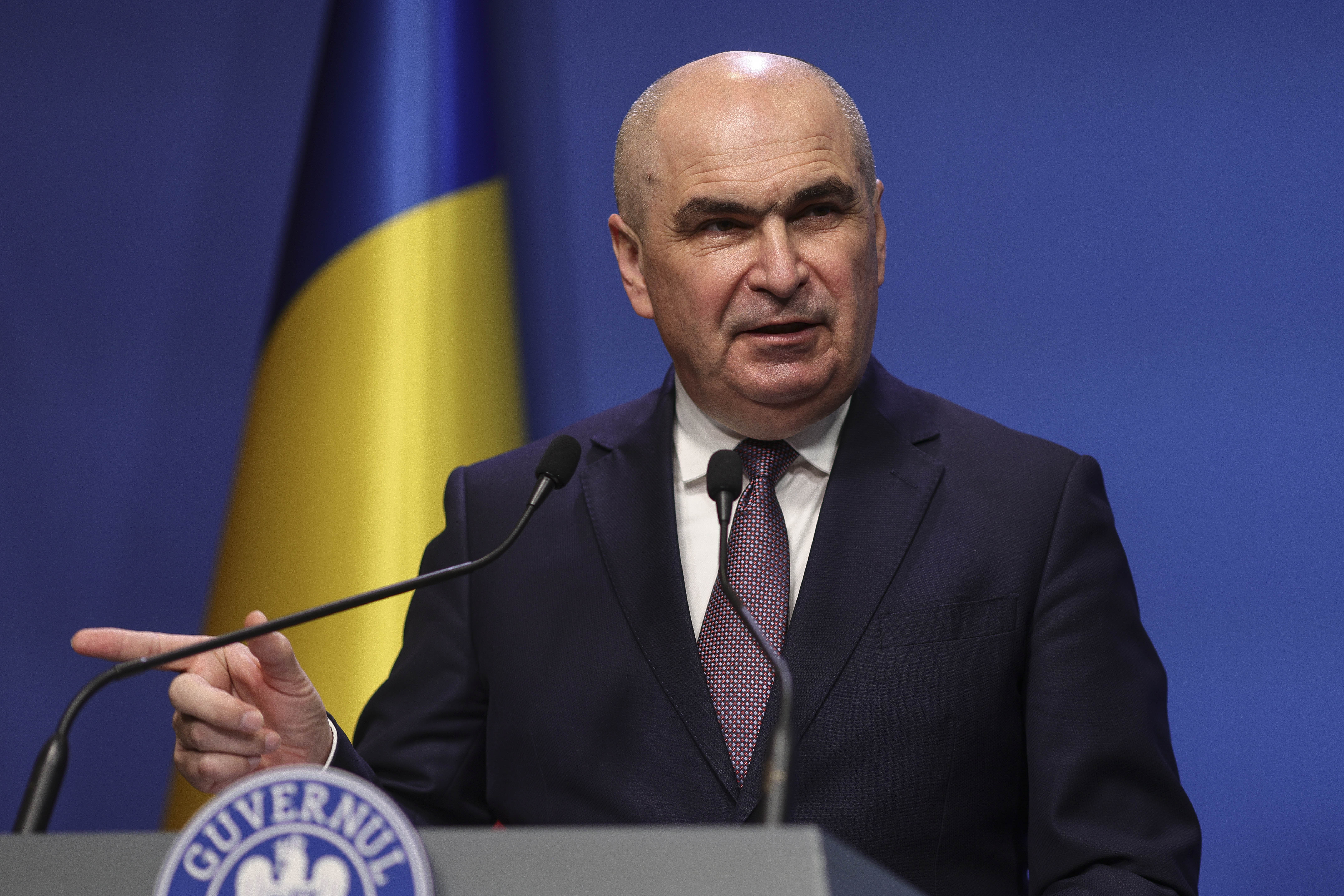
The Minister of Energy, Bogdan Ivan, gave one of the speeches that energized and “cooled” the hall against Bolojan, in Monday's PSD meeting in which the social democrats voted with 97% against the current liberal prime minister. The verification of his statements by HotNews reflects the real situation of the Romanian energy consumer.
1. The price of energy
Bogdan Ivan said: “It's an extremely complicated period and I ended up leading the Ministry of Energy, for the first time after 10 years a social democrat, after 10 years of right-wing colleagues, who, with all good intentions, I'm convinced, managed to leave Romania with the highest energy price in the entire European Union.”
Minister Ivan did not specify what price he was referring to. If it refers to the price for consumers, it is completely untrue: the price has been capped from 2021 until 1 July 2025 at one of the lowest levels in the European Union.
If it's the one on the stock market, then yes, this is some days the biggest in the EU. But in others, the price in Romania is also the lowest in the EU, depending on consumption, production and weather factors.
Even without the ceiling, Romania is not the most expensive country in the EU from the point of view of energy. According to the latest Eurostat data, valid for 2025, the highest price of energy for households is in the Czech Republic, Poland, Germany and Italy, with Romania in fourth place.
2. Minister Ivan stated that the cheapening of electricity is due to him
Bogdan Ivan: “This is the reality in which PSD got there. After caps, re-ceilings, liberalizations, which only made the price of electricity 5 times higher for consumers in our country between 2020 and 2025.”
In reality, prices did not increase fivefold between 2020 and 2025. Until July 1, 2025, the price was the same, capped, and, upon liberalization, for Hidroelectrica customers the increase was 70% (from 0.68 – 0.8 lei to 1 lei per kWh).
For other consumers, the price has doubled (from 0.68 – 0.8 lei per kWh, to 1.5 lei per kWh). In the meantime, however, market prices have fallen at most suppliers.
3 and 4. Two false statements in the same sentence
Bogdan Ivan: “We started a series of discussions with people who are from this market and it may seem a little, but after we forced traders to block substantial amounts of money when buying energy, after we came up with clearer rules in the market, from offers that in July were between 1.50-1.60 lei in the vast majority of them on the market, today we also have offers at 0.90, 1 leu, 1 leu and 10 money”.
In this verbal construction, the minister ascribes to himself two merits that do not belong to him. The obligation of traders to submit guarantees was not introduced by the Ministry of Energy, but by ANRE.
As an economic effect, the cheapening of the offers of suppliers in the market is the result of the competition generated by the liberalization of the market and the migration of consumers to the suppliers with the lowest prices.
5. Ivan Says He's Solved the “Smart Energy Guys” Problem
Bogdan Ivan continues: “We managed this with clear rules to block everything that means speculation, because there are these smart guys who are, they worked, they work, and we blocked a lot of what they did with these measures.”
In reality, the “smart guys in energy” problem has not been solved. It is a problem that even Prime Minister Ilie Bolojan has pointed out and that ANRE seeks to solve by amending the regulations for obtaining approvals for photovoltaic projects.
6. Money from PNRR
What did the PSD minister also say: “During my mandate at the Ministry of Energy, I brought 1 billion euros of money directly settled for investments. If in the two and a half years since the PNRR began until June last year, a little over 100 million euros were paid, between July last year and April 2026, I ended up making payments more than in two and a half years.”
In reality, the payments were made because during this period projects financed by PNRR and the Modernization Fund were completed, naturally reaching the settlement stage.
Furthermore, energy sector companies have reported delays in making payments during this period, even though projects have already been completed.
7. Bolojan's idea
Next, Ivan said: “Immediately after the outbreak of the war in the Middle East, when gas prices were 70% higher, Romania is the first country in the EU that found a mechanism that we proposed to the Government of Romania.”
“After very long debates, we ended up adopting a mechanism by which the energy produced on natural gas remains the same until April 2026. A billion euros that would have gone to the companies' profits remain in people's pockets, something that a social democratic minister did.”
In reality, it is about the price of gas and not the price of energy produced from gas, and the deadline is not April 2026, but April 2027. Even so, the mechanism did not come after the outbreak of the war, but had been announced in advance, at the beginning of February, even by Prime Minister Ilie Bolojan.
Moreover, according to the information HotNews published at that time, the Ministry of Energy was preparing for the liberalization of gas prices, and Minister Ivan was taken by surprise by Bolojan's announcement regarding the one-year postponement of the liberalization.
8. Shutting down coal plants
Bogdan Ivan continued: “With a cynicism that I cannot describe, in 2020 Romania chose the most aggressive decarbonization policy in the entire European Union. And it assumed that by the end of 2025 it will stop coal mining in our country and it will also stop coal-fired power plants in our country.”
“By comparison, Germany and Poland have chosen 2039 and 2049 as their deadlines, respectively. In Germany we have situations where wind turbines are put aside to reopen coal deposits.”
“And we have assumed some extremely aggressive deadlines, we have assumed that we will fire thousands of people, we have assumed that we will also close the coal-fired power plants and coal mining”, said Minister Ivan.
In reality, the closure of the coal plants was assumed by Romania within the restructuring plan of the Oltenia Energy Complex, a company that was thus able to obtain a state aid of 2.5 billion euros.
The plan was aimed at the financial recovery of the company, which was on the verge of bankruptcy without this help. According to the 2021 plan, two gas plants and a photovoltaic park were to be built at the Oltenia Complex by December 31, 2025, when the coal plants would be closed.
But the new projects were not completed on time and Romania requested a postponement of the closure of the lignite plants.
9. The “Artificial Intelligence Factory” that keeps drones away
Ivan also talked about a project, “perhaps the most important project that Romania has, an artificial intelligence factory that we will do in Cernavodă, because we need electricity in the band and that will bring 5 billion euros and a real chance for the thousands of students and engineers that we have in our country, to make our country an energy and information technology hub, and so no one will ever think of flying drones near our country”.
In reality, Romania has been trying for eight years to complete a 400 MW plant (the one at Iernut). Romania has numerous other projects underway or planned, such as the refurbishment of reactor 1 at Cernavodă, the construction of reactors 3 and 4, the Tarnița-Lăpuștești hydropower plant, other hydro projects and the mini-reactors at Doicești.
In this context, the project of a so-called “artificial intelligence factory” of 5 billion euros is also added, which, in the form presented, seems something indefinite. The presence in the same sentence of an “artificial intelligence factory” and the statement “no one will ever think of flying drones near our country” is, cognitively, an unknown.
10. Ivan said at the beginning of the war that there was no way diesel would reach 10 lei
About the price of fuel: “If we from the PSD had not been in government, if we had not come up with the solution regarding the price reduction package, today the price of diesel would have been 1 leu higher. After I went before the Government with the proposal to declare the crisis it was clear we were experiencing.”
In reality, at the beginning of the war, when analysts estimated that the price of diesel could reach 10 lei, Ivan argued that any price increase of more than 3-5 pennies at the pump was not justified. In addition, he qualifies the forecasts regarding the price of 10 lei as “blatant lies”. After just one day, he changed his mind and admitted that there was such a risk.