Robert Fico is doing business with Putin. The most important are[WYKRESY]

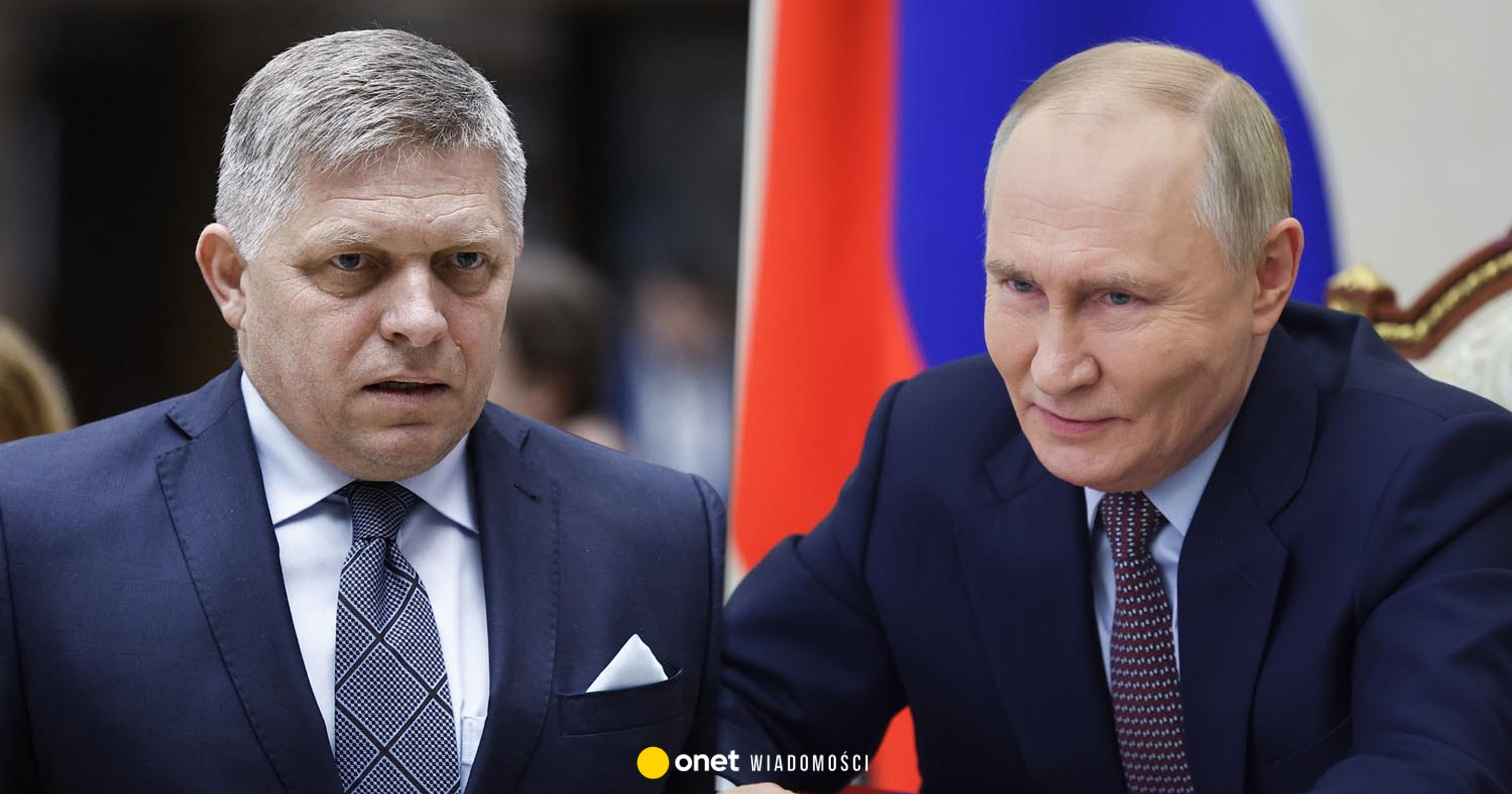
After Viktor Orban's defeat in Hungary, the Slovak Prime Minister is alone in the EU in his pro-Russian attitude. And he just received a painful blow from the Baltic states.
Robert Fico is one of the few leaders of EU and NATO countries who maintains regular relations with the leader of Russia. During all his terms (since 2006), he met Putin several times. After returning to power in 2023, Fico significantly tightened contacts, making three visits in a short period of time:
- December 2024 (Moscow) — gas supply negotiations;
- May 2025 (Moscow) — participation in the Victory Day celebrations;
- September 2025 (Beijing) — conversations during a visit to China.
The December visit to Moscow was met with a wave of criticism. In the European Union, it was assessed as an attempt to break the Kremlin's diplomatic isolation during the war against Ukraine.
Demonstration in Bratislava against Robert Fico's visit to Moscow (December 2024)CTK Photo/Patrik Uhlir / PAP
Fico went on the offensive. In early January 2025, he threatened to suspend emergency electricity supplies to Ukraine, as well as limit support for Ukrainian refugees staying in Slovakia. He also announced that Slovakia may completely suspend humanitarian aid to Kiev and will consider using its right of veto on EU policies supporting Ukraine.
Fico didn't care about criticism. A few months later, he visited Moscow again and took part in the Victory Day celebrations. The event was attended by leaders including: China, Belarus and the countries of Central Asia and the Global South. Xi Jinping, Alexander Lukashenko, Kasym-Jomart Tokayev (Kazakhstan), Sadyr Japarov (Kyrgyzstan), Emomali Rahmon (Tajikistan) and Serdar Berdimuhamedov (Turkmenistan), as well as Nikol Pashinyan (Armenia), Miguel Díaz-Canel (Cuba), Nicolás Maduro (Venezuela) and Ibrahim appeared in the stands. Traoré (Burkina Faso).
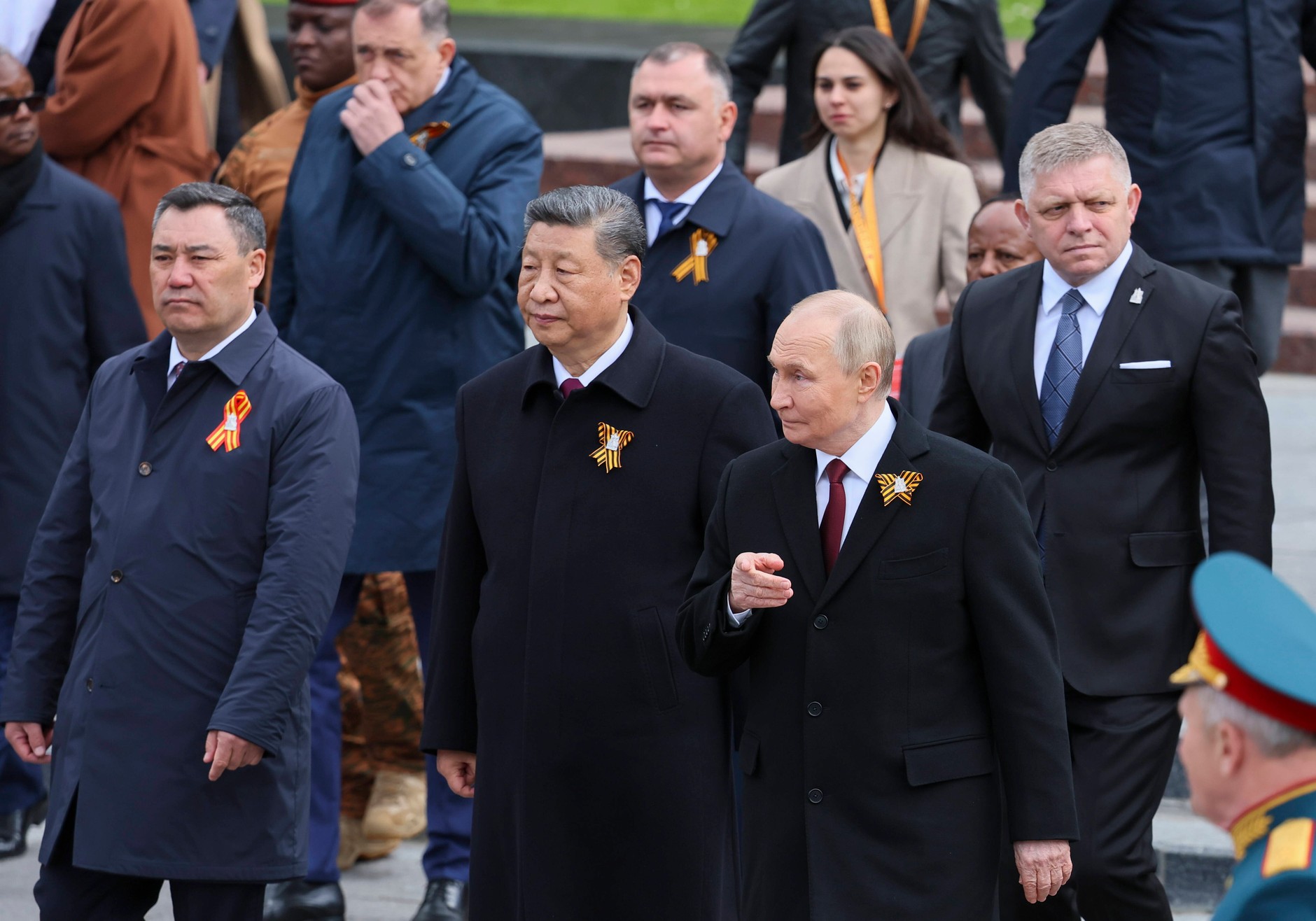
President of Kyrgyzstan Sadyr Japarov (L), President of Russia Vladimir Putin (2-R), President of China Xi Jinping (C) and Prime Minister of Slovakia Robert Fico (R) along with other foreign leaders take part in a wreath-laying ceremony at the Tomb of the Unknown Soldier in Alexander Garden on Victory Day (May 2025)YURI KOCHETKOV / PAP
From Europe, only the Prime Minister of Slovakia, Robert Fico, and the President of Serbia, Aleksandar Vucić, were present.
In September 2025, during a visit to Beijing related to the celebration of the anniversary of the end of World War II in Asia, Robert Fico met with the Chinese authorities, talking, among others, on economic cooperation and relations between the EU and China. On the sidelines of the ceremony, he also met with Vladimir Putin.
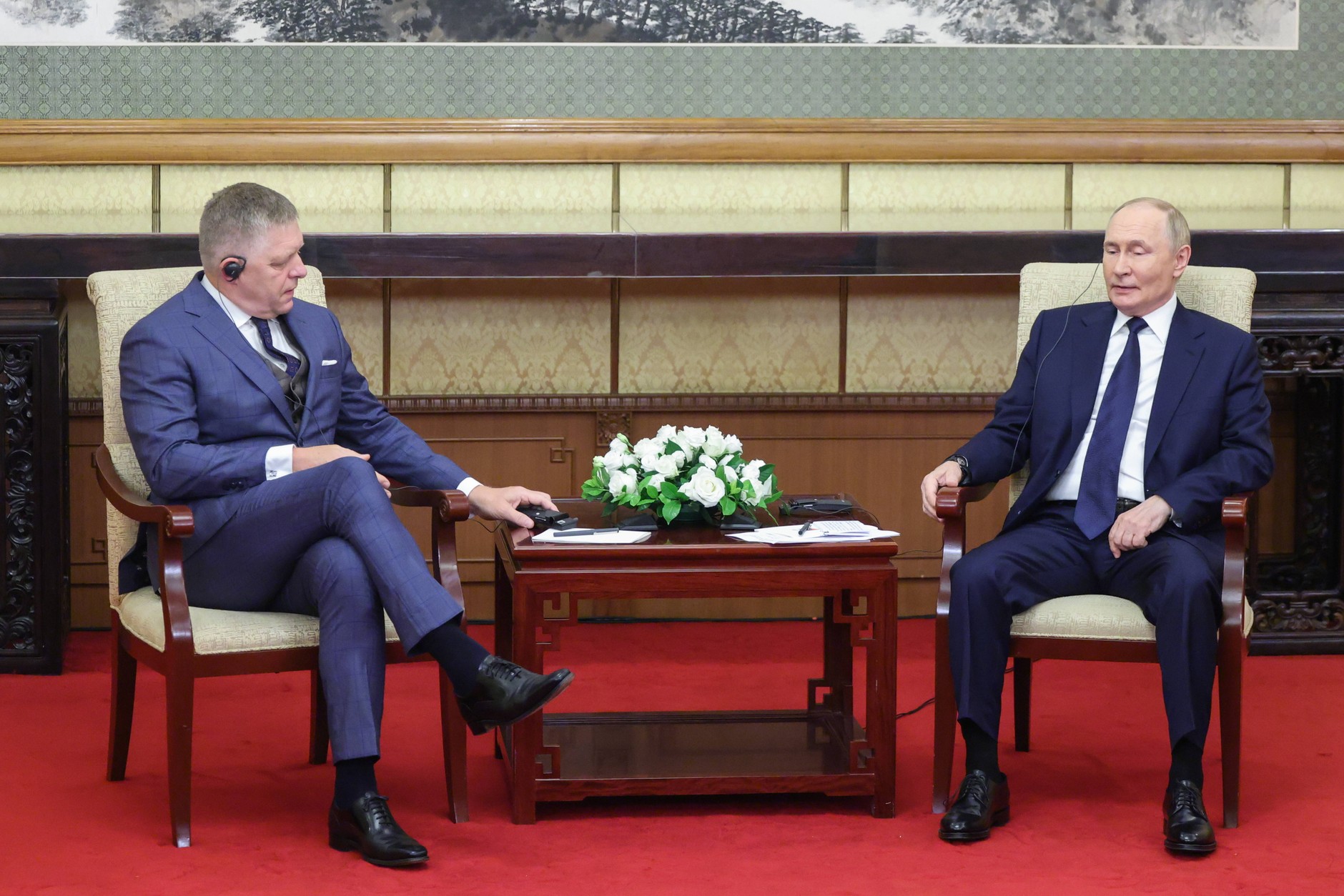
Robert Fico and Vladimir Putin (September 2025)MAXIM SHEMETOV / POOL / PAP
Three key areas of cooperation
Robert Fico's relations with Moscow focus on three key areas: gas, oil and nuclear fuel.
Report from May 2025, prepared by CREA, i.e. the Center for Research on Energy and Clean Air, and the Center for the Study of Democracy – independent analytical centers dealing with, among others, energy, security and politics – puts Slovakia in a rather uncomfortable light, as one of the countries which have changed the least in their energy policy despite the war in Ukraine. Hungary is also in a similar situation, as it still relies heavily on Russian raw materials, especially oil and gas.
The authors point out that although imports of Russian gas have dropped sharply throughout the European Union, Slovakia is – along with Hungary – one of the exceptions. In 2021–2024, it limited purchases only slightly, and the share of Russian gas in imports remains very high, reaching approximately 70%. This is one of the highest levels in the EU – comparable to Hungary, where the share of Russian gas in imports also remains at a very high level, reaching approximately 70-80%. For comparison, in Austria this share has fallen in recent years from over 80%. before 2022 to almost zero, and in the Czech Republic – thanks to diversification and access to LNG – it was limited to a few or a dozen percent.
The report also emphasizes that the problem is not solely due to technical limitations. Slovakia today has access to alternative sources – through connections with the Czech Republic, Poland and Hungary – and the possibility of using LNG delivered to Europe. Despite this, Russian gas remains a key element of the system.
Particularly critical was the fact that after 2022, Slovakia maintained high levels of gas imports, taking advantage of exceptions introduced by the EU and available supply routes.
Oil addiction
Slovakia's dependence on Russian oil remains one of Moscow's most important pressure tools in the region. Bratislava still bases a significant part of its raw material security on supplies flowing through the southern branch of the Druzhba pipeline through Ukraine to the Slovnaft refinery. Transmission along this route was disrupted after the pipeline in Ukraine was damaged during Russian attacks in January.
This matter raises considerable emotions in Slovakia. The Slovak refinery Slovnaft – key to the fuel market in the country – still relies largely on Russian Urals crude oil, supplied via the Druzhba pipeline. Although it is technically possible to switch to other types of raw material (e.g. via the Adria pipeline from Croatia), this would mean higher costs and the need for technological adjustments. Therefore, since the beginning of the war, Bratislava has been taking advantage of an exception in EU sanctions that allows landlocked countries to continue receiving Russian oil through pipelines.
Russian nuclear fuel
Slovakia's dependence on Russian nuclear fuel has been one of the most extreme cases in the European Union for years.
The Slovak energy industry is largely based on nuclear energy. Nuclear power plants in Bohunice and Mochovce produce over 60 percent. electricity in the country, which puts Slovakia at the forefront of the EU in terms of the share of nuclear energy in the energy mix. At the same time, all reactors operating there are VVER-440 units, designed in Soviet times. It is this fact that has determined the direction of fuel supplies for decades.
The 2019 agreement between the Russian TVEL (part of Rosatom) and the Slovak operator Slovenske elektrarne was one of the most important elements consolidating Slovakia's fuel dependence. It provides for deliveries in the years 2022–2026, with the possibility of extension even until 2030.
So, by 2022, the situation was clear: the Russian company TVEL was in fact the only supplier of nuclear fuel for Slovak power plants. In 2023, Slovakia imported record amounts of Russian nuclear fuel – approximately 230 tons, with a value estimated at nearly EUR 200 million. This amount was sufficient to cover the needs of domestic reactors for up to two to three years.
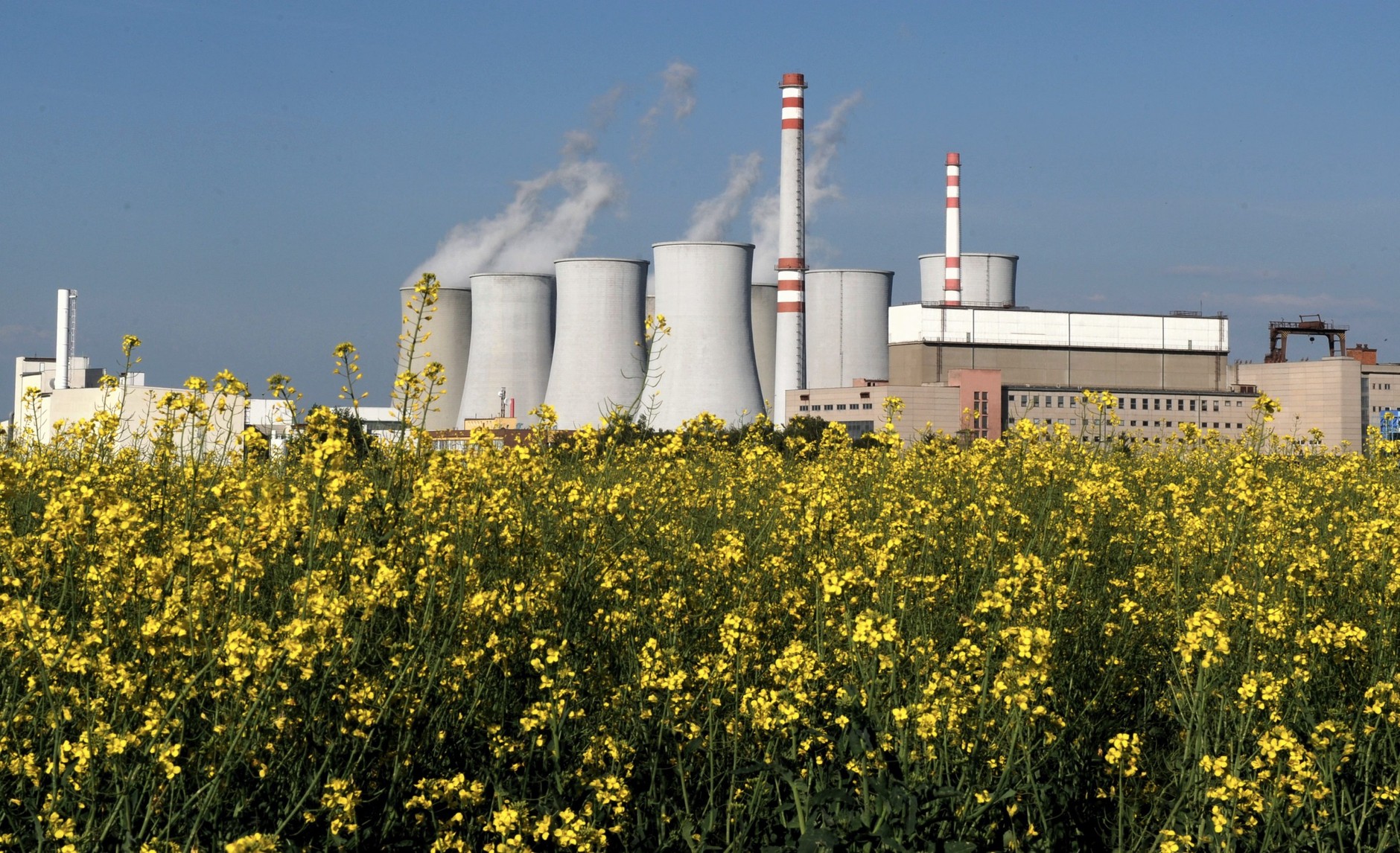
Nuclear power plant in Jaslovské BohuniceFilip Singer / PAP
The strategic element of this relationship was technological specificity. VVER-440 reactors require fuel designed for a specific type of installation, and for a long time the only manufacturer able to supply it on an industrial scale was Rosatom.
Only after 2022 did the real process of diversification begin. The Slovak operator has signed agreements with the American Westinghouse and the French Framatome, which are intended to gradually replace Russian supplies.
Slovak veto
Slovakia under Robert Fico's government regularly torpedoes the EU's policy towards Russia, primarily using the mechanism of unanimity in foreign policy. Here are some examples:
Blockage of the 18th sanctions package (July 2025)
Slovakia has suspended the adoption of the 18th sanctions package for over six weeks. Fico did not question the content of the sanctions themselves, but used the veto as a pressure tool in the dispute over the EU's plan to phase out imports of Russian fuels by 2028. He demanded guarantees or exceptions due to the long-term gas contract with Gazprom (until 2034) and the risk of multi-billion losses. Ultimately, he withdrew his veto.
Blocking of the 19th sanctions package (October 2025)
Even before the official proposal of the package, Fico announced his opposition, making support dependent on EU actions on energy prices and support for the automotive industry. In October, it actually vetoed the package and for several weeks was the last state to block unanimity. He rhetorically rejected the point of sanctions, claiming that they would not bring Russia to its knees. The veto was lifted only after the provisions on energy and industry were included in the European Council conclusions.
Opposition to REPowerEU and application to the CJEU (2025–2026)
Slovakia opposed the plan to phase out Russian gas, calling it “imbecile” from the point of view of energy security. Together with Hungary, she voted against it, but the regulation passed by a qualified majority, so she could not block it. In response, both countries decided to pursue legal action – in December 2025, they announced a lawsuit, and at the end of January 2026, they formally appealed against the regulation to the Court of Justice of the EU, questioning the manner in which it was adopted.
Blockage of the 20th sanctions package (February 2026)
Slovakia, together with Hungary, blocked the adoption of the 20th sanctions package just before the anniversary of Russia's full-scale invasion. The key reason was the dispute over the Druzhba oil pipeline – after the interruption of supplies, both countries accused Ukraine of delaying repairs. The veto was used as an element of pressure to force the restoration of oil transit. At the same time, Fico argued that sanctions were self-destructive and did not bring the end of the war closer.
Threat of blocking the extension of personal sanctions (March 2026)
At the beginning of March 2026 Slovakia threatened to block the extension of sanctions against Russians covered by them. These sanctions must be renewed unanimously. Slovakia demanded that, among others, be removed from the list: one of Russia's richest men, Alisher Usmanov, and Russian-Israeli billionaire Mikhail Fridman, claiming that the evidence against them was insufficient. Failure to consent would mean the automatic expiration of sanctions. Finally, on March 14, Slovakia withdrew its opposition.