
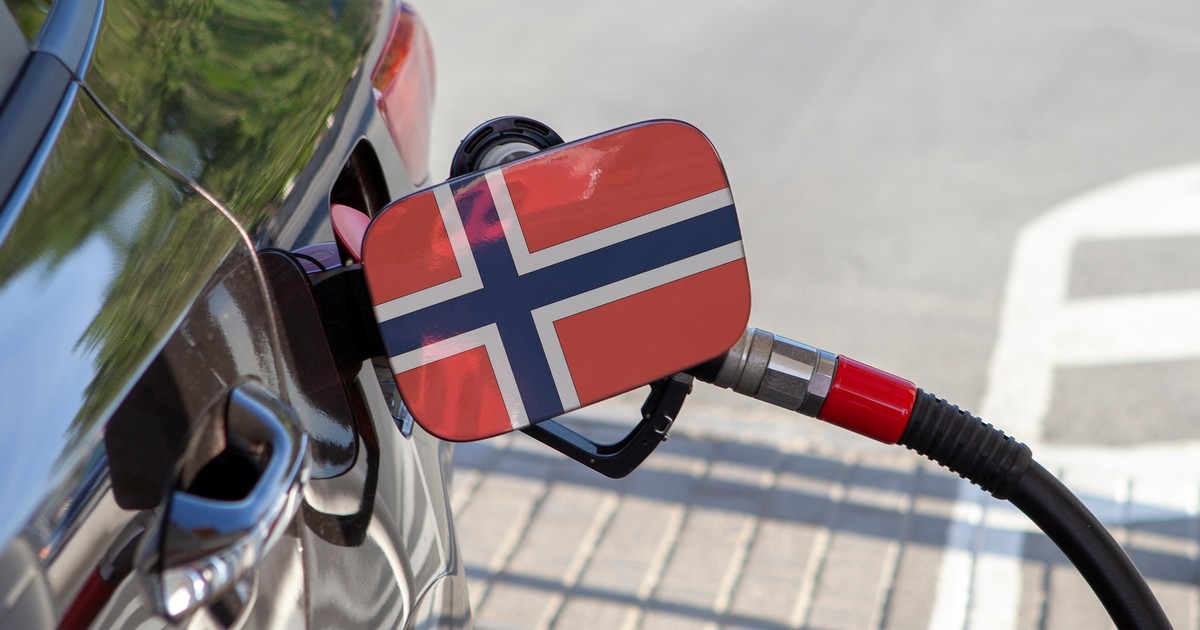
Norway's strategic fuel reserves only cover 20 days of demand, which, compared to neighboring Sweden and Finland, which maintain 90 days of reserves, seems to be an alarmingly low level.
In an interview with the “Aftenposten” daily, Jonas Gahr Stoere admitted that the previous strategy was based on incorrect assumptions, which in the current situation turn out to be insufficient.
— As a country extracting raw materials, we relied on the continuity of production and the proximity of our own refineries. In times of stabilization, this was considered sufficient security, which allowed the stock levels to be kept low, explained the head of government.
Read also: Norwegian weapons sell out quickly. Poland is one of the purchasing leaders
The blockade of the Strait of Hormuz and the sharp increase in oil prices resulting from the conflict in the Middle East have hit the Norwegian fuel infrastructure, revealing its weaknesses. Although the country achieved record revenues from oil and gas exports in March 2026, it is unable to ensure stability of supplies on the internal market.
Norwegian Paradox. A country full of oil has an oil problem
As noted by the Norwegian media, this situation exposes the paradox in which Oslo finds itself – a country that is an energy giant on the international arena is struggling with fuel shortages in its own backyard.
According to data from the Norwegian Statistical Office SSB, in March 2026, Norway sold 56.6 million barrels of oil for EUR 4.9 billion, and gas revenues amounted to EUR 5.9 billion.
This country is a key supplier of energy raw materials for countries such as Germany, Great Britain and others Poland, where it accounts for approximately one third of gas supplies. What is even more surprising is the fact that Norway does not have adequate stocks of ready fuels or infrastructure that could ensure energy security in crisis situations.
Read also: Poland will produce weapons for Norway. There is a contract
Commentators of the Norwegian dailies “Aftenposten” and “VG” point out the irony of fate: a country that recently enjoyed record profits from the export of raw materials now it is forced to take steps to reduce fuel consumption by its citizens. The introduction of remote work, although it may prove to be an effective temporary solution, will not solve the structural problem facing Norway.


