People in Turkey are largely satisfied with their government's handling of the regional crisis related to the war in Iran. Over the past 12 years, support for Turkey's policy towards the Near and Middle East has never been as high as it is today, according to a survey conducted by the Metropoll institute. Slightly less than half of respondents rated Ankara's course as successful. In previous surveys, this value always fluctuated around 37%.
Foreign Minister Hakan Fidan was involved in preparations for the talks in Islamabad and at the end of March he took part in a meeting of four countries with the participation of Pakistan, Egypt and Saudi Arabia, the aim of which was to initiate a direct dialogue between the US and Iran. Moreover, Türkiye is one of the countries that act as intermediaries between Washington and Tehran.
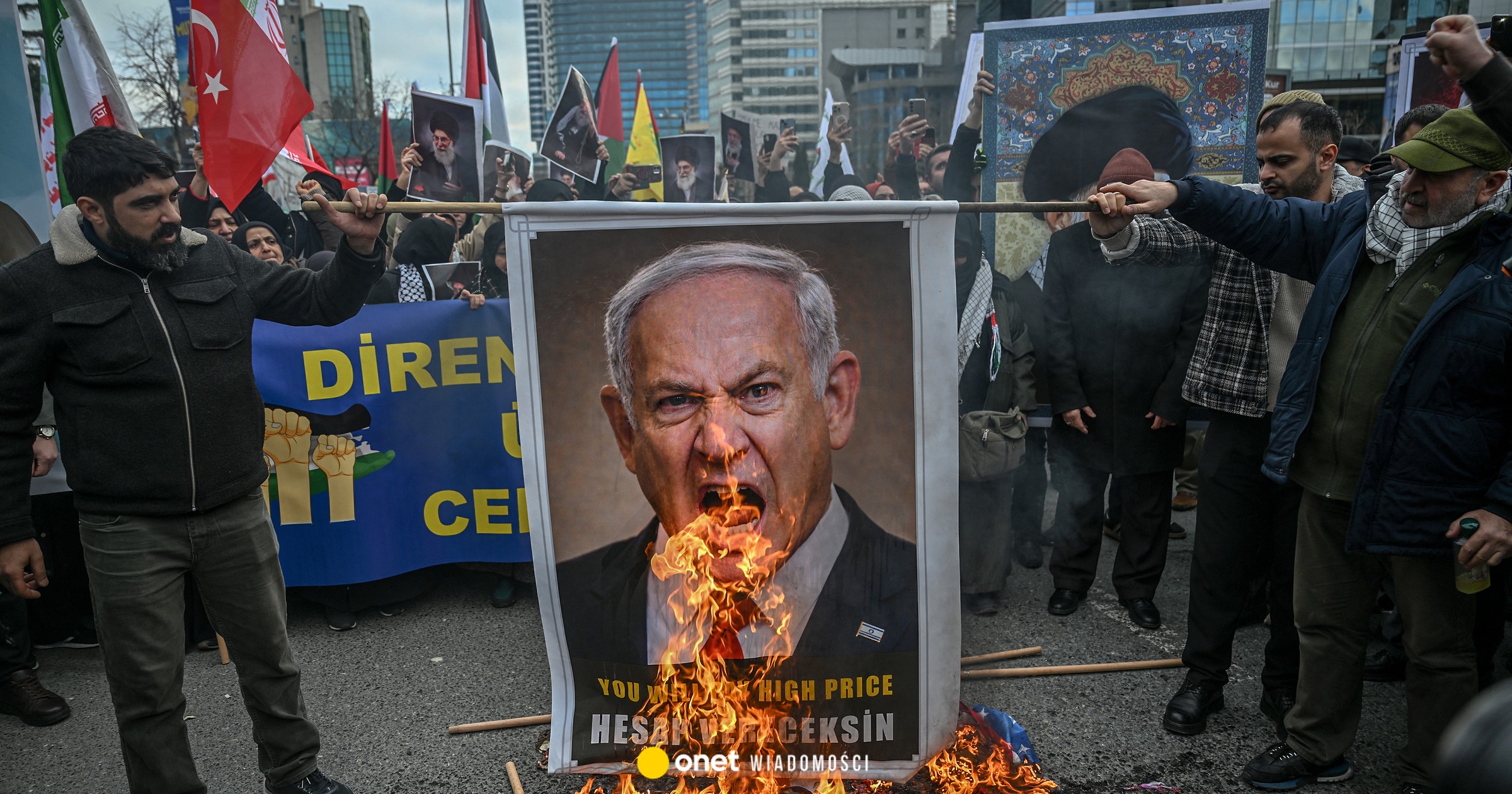
On the other hand, the government of Recep Tayyip Erdogan sharply criticizes the third party in the war with Iran: Israel. Just how harsh the tone is now is shown by the exchange of blows between the two governments last week.
The Istanbul Prosecutor General's Office filed charges on April 11 against 35 people – including Israeli Prime Minister Binyamin Netanyahu – in connection with an Israeli military operation against an international convoy of ships that was supposed to deliver humanitarian aid to the Gaza Strip.
In response, Netanyahu publicly attacked Erdogan, accusing him of “helping the terrorist regime of Iran” and repressing his own Kurdish population. The Turkish Ministry of Foreign Affairs, in turn, responded with a statement in which Netanyahu he was called “the Hitler of our times”.
This mix of diplomacy and rhetorical attacks is nothing new. Dealing with ambiguity and using it in politics is one of Erdogan's key competencies. However, the structural rivalry between Turkey and Israel has become entrenched in recent years and was once again exposed by the war with Iran. Currently, both countries see each other as a threat to their security.
A new phase of the conflict
The example of Iran shows that the Israeli government, led by Netanyahu, is pursuing a scenario in which the regime in Tehran is either overthrown or weakened so much that it no longer poses an existential threat to Israel. Netanyahu is willing to accept the power vacuum and chaos that would almost inevitably follow. From his point of view, a weak Iran in chaos is easier to control than a stable regime that is getting closer to acquiring a nuclear bomb.
Türkiye, however, wants to prevent such a scenario. Not because it sees Tehran as an ally — in Syria, for example, the two countries have been pursuing conflicting goals for years — but because it sees the Iranian regime as the lesser of two evils. If it fell, it would create space for the Kurdish movement to gain greater autonomy. Ankara sees these aspirations as a security threat.
The article continues below the video
Another aspect is the refugee movements that would arise as a result of the implosion of Iran. Iran has a population of about 90 million – four times the size of Syria before the civil war began. The fighting at that time forced over 6 million people to flee abroad, causing the largest refugee crisis in recent decades. The consequences of this crisis affect Turkey to this day.
In Syria, Ankara and Jerusalem have also pursued conflicting goals in recent years. Türkiye is one of the most important supporters of the new leader Ahmed al-Shar and is focusing on the most stable, centrally managed state possible.
The motives behind this are similar to those of Iran: Ankara wants to prevent the strengthening of the Kurdish autonomous areas and at the same time stop new waves of refugees.
Israel, on the other hand, does not trust the new authorities in Damascus and accuses them of dangerous Islamist ideology. From this point of view, it would be easier to keep a decentralized Syria in check with weak authorities.
These contradictions are not an isolated incident. They point to a fundamental difference in how the two countries understand security and order in the region — and their own roles in this structure.
From Ankara's point of view, Israel justifies almost any expansion of its military maneuver space with its own security — even if it comes at the expense of the territorial integrity of other states. For example, Israel has created buffer zones in Lebanon, Syria and the Gaza Strip; in the Palestinian West Bank, it has significantly expanded settlement activities.
Israeli Prime Minister Binyamin Netanyahu and Turkish President Recep Tayyip Erdogan during the UN General Assembly in New York, September 19, 2023.TUR Presidency/Murat Cetinmuhurdar / Handout / Anadolu Agency via Getty Images / Getty Images
In mid-March, the Turkish Foreign Minister said in an interview with Anadolu news agency that after the war with Iran, Israel “he won't be able to live without his enemy.” According to the Turkish interpretation, Ankara is next on the list and Israel is now trying “declare Turkey the new enemy.
Erdogan also said in 2024 that after the victory over Hamas, Israel “will not limit itself to the Gaza Strip”, but will sooner or later also target Turkey.
Mutual distrust
This narrative resonates among the Turkish population. Polls have shown an extremely negative image of Israel for years. According to a study conducted by the Pew Institute in June last year, 93 percent respondents in Turkey expressed negative attitudes towards the Jewish state. More than a third of Turks see Israel as the greatest threat to their country.
This distrust is mutual. The Jerusalem Post recently quoted Israeli analyst Yoni Ben Menachem as saying that “Türkiye is the new Iran.” The belief behind this is that if Tehran weakens, Ankara may try to take over a leading role in the region.
The collapse of the Shiite axis will create a vacuum that Türkiye, together with Saudi Arabia, Egypt and Pakistan, wants to fill by creating a “Sunni power bloc,” the newspaper quotes Menachem as saying.
This is not a temporary difference of opinion that is emerging here between Turkey and Israel. Rather, it is an enduring rivalry between two regional powerswhich increasingly see each other as strategic adversaries. The more both sides want to push their interests, the greater the risk that the competition will at some point turn into some form of confrontation.
I’m Ashley Davis as an editor, I’m committed to upholding the highest standards of integrity and accuracy in every piece we publish. My work is driven by curiosity, a passion for truth, and a belief that journalism plays a crucial role in shaping public discourse. I strive to tell stories that not only inform but also inspire action and conversation.