From PLN 500 to images worth a fortune. How to invest in art?

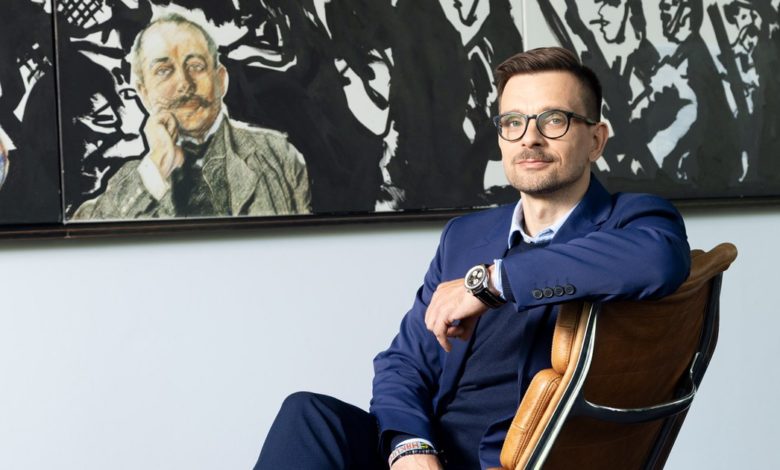
Liviusz Krawczyk is a recognized collector, although he is an economist by profession. Before the auction of its part of the collection, which is scheduled for June 10 at DESA Unicum, we talk about how he built the collection and what can advise those who also want to try.
Mateusz Madejski, journalist Business Insider Polska: How did you start investing in art? It was a impulse?
Liviusz Krawczyk: No, I wouldn't put it that way. It was a rather thoughtful decision resulting from the fact that I wanted to diversify savings. However, I went through an interesting path because I had no contact with art before. That is why I think that everyone has a chance to become a collector if he opens his horizons accordingly. Of course, there are people who have been collecting art for generations, but not only they can become collectors
Read also at Business Insider
Do you see the flourishing of this market with us?
Yes, you can see it! Although it is still a young market. We have had this market for a larger scale for three decades. Therefore, it is difficult for us to compare here with the French or even with Germany.
Knowledge helps or can everyone try?
When my adventure with art began, it didn't matter to me whether it was old or contemporary art. I was primarily guided by calculation – I analyzed the market and used the knowledge of those who have been in the subject for years. In time, however, this began to change. Man learns, develops, begins to look differently. In my case, the post -war avant -garde took a special place. But to understand this current, and above all feel emotionally, you need to have some preparation. Especially that the picture moves us … To feel all this, we must have knowledge, because we perceive modern art completely differently than the old. Here, it is often not enough to look, you still need to know how to look.
Is it possible to invest “cold”?
So in your case is it no longer cool investing?
No, although of course you can go this way. It can be assumed that a given picture will gain so much and so much in the assumed time … I also have a feeling that art is an act, which, however, gives us something more than the financial aspect – even when it is treated purely investment.
Let's assume that art in someone does not arouse emotions at all. Does it make sense for such a person to invest in her?
If art does not arouse emotions at all, but I would advise you to look for other investments.
Apparently, the first lord of the graphic artist you bought cost about PLN 500.
Yes. The first work I bought was Jan Tarasin's graphics – it cost about PLN 500. It was at the turn of 2007 and 2008. It was then that I began to be interested in post -war abstract art. Of course, I did not assume that I would build a large collection. I didn't even think about myself as a collector. But I felt it really attracted me. It started.
Until 2012, I had only a few, maybe a dozen or so works. It was a slow, natural process – nothing happened day by day. Even then, the work of interest to me could cost tens of thousands of zlotys, and I was not ready for such investments yet. The breakthrough came around 2014-2015, during the crisis in the European Union (the so -called Greek crisis – ed.), After a global financial breakdown. I had the feeling that the value of money could be devalued. And that's when I thought that art could be a really solid asset for difficult times.
Over time, these initial calculations began to give way to emotions. I discovered how deeply contact with art can move and how important it becomes not only its material aspect, but also spiritual.
What is worth remembering, how do you want to get involved in such investments?
Certainly about the fact that art cannot be thought in a short term. Unlike the stock market or cryptocurrencies, where investors often wonder what will happen to their portfolio in a week, month or even the next day. In the case of art, this time horizon is much longer. If someone counts on the fact that the image will gain value within a month, they can be very disappointed. Here you need patience, knowledge and trust in your own taste, not just calculation.
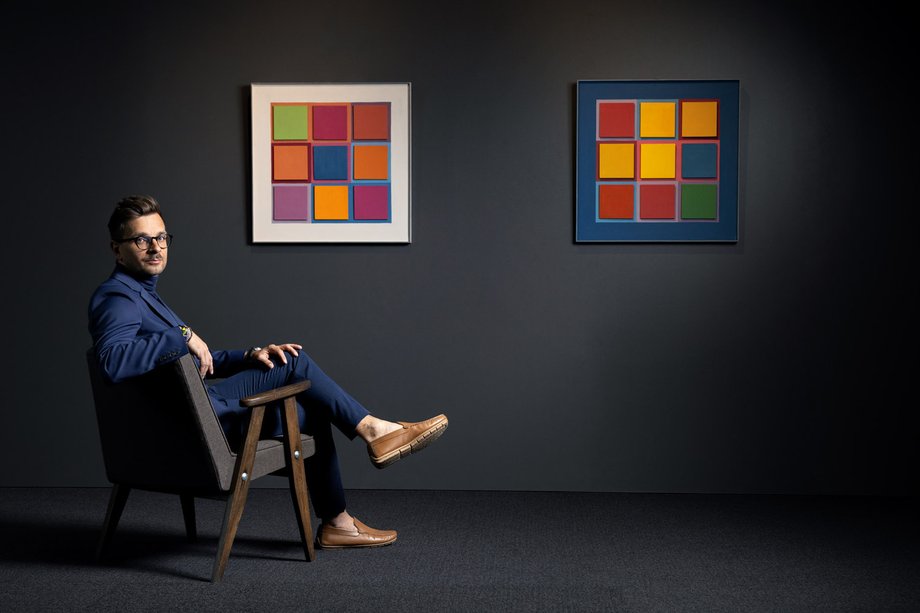
Liviusz Krawczyk
|
Marcin Koniak / Desa
The question is whether investing in art will defend itself in the AI era.
I am deeply convinced that art requires human intention. I believe that just such an art behind which real thought, emotion will always defend itself.
Where is it worth keeping your collections? House is a good solution?
Real collectors should have their works on the wall.
Investing and risk
Is this not risky?
I do not think that security is a real problem when collecting art. Works can be insured very sensibly today. Insurance includes flooding, fires or theft, and the theft of works of art alone, contrary to appearances, is rare. The collectors' environment is quite narrow, many people know each other and know what is in whose hands. It is really hard to imagine that the image from an uncertain source will go to a serious buyer.
Suppose someone steals a picture worth a million zlotys and tries to sell it. An ordinary Kowalski will not buy it, even if he is very wealthy, because he does not know what he is dealing with. And the collector? This will start asking questions and will probably never happen to the transaction. Of course, there are internationally recognized artists in Poland, like Wojciech Fangor, and you can imagine an attempt to sell such a work abroad. But even then I think it is unlikely. And if something really happens – there is insurance for this.
See also: Just behind Japan, but before Germany. In this market, Poland is a key player
On June 10, there will be auction of works that the Lord gathered.
I cordially invite you. A few months ago we had an exhibition of the collection in BWA in Katowice. It was then that for the first time I really realized how a large collection was gathered – however it sounded. That moment was an impulse for reflection: maybe it is worth narrowing the collection a bit, “shallow”.
Currently, it covers the works of about a hundred artists – this is a very wide cross -section. Now we want to focus more on a smaller, selected group of creators, but to approach it deeper, more consistently. And this will require new purchases – and it is for this purpose that we want to partially allocate funds from the upcoming auction.
How many works do you have in the collection now?
This is a collection built over the years – from graphics bought for several hundred zlotys to images with estimates of 500-700 thousand. zloty. Looking at it from the perspective of two decades, I can say that the average annual rate of return was double -digit and there were also cases similar to three -digit. From this point of view, this is a very interesting act. Not to mention the emotions that can cause communing with art.