Iran backtracked on reopening the Strait of Hormuz and reimposed restrictions, citing the maintenance of the US blockade. The decision is accompanied by maritime incidents and a series of statements from Tehran and Washington.
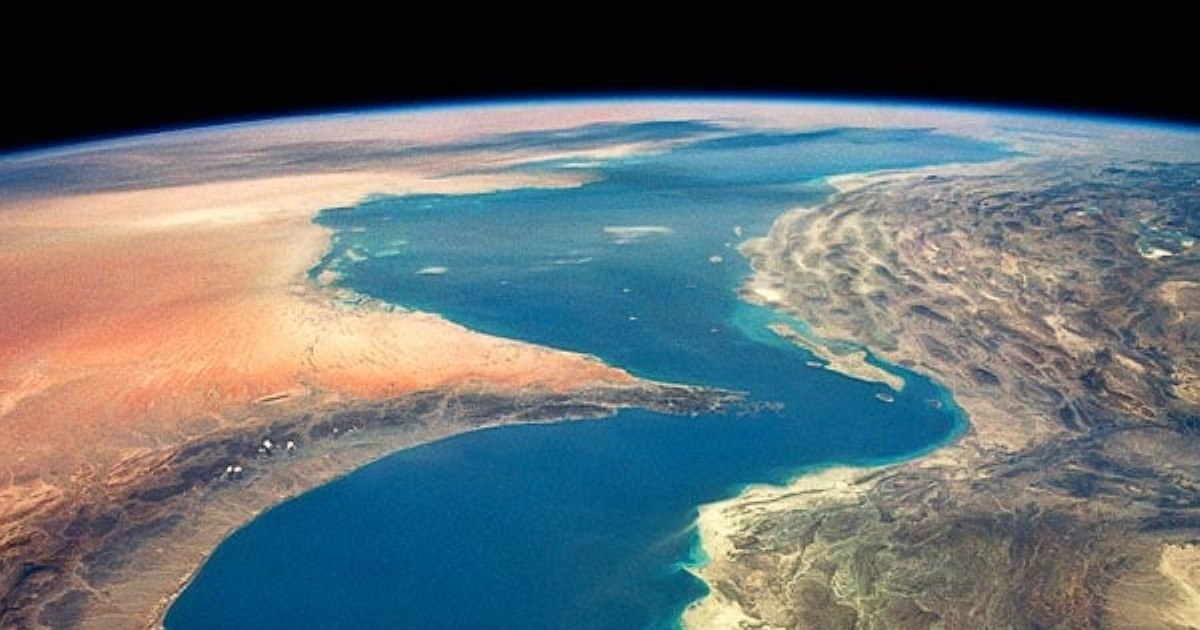
Satellite image of the Strait of Hormuz. PHOTO: NASA
Iran has announced that it has reintroduced restrictions on the Strait of Hormuz, shortly after announcing its reopening, amid heightened tensions with the United States. The decision comes after Washington signaled that it has no intention of lifting the blockade on Iranian ports, which Tehran considers an essential condition for freedom of navigation.
The situation in the area was also amplified by maritime incidents reported during the day of Saturday, April 18. A British maritime monitoring agency reported that ships of the Islamic Revolutionary Guard Corps (IRGC) opened fire on an oil tanker trying to cross the Strait of Hormuz. At the same time, Reuters reported that an Indian-flagged vessel loaded with crude oil had also been attacked in the same sensitive maritime area.
Iranian authorities later confirmed that the strait had returned to “its previous status” and it is again “under the administration and strict control of the armed forces“, according to the Khatam al-Anbiya military command.
Tehran linked the maintenance of these restrictions to the fact that Washington maintains the blockade in the area and requested “guaranteeing full freedom of navigation for ships traveling from Iran to other destinations and from other destinations to Iran”notes The Guardian.
In an intervention made in Antalya, on the sidelines of a diplomatic forum, Iranian Deputy Foreign Minister Saeed Khatibzadeh accused the United States of “they cannot impose their will to besiege Iran while Iran, in good faith, is trying to facilitate safe passage through the Strait of Hormuz.”
Iran demands that the US step back in the strait
On the military front, the IRGC naval command conveyed, in a message published on the X platform, that the situation in Hormuz remains conditional on the decision of the United States to maintain the blockade.
“As long as the movement of ships from and to Iran is threatened, the status of the Strait of Hormuz will remain as it was before. Any violation of commitments by the United States will be met with an appropriate response,” Iran reported
Progress in negotiations is announced, but results are delayed
In parallel, negotiations between Tehran and Washington continue in a fragile climate. Iran's chief negotiator, Mohammad Bagher Ghalibaf, said recent talks had brought some progress, but differences of opinion remained significant, particularly on the nuclear issue and the Strait of Hormuz.
“We've made progress, but there's still a big gap between us,” he told state media, adding that “there are some issues that we insist on… And they have red lines. But those issues might be just one or two.”
On the other hand, US President Donald Trump stated that the United States carries “very good conversations” with Iran, but warned against any “blackmail”
related to the strategic maritime channel. He later praised US ally Israel, claiming that “other allies have shown their true colors in a time of conflict and tension.”
Neither side has provided clear details of the state of negotiations as the fragile truce nears expiration.
Donald Trump said the US blockade would “remains in full force” to a permanent peace deal and suggested that the Pakistan-brokered ceasefire, which was due to expire on Wednesday, might not be extended.