
Bulgaria can elect “Europe's new Viktor Orban” on Sunday. How former president Rumen Radev became the favorite and why he invoked the “Romanian scenario”


In Sunday's parliamentary elections, Bulgarians can bring to power a more moderate version of Viktor Orbán, in the person of former president Rumen Radev, whose coalition is leading in the polls, Krasen Nikolov, journalist of the Bulgarian publication Mediapool, tells the HotNews audience. Suspicions regarding possible Russian interference in the campaign, denounced by the current technocrat government in Sofia, led Radev to talk about a possible “Romanian scenario”, referring to the cancellation of the 2024 presidential elections.
- This article was made within the European project PULSE, in collaboration with Krasen Nikolov, from Mediapool.bg.
Bulgarians go to the polls on Sunday for the eighth round of parliamentary elections in five years, amid an endless political crisis in which fragile coalitions have failed to hold together, citizens have grown increasingly dissatisfied with the political context and economic situation, and confidence in democratic elections has waned.
This ballot may be different.
Former President Rumen Radev, who remained popular during his two terms in the largely ceremonial post, recently resigned and will run in Sunday's election, which he has a strong chance of winning.
His coalition, Progressive Bulgaria, is credited with a score of 30%-33%, ten percentage points ahead of the next-ranking party, former Prime Minister Boiko Borisov's GERB party, which has 19%-21% support.
Who is Radev?
Who exactly is the most likely candidate to become prime minister?
During his two terms as president, Radev promoted internal reforms and supported the fight against corruption within the judiciary and security services.
Instead, his foreign policy profile is defined by his opposition to military aid to Ukraine and his criticism of Kiev, Krasen Nikolov, a journalist with the Bulgarian publication Mediapool, explained to HotNews.
Radev also explicitly wants to resume relations with Russia.
Some have speculated that Radev may be a variant of Hungarian Prime Minister Viktor Orbán, fresh off defeat in last Sunday's election, with a friendly approach to Moscow being one of the common traits.
But, Nikolov points out, Radev notably refrained from disrupting the Brussels consensus while representing Sofia's official position at the 2021 and 2022 summits.
Who else enters Parliament
And yet, things are not so simple, and despite Radev's comfortable score, the road to forming a coalition will not be an easy task.
Beyond Progressive Bulgaria and GERB, the reformist, liberal and pro-European coalition “Continuing the change – Democratic Bulgaria” (PP-DB), now credited with 12-14% of the votes, will enter the parliament, probably in third place.
In total, seven political parties are expected to win seats in the upcoming parliament.
Among them is the US-UK-sanctioned Movement for Rights and Freedoms (DPS) – A New Beginning, led by mogul Delian Peevski. His party currently scores 9-10% in the polls.
The radical pro-Russian party “Renaissance” occupies the fifth position, with 7-8%, followed by the populist party MECH, with 6%, and the pro-Russian Bulgarian Socialist Party, with 4-5%.
The game of coalitions and the long-awaited stability
Depending on the final result – and who will eventually cross the parliamentary threshold – Radev will have several options for forming a stable coalition.
The most stable option would be a grand coalition with Boiko Borissov, but it carries significant risks to the reputation of Radev, a critic of the corruption scandals that have marked Borisov's tenure.
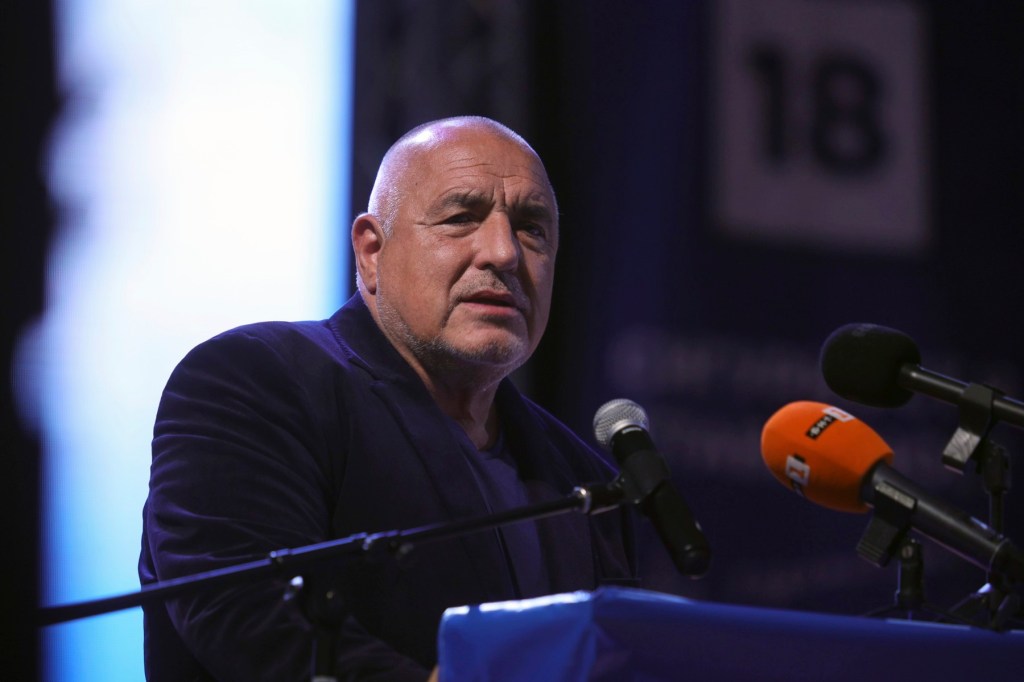
The second option is a more fragile alliance with PP-DB. And this involves risks.
Detailed sociological analyzes indicate that almost half of Radev's electorate has anti-European and pro-Russian sentiments, which creates a delicate situation for the leader, explained journalist Krasen Nikolov.
Ultimately, political stability in Bulgaria will depend on the exact score of the parties in Sunday's election.
“If they could get more than 110 seats in parliament (out of 240), stability would be possible. However, they could very well get less,” Parvan Simeonov, a political scientist and owner of Myara, one of Bulgaria's leading polling agencies, observed for the Mediapool website.
“A clear mandate would mean stability. The really important question is whether Radev will succeed in building a stable political party,” he warned.
A complicated period
The political crisis that Bulgaria is going through has generated not only dissatisfaction, but also apathy and distrust in democratic elections.
Prime Minister Boiko Borisov led the country from 2016 until protests in 2020 forced him to resign in 2021. His party, GERB, remained Bulgaria's most important political force.
In recent years, Bulgaria has had a series of short-lived governments, punctuated by periods of technocratic rule.
The last interim government was installed by President Iliana Iotova in February, after the fall of the main coalition, following massive anti-corruption demonstrations that illustrated citizens' discontent.
Bulgaria adopted the euro on January 1 and fears of rising prices were rife.
Rising inflation, although not dramatic, youth unemployment and a lack of opportunities are troubling Bulgarians, the country with the lowest GDP per capita in the EU.
Last year's protests were supported, at least initially, by the reformist and pro-European PP-DB coalition, which is pushing to play a bigger role in Bulgarian politics, but in the end, it looks like Radev will be the one to profit from the demonstrations.
Why Radev remained popular
Before taking over as president, Rumen Radev was a high-ranking officer in the Bulgarian Army, a general who distinguished himself as a MiG-29 fighter pilot and commander of the Bulgarian Air Force.
In addition to his studies at the Bulgarian military schools and the Military Academy in Sofia, he is a graduate of some American military institutions.
During the ten years of his presidential mandate, Radev openly supported reformist policies at the national level.
He managed to maintain his popularity by presenting himself as an alternative not only to those in power, but also to the entire dominant narrative, Simeonov explained.
At the start of the COVID pandemic, for example, he took a more critical stance towards the government, which imposed strict restrictions.
For the resumption of relations with Russia
Radev has remained a fierce critic of the EU's approach to Ukraine.
Five years ago, Radev caused a diplomatic scandal with Kiev by declaring Crimea to be Russian.
He frequently said that Bulgarian politicians advocating military aid to Kiev were inciting war and suggested that Ukraine bears part of the responsibility for the Russian invasion, journalist Krasen Nikolov explained.
His position that Bulgaria should not send weapons to help Ukraine led to an openly hostile exchange with Ukrainian President Volodymyr Zelenskiy in Sofia in 2023.
“God forbid tragedy strikes you and you wake up in my place, without anyone who shares your values giving you weapons. What would you do then? Would you say: 'Putin, take Bulgarian territories'? No, as a true president, I'm sure you wouldn't compromise your country or its sovereignty,” Zelenskiy replied to Radev.
Now, he became more cautious. In political debates, Radev and associates have conspicuously avoided taking firm positions on the war in Ukraine, Nikolov explained.
Reuters notes, however, that after the departure of Viktor Orbán, Radev positions himself as the only EU leader left willing to improve relations with Moscow.
“We are the only member state of the European Union that is both Slavic and Orthodox,” he said in an interview with Bulgarian journalist Martin Karbovski and quoted by Reuters. “We can be a very important link in this whole mechanism for restoring relations with Russia,” he added.
A massive social media campaign for Radev
The campaign in Bulgaria was marked by suspicions regarding the fairness of the vote.
In March, an investigation by Mediapool revealed that various TikTok accounts posing as news agencies had been broadcasting content designed to build a specific narrative in favor of Rumen Radev and his political formation.
Although these accounts are not officially linked to each other, they appear to be acting in a coordinated manner, explained journalist Nikolov.
The clips typically follow two formats: still images overlaid with possibly AI-generated background voices, or clips from the president's actual speeches and interviews, some reused years after they were originally filmed.
Shortly after Mediapool's investigation, the Balkan Free Media Initiative (BFMI), in collaboration with data analytics firm Sensika, published a report showing that despite not having an official account on TikTok, Rumen Radev had amassed 90 million views on the platform.
The report suggests that this coverage is generated by networks whose “behavior can hardly be explained by organic activity alone.”
In an interview with Mediapool, BFMI founder, former BBC director Peter Horrocks, pointed out that Radev is dominant on social media, but warned that what appears “organic” is not.
“One thing is certain: networks that were previously inactive in Bulgaria are now operational and have a huge scale,” he said, pointing out that in parallel, businessman Deian Peevski is building his own digital infrastructure.
Radev invoked the “Romanian scenario”
Following these revelations, the Bulgarian interim government requested, and the EU subsequently activated, the mechanism to combat disinformation.
Rumen Radev responded harshly to the interim government of Andrei Gyurov, accusing him of trying to discredit the elections.
He claimed that the administration is fueling panic with a “possible Romanian scenario” – referring to the cancellation of the 2024 Romanian presidential election.
“Their plan is in full swing, with EU help officially requested, along with insinuations of alleged hybrid foreign interference in the elections. Is anyone actually seeing such interference on the ground?” Radev said a fortnight ago.
The goal, continued Radev, is “to discredit the elections by establishing a parallel with the Romanian model”.
“These people cannot even understand the extent to which their behavior damages Bulgaria's reputation within the EU. I urge all Bulgarian citizens not to allow this brutal and absurd attempt to steal the election,” he added.
The PULSE project is a European initiative to promote cross-border journalistic partnerships, co-financed by the European Commission (DG CONNECT) within the Multimedia Actions through grant agreement LC-02772862. HotNews.ro collaborates within the project with other prestigious publications from Europe: Delfi (Lithuania), Deník Referendum (Czech Republic), the largest Austrian newspaper Der Standard (Austria), some of the largest publications in Greece – EFSYN, El Confidencial – Spain, the largest Polish newspaper Gazeta Wyborcza, the oldest Bulgarian analytical and information site Mediapool, one of the largest independent Hungarian publications HVG and Italian economic profile newspaper Il Sole 24 Ore, one of the oldest and most powerful publications in the Peninsula.
Three renowned transnational media organizations – OBCT (Italy), N-ost (Germany) and Voxeurop (France) will coordinate the project activities.


