Prime Minister Bolojan details the plans regarding state companies. “Romania can no longer afford the waste until now”

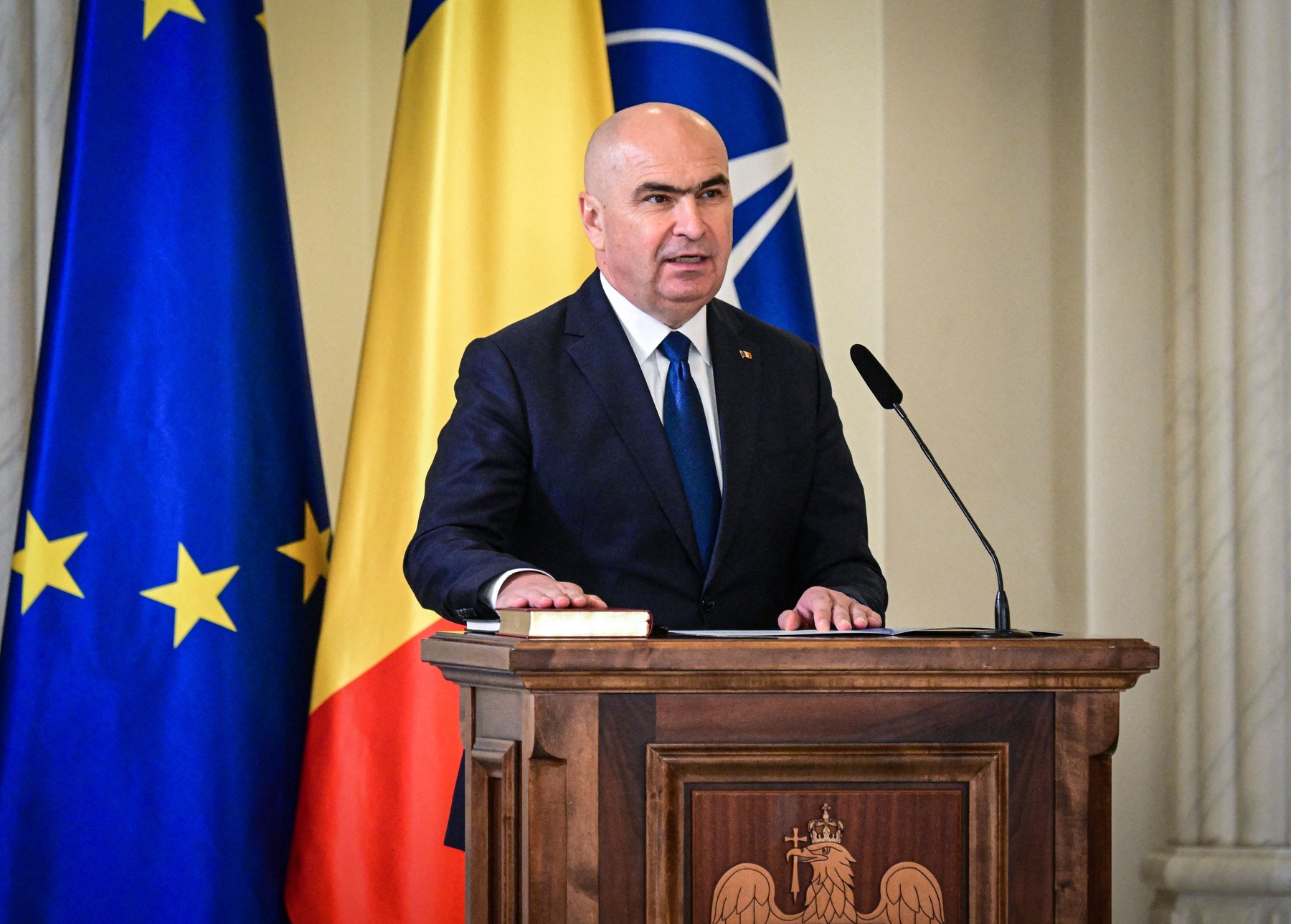
Prime Minister Ilie Bolojan announced, Thursday evening, the directions of action for the reform of the first 22 state companies, explaining that we cannot accept situations in which companies that have been in bankruptcy for years continue to consume public money, informs News.ro. State companies have generated losses of 14 billion lei in recent years, money that could have gone to important investments for Romanians.
“We have a clearer picture of state companies and a structured work plan for the next period. Romania has over 1,500 companies in which the state is a shareholder, and many of them operate inefficiently and generate significant losses for the public budget. In total, we are talking about 14 billion lei in losses in recent years, money that could have gone into important investments for Romanians,” wrote Prime Minister Ilie Bolojan on Facebook Thursday evening.
“The state must act as a responsible owner”
He reiterated the idea that the reform started with a pilot project aimed at 22 energy, transport and industry companies, which accumulated, in a single year, budget debts of over 4 billion lei and losses of over 1 billion lei.
“This is the annual bill that Romanians bear due to the lack of decision. This reform starts from the principle that the state must behave as a responsible owner. This means knowing clearly what it owns, why it owns and what it does next with each company. The problem has been accumulated for years. Based on this analysis, we have established several directions of action”, stated the prime minister.
He announces that critical infrastructure companies, such as ELCEN, Oil Terminal or CFR SA, will be supported through investments and a more professional administration, because they have an essential role in the functioning of the economy.
“At the same time, for companies with a strategic role, such as Avioane Craiova or Romaero, decisions will be made in coordination between the institutions involved, based on independent analyzes and audits, so that it is clear how their industrial potential can be better exploited. Where modernization is needed, we consider aligning with European models, such as the case of the Boiler Control Company (CNCIR), which will be reorganized to become a more competitive structure and closer to standards similar operators in Europe”, explains the prime minister.
What happens to loss making companies
He also announces that companies with problems (losses, subsidies increasing year by year), such as CFR Călători, Metrorex or TAROM, enter a process of operational recovery, with efficiency measures and international expertise.
“We can no longer prolong situations that produce losses year after year. Where there are overlaps and inefficiencies, we will do mergers and integrations. For example, in the case of companies like CFR Telecommunications or Tipografica Filaret, the goal is to reduce costs and increase efficiency. And where companies no longer have a future, we close them gradually and in an orderly manner. Cases like CFR Marfă or Petrotrans show why this reform can no longer be postponed,” the prime minister said.
Ilie Bolojan appreciates that “we can no longer accept situations in which companies that have been in bankruptcy for years continue to consume public money”.
“Petrotrans is a company in bankruptcy since 2007, which even today is not completely liquidated, but which continued to generate costs for the state, including annual payments for assets that exist only on paper”, stated Ilie Bolojan.
Stock market listings
The Prime Minister of Romania announces that, in parallel, a list of companies that could be listed on the stock exchange, through the sale of minority stakes, is being worked on, depending on the profile of each one.
“The state will remain the majority shareholder, and control over strategic decisions will be fully maintained”, explains the prime minister, specifying that among the companies considered are Hidroelectrica, Romgaz and CEC Bank, and for others, such as Transgaz, the Port of Constanţa or the Romanian Post, the process depends on the fulfillment of certain preconditions.
“This stage will contribute to the development of the capital market in Romania, to the increase of transparency and to a better performance of the state companies”, Bolojan said, explaining that it is only the first step.
In the next 30 days, a new wave of evaluations will be launched, based on criteria related to the companies' strategic importance and financial situation.
“Romania can no longer afford the waste and blockages of the past. The reform of state companies carried out to the end will mean real results in the economy and in the public budget, for the benefit of Romania and the people”, says Bolojan.
Deputy Prime Minister Oana Gheorghiu declared, on Thursday, in a press conference, that there are over 1,500 state companies, many of them with historical losses of approximately 14 billion lei, showing that the time has come to put an end to the waste, to take the necessary measures for the benefit of Romania, not the smart guys.
Gheorghiu announced that for the first time, Romania has a structured balance sheet, made on unitary criteria, of a pilot portfolio of 22 state companies, which accumulated cumulative budget debts of approximately 4.2 billion lei historical debts and recorded aggregate net losses of approximately 1.12 billion lei in the last reported year.