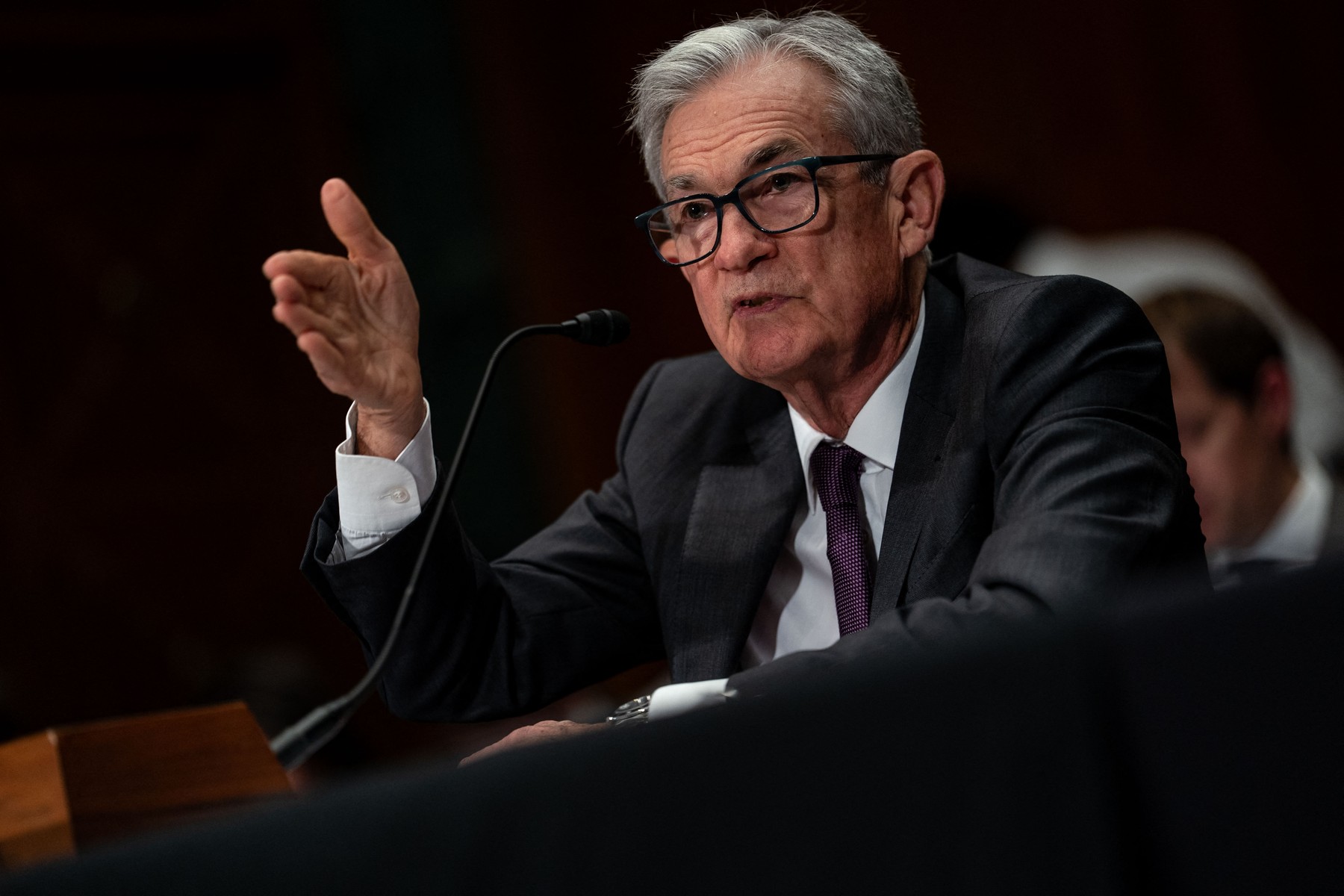
US President Donald Trump threatened on Wednesday to fire the head of the Federal Reserve (Fed), Jerome Powell, from his separate position on the Board of Governors of the US central bank, if Powell does not also give up this post when his term as Fed chairman ends on May 15, thus intensifying a complicated confrontation that has upset the usually smooth transition of power at the national bank, writes Reuters.
The Trump administration's threats against Powell, including an ongoing criminal investigation, could delay the US Senate's confirmation of Kevin Warsh as the US president's nominee to succeed Powell as Fed chief, but Trump, in an interview with Fox Business, pressed the investigation as a means of proving Powell's “incompetence” and said that if he doesn't go for good, “then I'm going to have to fire him.”
“Do you want Jay Powell to go?” Fox Business anchor Maria Bartiromo asked him.
“If he doesn't leave on time — I refrained from firing him, I wanted to fire him, but I hate to be controversial, you know. I want to be non-controversial, but he's going to be fired,” Trump responded. He gave no indication that District of Columbia Attorney General Jeanine Pirro would drop an investigation into a Fed construction project that the Republican administration has criticized for cost overruns.
Trump's language and tone underscore the stakes and potential complications facing the administration in Washington if Powell does not leave the Fed's seven-member board.
With more control over seats on the board, Warsh would have more freedom to set monetary policy and make other changes to the central bank that the US administration might want. Trump has appointed only three of the current members, and one of them, Stephen Miran, is filling a seat whose term has already expired and, as things stand, would have to be vacated for Warsh to join.
Warsh's confirmation process complicated by the ongoing investigation
Three of the Fed's seven governors were appointed by former President Joe Biden; Powell was promoted to head the central bank by Trump, but proved independent of the president's pressures and threats; and Trump appointees, such as Governor Christopher Waller, are thought to be unlikely to support sweeping changes or even follow Trump's advice on interest rates.
As a result, the US administration's efforts to make room on the board, such as by impeaching Fed Governor Lisa Cook, a case pending before the US Supreme Court, have become much more urgent in the debate over the Fed's status as an independent central bank able to set interest rates without political influence.
The status of Prosecutor Pirro's investigation into the possibility that Powell made false statements to Congress about the project at the Fed's headquarters in Washington, DC, remains unclear. Pirro was dismissed by a federal judge who ruled that the grand jury subpoenas were not warranted, but has yet to follow through on the promised appeal. Investigators from the DA's office made an unannounced visit to the site on Tuesday, where they were told to request an appointment.
Both Trump and Pirro said the investigation into the Fed building must continue regardless of how it affects Warsh's confirmation process. Sen. Thom Tillis, a Republican member of the Senate Banking Committee, said he considers the investigation a frivolous attack on the Fed's independence and will block Warsh's confirmation until it is dismissed.
Warsh, whom Trump has said he trusts to cut interest rates, which Powell and other Fed officials say would be imprudent given inflation is above the central bank's 2 percent target, has a hearing before the committee on April 21.
Trump has resented Powell since shortly after appointing him as Fed chief during his first term in the White House. But the Pirro investigation has strengthened Powell's stance to remain on the Fed's Board of Governors, which extends through 2028, the last full year of Trump's presidency. Fed chiefs usually leave the board when their tenure ends.
In a news conference after the Fed's March 17-18 monetary policy meeting, Powell said he has “no intention of leaving the board until the investigation is finally, transparently, and conclusively concluded,” and that he may stay on even after that, “depending on what I think is best for the institution and the people we serve.”