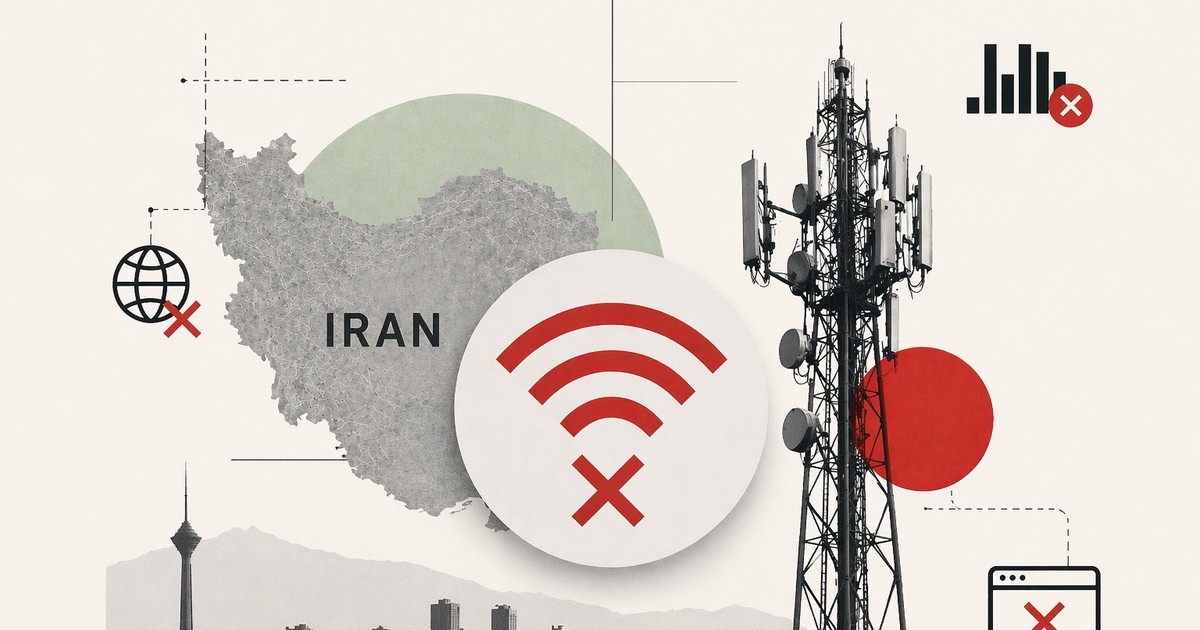
NetBlocks, an independent internet monitoring organization, reports in a post on the “X” account: “Internet blockade in Iran It's already the 47th day1,104 hours of international communications blackout for the general public. The blockade continues to severely limit Iranians' ability to check the safety of friends and loved ones abroad.
Despite the declaration of a ceasefire, the Internet in Iran remains cut off, and ordinary citizens are deprived of the right to access information and the international network.
In previous posts, NetBlocks also informed that “despite the blockade, regime representatives and influencers from the “white list” publish freely on social media. At this time Over 90 million people have been silenced by those who supposedly serve them.”
The IranWIRE website reports that despite a nationwide blackout in Internet access, Iranian authorities have granted global Internet access only to government members and people close to the regime. Before Iranian government spokesman stated that “white SIM cards” are allocated to those who are able to “convey the voice of the people”.
Death penalty for Starlink
Using Starlink terminals is not the solution. Under current regulations passed this year, in Iran, owning or using a Starlink terminal can even result in the death penalty.
Starlink terminal
|
Starlink / X (Twitter)
Moreover, three months ago, a report by IranWire reported that during the January protests Starlink in Iran blocked by 'military-level jamming'. The Iranian authorities use this for this purpose jamming technology likely provided by Russia or China. President Trump was supposed to talk to Elon Musk about this matter.
Information block
Iranian authorities completely cut off internet access on February 28on the day the war began, shortly after the first attacks by the US and Israel.
The lock scale means thatmany Iranians receive limited information about the war, beyond personal experiences and accounts from friends compared to other countries in the region. “When I talk to people in Iran, often they don't realize the full scale of the destruction and all events,” said Amir Rashidi, director of Miaan Group, a human rights organization in Iran.
“Their the only sources of information are Iranian state television and one satellite channel. They do not have access to other primary sources of information, and both media report news according to their own agendas. As a result, Iranians do not know many details or even actual news.”
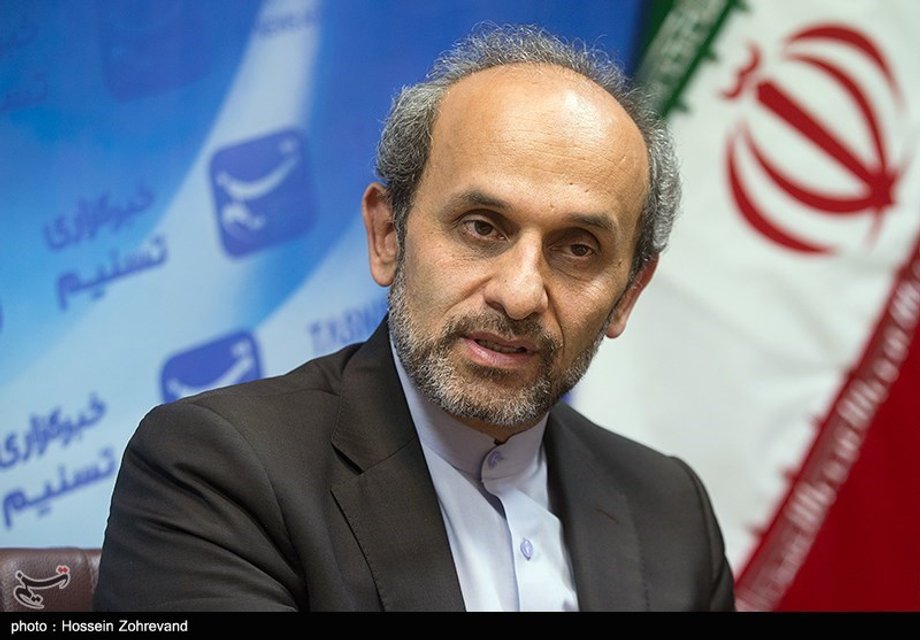
Peyman Jebeli – head of IRIB (Islamic Republic of Iran Broadcasting) – appointed by Ali Khamenei
|
Hossein Zohrevand / Wikipedia.com
Nowadays, most Iranians do access only to the Iranian national information network, which has been developed for 16 years and is completely separated from the global Internetwhich offers parallel services such as search engines, the Iranian version of Netflix and instant messaging.

Namava
|
http://www.namava.ir/
But the national network is, of course, closely monitored by the governmentand its platforms, including instant messaging, enable Iranian authorities to obtain information about their users.
Miaan Group's report showed that strict censorship is imposed on national search engines and all local platforms. In particular in Gerdoo, Iran's version of Google, searching for keywords like “war” or “ceasefire” yields no results: “As if the war did not exist in Iran or anywhere else in the world,” the report said. On another Iranian Internet search engine, a search for “war” returns results of a decisive Iranian victory.
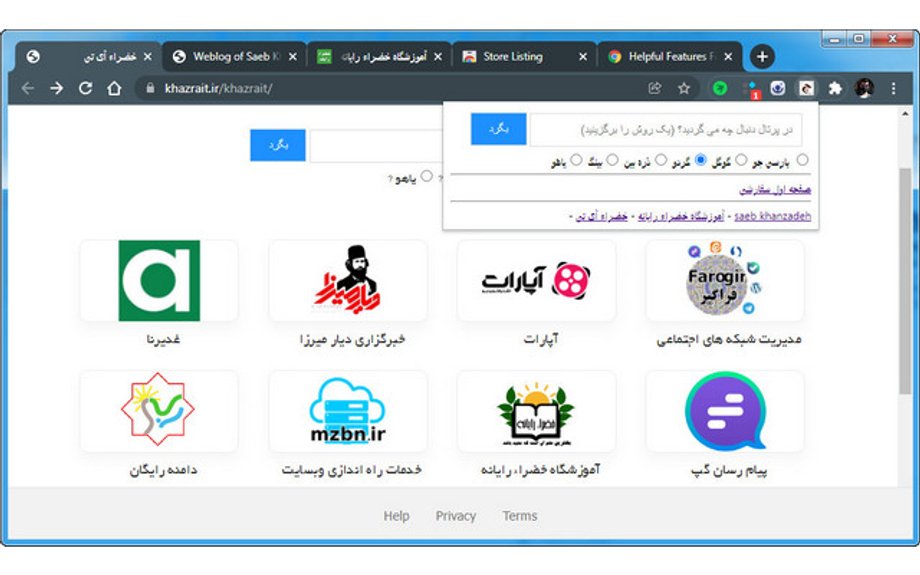
Iranian portal in Chrome
|
chromewebstore.google.com
Rashidi said: “National platforms disseminate information under very strict censorship and control, deliberately shaping public opinion.”
Iranians who want to bypass the blockade have few options, and they are expensive. Some Iranians travel overland, crossing the border into Turkey to connect to the internet. Otherwise Internet access — via a VPN or a special SIM card — is sold on the black market for between $6 and $24 per gigabytewhich is 5 to 20 times higher than the world average. This made it Internet access has become a “luxury good” available only to a few.
Miaan Group suggests that the internet blackout is likely to continue as Iran continues to promote its national network. However, many services on this network are faulty – or do not work at all.
The second longest nationwide lockdown in history
This is not the first nationwide internet blockade in Iran. During widespread protests against the Iranian regime (in which up to 30,000 people may have died), On January 8, 2026, a complete blockade of Internet access was introduced. It only eased after about three weeksbut significant restrictions remained and Internet traffic levels dropped by approximately 50%. Iran's communications minister then admitted that the January blockade had cost the economy about $35.7 million a day.
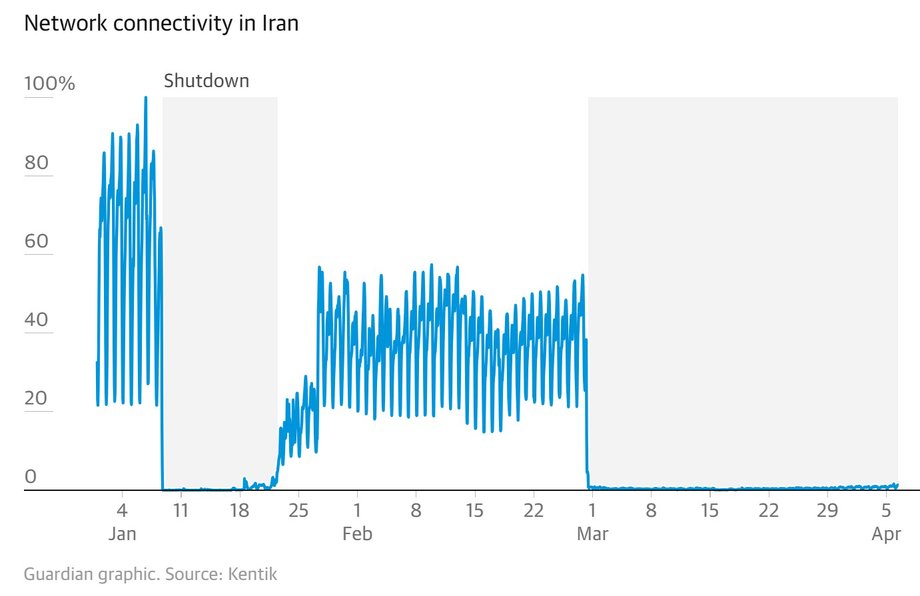
Two internet blockades in Iran – January and current
|
The Guardian
The fact that the Iranian government continues to block internet access suggests that the regime's structures have not changed significantly.
While Myanmar, Ukraine and the Gaza Strip have experienced longer regional breaks during ongoing conflicts, the current blockade in Iran is already longer than the one in Sudan in 2019, which lasted 37 days This is the longest and most severe nationwide lockdown since the Arab Spring. Then, on March 3, 2011, to prevent anti-government protests, Internet access was blocked in Libya ruled by Muammar Gaddafi almost six months.
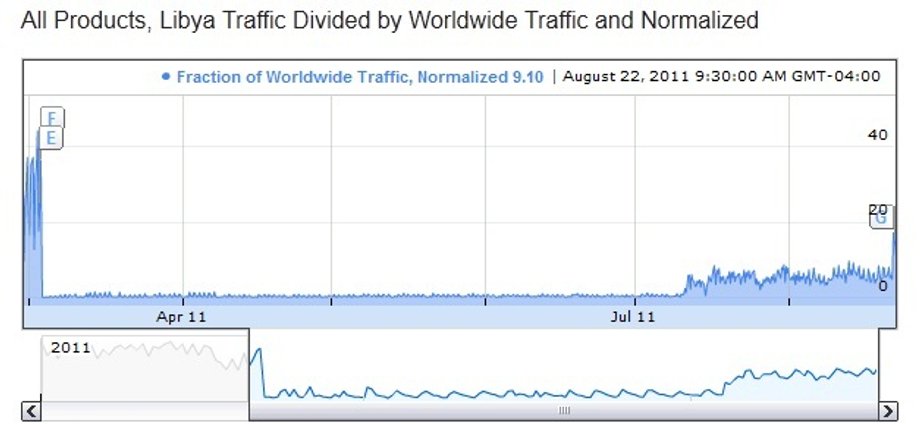
Internet blockade in Libya in 2011
|
Google Transparency Report
Human Rights Watch called the current blockade violation of fundamental rights and warned thatit hinders access to emergency information during active military attacks.