Cozonac and babka. How did holiday dishes enter everyday life: adaptation or “a banalization of consumption”?


“Bought by the slice from the supermarket or from the pretzel shop, the cozonac loses its meaning. From a festive food, it becomes a snack. Without the symbolic charge, it is just a consumer good like any other”, says, in a dialogue with HotNews, culinary anthropologist Adriana Sohodoleanu. She explains how the role of traditional holiday dishes has changed in recent years, affecting other customs as well. “He's less and less prepared in the family.”
- “However, it is important to remember that by outsourcing the production, not only the irresistible smell in the house is lost, but also the opportunity to spend time with the family, with the mother, grandmother, aunt (in sterile language, intergenerational knowledge transfer).”
Cozonac is no longer just an Easter or Christmas dessert. In recent years, we find it sliced in supermarkets, in the windows of pretzel shops or reinterpreted in cafes, in versions with pistachio, chocolate or pralines.
In parallel, babka, a dessert with Eastern European origins that resembles cozonac, has become increasingly present in urban menus.
The change is not only about taste preferences, but also about the way we relate to tradition, time and consumption, explains Adriana Sohodoleanu, culinary anthropologist, who studies the way food reflects social, economic and cultural changes.
The frequent consumption of cozonac, outside of holidays, is related to a wider change, Sohodoleanu believes: the loss of the connection between food and the special moment in which it is consumed.
“The normalization of consumption and its trivialization”
“I have been observing for some time this desacralization that modernity brings – ritual dishes or practices lose their characteristics (the connection with a time and a special context of the community) and end up available on the street corner, packaged in slices, in formulas promoted as traditional but obtained industrially or artisanally, sometimes in iterations such as the Dubai chocolate trend,” says the anthropologist.
On the one hand, this change can mean a revaluation of the product, the anthropologist explains. “This introduction into everyday life can mean a revaluation of the cozonac, expressed by the desire to consume it more often, thus extending the period in which it is available.”
On the other hand, there is also an opposite effect: “The flip side of the coin, however, is the normalization of consumption outside the holidays and its trivialization.”
From ritual to consumer product
The cozonacul also changes its status, along with the way it is consumed, explains Sohodoleanu: “Bought by the slice from the supermarket or from the pretzel shop, it loses its meaning. From a festive food, it becomes a snack, eaten hastily or without much attention, it loses its magic. Without the symbolic charge, it is just a consumer good like any other and I don't know if some of us are ready for that.”
Also, observes the anthropologist, “it is less and less prepared in the family, which is understandable – time and skills are increasingly scarce resources. In addition, no one regrets the absurd pressure placed on the woman to prove her qualities as a housewife by baking the perfect scone.”
“However, it is important to remember that by outsourcing the production, not only the irresistible smell in the house is lost, but also the opportunity to spend time with the family, with the mother, grandmother, aunt (in sterile language, the intergenerational transfer of knowledge)”, she emphasizes.
Globalization, consumption and identity
Asked how this transformation can be explained on a broader level, Adriana Sohodoleanu says that the phenomenon can be viewed from several perspectives. From a sociological point of view, she links the change to globalization: “For a sociologist, the responsible would be the roll of globalization that homogenizes and attacks the local specificity, replacing it with the cultural hegemonic symbols of the moment (pizza, pasta, burger, sushi, ramen in culinary terms).”
“Food is a simple, accessible and powerful way to resist standardization, because it is an identity marker. Because today, identity is built from various pieces, like Lego, and food is a sign of status and taste,” says the expert.
More concretely, the choice of food becomes a lifestyle indicator: “Eating Romanian (cozonac) or eating fashionable (babka) is a marker of a lifestyle, therefore what was special becomes part of the identity.”
The anthropologist says that the change is also related to the way time works in today's society: “The standardization of culture and the detemporization of society, i.e. social time detached from natural or ritual rhythms, make the logic of the celebration and the products available exclusively in relation to it disappear, we have access to products permanently, constantly, not cyclically.”
There is also an economic explanation: “From an economic perspective, however, this may be more easily explained by the commodity idea and theories of consumption. Capitalism tends to expand markets for seasonal produce, to nicely package symbolic meaning and sell it as a permanently available commodity.”
She also gives examples: “the cozonac, the martyrs and, before them, the zacusca”.
Why did babka become so popular?
In parallel with this change, I asked Adriana Sohodoleanu how she explains the popularity of babka in Romania, especially in the urban environment.
“Babka has been on the menu of cafes, bakeries, but also domestically, at home for several years; I think that the global reputation created by cafes abroad, the aesthetics and the composition – visually and taste-wise, it belongs to brioche-type baking; the fact that it looks like a bun, but is not one, may have offered a solution to those who wanted an alternative when the reinterpretation of the bun was not yet trendy.
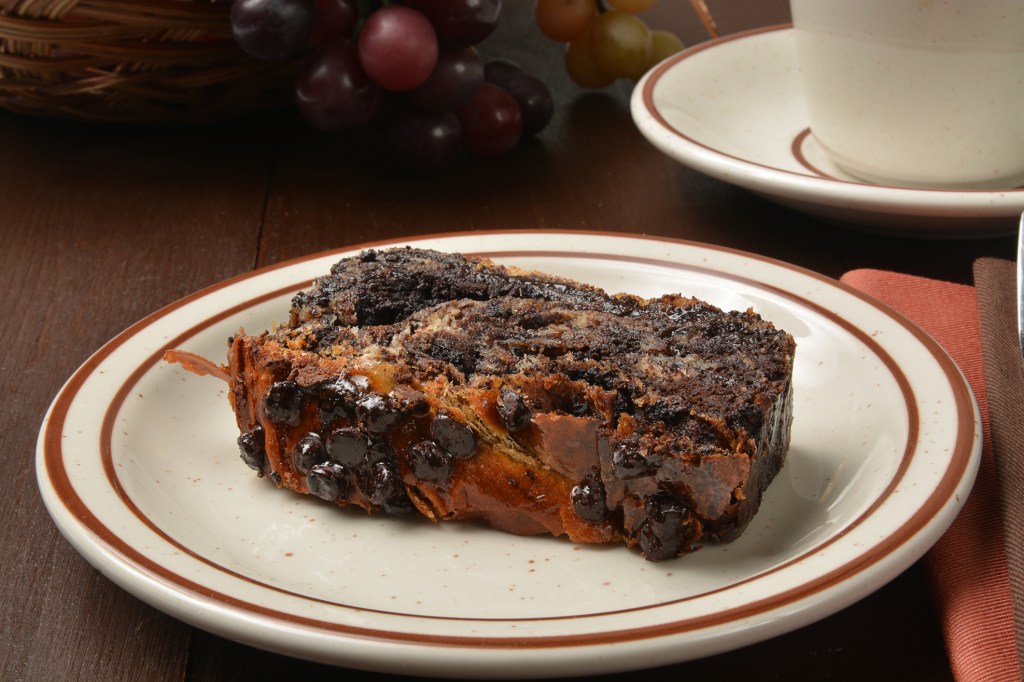
The cozonac comes with the baggage of a food considered sacred, the babka is free from any constraints – although originating from the Jewish culture, it is not strictly linked to a holiday, it is already everyday, normalized.”
When asked how the two products relate to each other, the anthropologist says that the difference depends on the stage in which each one is.
The cozonac has an incomplete transition, it is still seen, although we do not know for how long, as a ritualistic, festive right; babka is already mainstream culture, it's gone through the full cycle – local tradition, migration, urban reinterpretation, and hipster cafes have made it global.
Adriana Sohodoleanuculinary anthropologist
Finally, when asked if these changes show a loss or a transformation of food identity, Adriana Sohodoleanu says that it is more about diversification.
“We are curious, enthusiastic and eager to try the latest experiments on social media and, for that matter, like everyone else on the globe today, caught in a vortex of heightened consumerism, where food is also built on traditional foods reinvented to resonate with the needs of younger generations.”
For example, “a cake filled with pralines, glazed with chocolate and pistachio, decorated even with gold leaf unites the best of both worlds – it gives us the impression that we are eating Romanian and that we are preserving tradition, while ticking off the need for new, varied, fashionable, trendy.”
“It remains to be seen if these iterations will catch on with the public and different generations, as the cozonac called today classic has done for centuries”, concludes Adriana Sohodoleanu.