The head of EU diplomacy calls for the Union's naval involvement in protecting the Strait of Hormuz. “We cannot afford to lose a critical route”

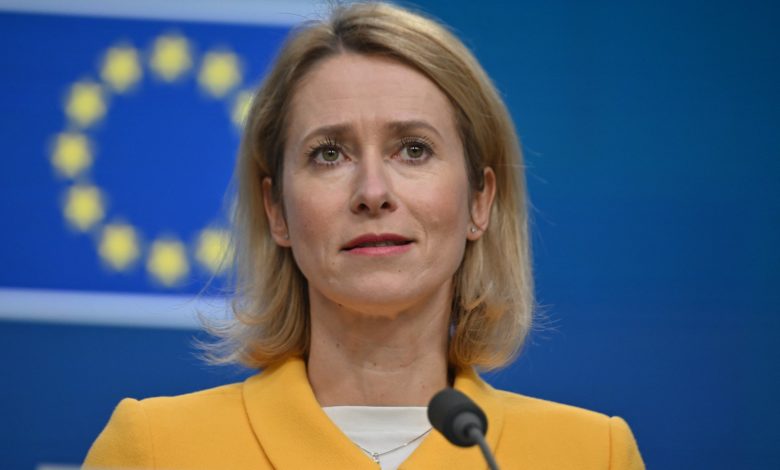
The European Union must expand its Aspides naval mission as part of wider maneuvers to protect sea lanes from the disruption caused by the US-Israeli war against Iran, EU foreign policy chief Kaja Kallas said, Reuters reports.
Kallas made this statement on X after attending a discussion with representatives from more than 40 countries, organized by British Foreign Secretary Yvette Cooper, to discuss the necessary actions to open the port of Hormuz.
“Thank you, Yvette Cooper, for convening over 40 countries to discuss the Strait of Hormuz.. This seaway is a global public good. Iran cannot be allowed to charge tolls for shipping. International law does not recognize pay-to-pass schemes,” Kallas wrote on X.
“Today we examined diplomatic, economic and security measures to restore free passage, working with the shipping industry. The EU's Aspides naval mission has helped 1,700 ships in the Red Sea and needs to be expanded. We cannot afford to lose another critical trade route,” added Kaja Kallas.
What is the Aspides mission
The European Union's Aspides mission was launched in March 2024 with the role of protecting maritime traffic in the Red Sea, affected by drone and missile attacks launched by the Houthi militias on commercial ships heading to or coming from the Suez Canal.
Kallas' call comes in the conditions where the subject of expanding the mission to the Strait of Hormuz has already been discussed at the EU level, but no agreement has been reached on this issue.
European Union foreign ministers have, for the moment, shown “no appetite” for expanding the EU's naval mission from the Middle East to the Strait of Hormuz, the head of European diplomacy, Kaja Kallas, said on March 16.
“In our discussions there was a clear desire to strengthen this operation, but for the moment there was no appetite for changing the mandate of the mission,” Kaja Kallas told reporters after a meeting of EU foreign ministers in Brussels.
Reduced mission resources
The mission currently has one Italian and one Greek ship under direct command and can also call on a French ship and another Italian vessel for support. “The discussion was that it should be strengthened, because it doesn't have many naval assets. It should have more,” Kallas said.
At the same time, German Foreign Minister Johann Wadephul justified the non-involvement of European countries in a military mission in Hormuz by the fact that the Aspides mission “was not effective” in the Red Sea either, where the US also sent a similar naval mission.