Chancellor Merz's party wins the elections in Rhineland-Palatinate. Painful defeat for the social democrats, after 35 years


German Chancellor Friedrich Merz's Christian Democratic Party (CDU) is expected to win Sunday's election in the western German state of Rhineland-Palatinate, beating its coalition partners in the Social Democratic Party (SPD), who suffered a “painful” defeat after ruling the state for 35 years.
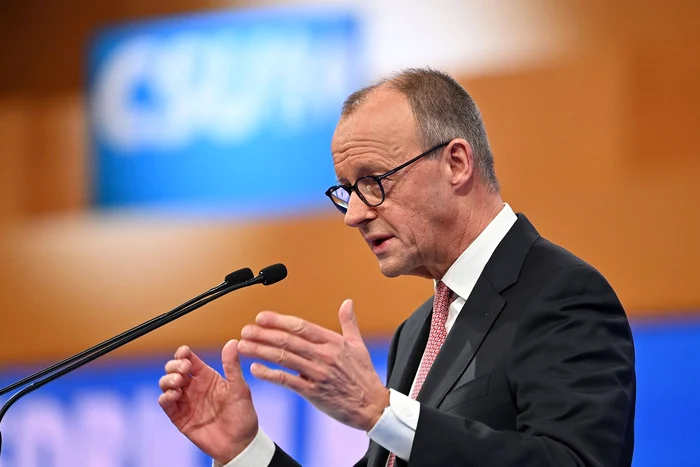
Friedrich Merz, Chancellor of Germany PHOTO: Profimedia
The first estimates broadcast by ARD television after polls closed showed Merz's CDU with 30.5 percent of the vote, ahead of the SPD, which got 26.9 percent, pointing to a likely victory for Merz after his party narrowly lost the election in the neighboring state of Baden-Württemberg on March 8, according to the News.
The general secretary of the CDU, Carsten Linnemann, qualified the result as fair “excellent one”, which demonstrated strong overall support for Merz's two coalition partners.
“If the result stays like this, the CDU/CSU and the SPD will get over 50% of the vote, which is also a solid result for the centrist parties”Linnemann said, referring to the CDU's sister party in Bavaria.
For Merz, who is struggling to shore up Western support for Ukraine and faces the imminent threat of an energy shock from war with Iran, victory in Rhineland-Palatinate would be a relief after his party's narrow defeat two weeks ago.
But the result would be a heavy blow to his coalition partners in Berlin in the SPD, which is still reeling from a disastrous result in Baden-Württemberg, where it won just 5.5 percent of the vote, narrowly crossing the threshold to enter parliament.
The SPD has ruled Rhineland-Palatinate for 35 years, and the loss of control over this land will probably accentuate the atmosphere of crisis that has been hanging over the party since the collapse of the governing coalition of former SPD Chancellor Olaf Scholz in Berlin in 2024.
SPD General Secretary Tim Kluessendorf told ARD that the predicted result is a “bitter failure”.
The far-right Alternative for Germany (AfD), which has now clearly established itself as the second-strongest party nationally, was expected to get 20% of the vote, in line with the result in Baden-Württemberg. Rhineland-Palatinate, one of Germany's main wine regions and home to chemical giant BASF as well as a host of small Mittelstand companies, has been hit by Germany's economic stagnation in recent years and would be vulnerable to energy disruptions from the Iran war.
Depending on the final result, the CDU and the SPD could form a coalition at the state level, on the model of the Berlin coalition, with the CDU candidate, Gordon Schnieder, on his way to replace the current SPD premier, Alexander Schweitzer.