Many alcohol problems could be solved if there were the favor of the rulers, but this has not been for decades – Hanna Ostrowska -Biskot, a psychotherapist of addiction, told PAP. She emphasized that “only empty declarations are falling, from which nothing results.”

PAP: August with a month of sobriety – as every year. And as every year we will talk about the same problems that do not disappear.
About 900 thousand Poles are addicted, another 2-2.5 million. He drinks risky. The average consumption is 11 liters of pure ethyl alcohol per person per year – more than the EU average (9.8 l). In addition, Poland ranks 2nd place in the EU in terms of the number of alcohol -related deaths – over 9 deaths per 100,000. residents a year.
Hanna Ostrowska-Biskot: And every now and then we hear that something will happen to alcohol, which is known to be poison, that not only drinkers, but also their loved ones.
There is no such area in social life that would not hurt because of a person drinking alcohol. This, apart from families, workplaces, healthcare system, and insurance system.
We repeat this, like a mantra, for years, and politicians have answered with their mantra assurances that everything will change in a moment – from stores “monkeys” with vodka will disappear, alcohol will disappear from gas stations, the number of points selling alcohol will be limited. We hear about it every year and nothing changes.
PAP: In the years 2002–20 alcohol consumption in Poland increased by 35 percent, and the number of sales points reached 490 thousand. For comparison – according to the WHO recommendation, one alcohol sales point should fall for a maximum of 1,500 people, in Poland there is 1 out of 270.
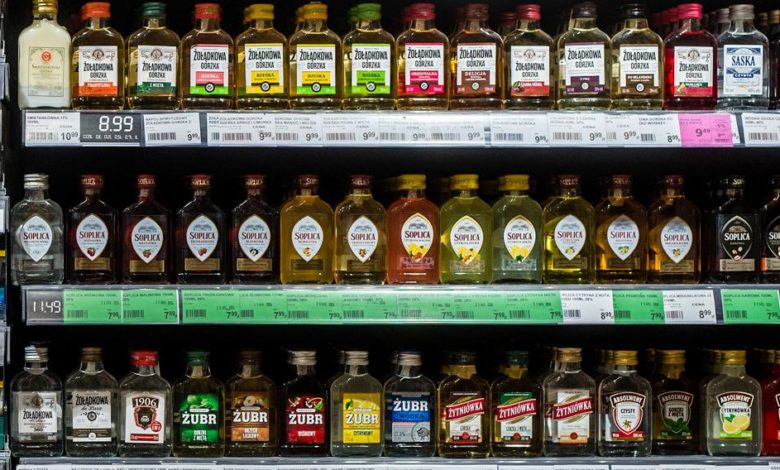
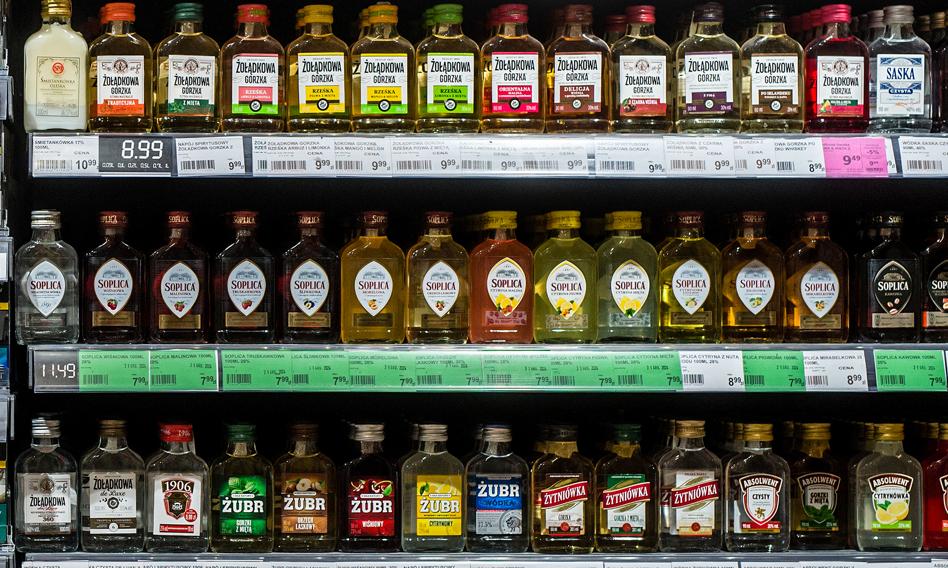
Ho-B.: And every day three million small bottles with vodka sell in Poland, so-called “Monkey”. This means that millions of these bottles go to people who come to work under the influence of alcohol. And let's face it, these are not just construction workers, but also nurses, accountants, please add the whole list of competitions here, because alcoholism does not choose, it is very democratic.
And these “monkeys”, “puppies”, or what is still called small packaging of alcohol are everywhere – in every frog, ladybug, at a gas station, beautifully exposed, tempting with colorful stickers.
PAP: So much good that sellers, in fear of the consequences, do not sell alcohol to minors.
Ho-B.: In my opinion, you should increase the age for buying alcohol from 18 to e.g. 21 years. The 18-year-old body is still too young, too sensitive to deal with this poison. And more susceptible to addiction.
In addition, with this unnecessary alcohol to minors, it is a fiction, because there will always be some “Mr. Zenek”, a honeymoon, who in exchange for beer will buy kids what they ask for, like in the serial “ranch”.
I know such a story from the Podkowa Leśna near Warsaw, where on a bench, along with other companions, he was such a man – always drunk, half -homeless, oily. And this man entered the comedit with local youth, whom he bought alcohol in exchange for material benefits.
The point of this story is that this “Zenek” changed soon beyond recognition, because instead of in his rags, he suddenly began to walk in branded clothes. These were clothes from those young people from whom they have already grown up.
The moral from this story is that if you don't limit vodka trading points, nothing will change.
I also regret the fact that the number of towns that introduced a ban on the night sales of alcohol is barely trace. I think this is a scandal – if I wanted to buy bread at 1 at night I am doomed to failure, but I will buy vodka without a problem.
But well, it's hardly surprising, after all, we live in a country where drinking at work is prohibited, while in a very important place where people working there decide about our fate – that is in the Sejm – alcohol is available non -stop. This is – apart from everything else – simply immoral.
PAP: There is also a matter of alcohol advertising, because only beer can be advertised in Poland, the promotion of stronger drinks is prohibited, but companies celebrate these bans.
Ho-B.: And these beer ads are constructed in such a way that if it is fun at the party, it must be alcohol on it.
The next fraud is advertising of non -alcoholic beer. Once, that there is a trace of alcohol in non -alcoholic beer, and two, that it is simply encouraging and getting used to reach for beer, introducing the world of drinking.
Please look at the labels: the word “beer” is capital letters there, and “non -alcoholic” small.
Another scandal is non -alcoholic champagne, which children are to be consumer. Message: There is no name day, there is no birthday without bubbles. These non -alcoholic bubbles quickly turn into percentage.
But I almost got a heart attack when I entered one of the discount stores last year and saw on the label of the actor Tomasz Kot characterized as “Mr. Kleks”, the hero of the film under the same title based on the book by Jan Brzechwa, who advertised champagne for children.
PAP: The actor has repeatedly cut off from this advertisement, it turned out that his image was used illegally.
Ho-B.: Nevertheless, these are sick situations. I urge public figures to be allergic to what purpose their image can be used, because the damage can be great, not only for them, but also for the whole society.
PAP: He earns a good money on alcohol.
Ho-B.: Who earns, he earns. I am very irritated when I hear – often, unfortunately repeated – the argument that if alcohol stopped, the state will fall out of poverty, because from this vodka it is such a great income. This is another illusion and a fairy tale.
Research shows that an active alcoholic uses more money than he brings to his budget: because he goes to exemptions, because he has accidents because he has to pay insurance because his children go to an orphanage …
PAP: Would you like to introduce prohibition?
Ho-B.: No, but I will tell you what I recently heard at one of the conferences devoted to combating alcohol problems from a delegate from Lithuania, a doctor, incidentally.
Namely, Lithuanians in 2011 realized that the mortality resulting from drunkenness was so high that they would simply cease to exist in a moment and they have to do something about it quickly.
And they did, immediately.
First of all, they liquidated alcohol ads in every form. Secondly – they liquidated the sale of alcohol in small packaging. Third – they liquidated some alcohol stores.
The latter was made in a very ingenious way: in Lithuania you must not sell percentages where there is food for children, and as it is everywhere, only specialized alcohol stores remain.
In addition, they increased their age when you can buy alcohol yourself, by 20.
All this resulted in such a way that the mortality curve quickly fell. It would probably also happen with us. According to data from 2021, alcohol is responsible in Poland for about 30 thousand. deaths per year.
And still data: in 2024, the National Health Fund allocated almost PLN 994 million for the treatment of alcohol poisoning and addictions – by over 24 percent. more than in 2020.
There are still costs incompatible with any money, for no tables or charts – namely the harm that drinking people generate, and which affects their loved ones, the whole surroundings.
According to estimates, social costs related to alcohol are up to 100 times higher than direct treatment costs.
In the sobering of alcoholics, there is a letter in which it is written that alcohol is such a gangster who is unacceptable and absolutely unpunished, what he wants, he does. He takes children, fathers, takes employees, takes great people from the nation, takes talents and property.
Often these are unbeatable matters, because if you can recover the property, children hurt by parents-alcoholics no longer want to know them.
PAP: 80 percent teenagers aged 15-16 already drank alcohol, 78 percent of them reaches for beer. Meanwhile, with each year, alcohol initiation delay by 14 percent. The likelihood of alcohol addiction is decreased, and the risk of abuse by 8 percent. – results from last year's report prepared by the Institute of Conscious Man. Drinking often begins at home aged 10-12.
Ho-B.: Yeah, and the main determinants are family, peers and advertising.
A few years ago I worked in the sobering-up room at Kolska in Warsaw and sometimes we were brought by children, e.g. 14-year-old, drunk completely. Of course, the chamber is not a place for such a child and there was a terrible problem with it. The first thing that is done in this case calls parents, but it has happened more than once that parents were also drunk in a corpse. So helplessness …
PAP: Well, where are the parents?
Ho-B.: Young people today cannot imagine that there is no smoking grass at the party, and that there would be no alcohol. The same applies to boys and girls, they go head to the head with this drink.
And parents? Well, they either drink themselves or do not watch children, they closes their eyes.
However, children have to be careful, I can't imagine that my daughter or my son go to a party and I would go to sleep. NO. You have to wait for a child so that he knows that after returning my mother or dad will ask: how you feel, how you had fun; He will see what the kid looks like.
Unfortunately, you don't want to adults.
My, but not only in my opinion, also many therapists, the problem with drinking minors is so great that there is a need to create a special ward in one of the childhood psychiatric hospitals in Mazovia. But probably not only there.
PAP: Do you see any way out, a way to solve these problems?
Ho-B.: I am convinced that many of these alcohol problems could be solved if the favor of the rulers. But this is not there, for decades. Only empty declarations are falling, from which nothing results.
Talked: Mira Suchodolska (PAP)
mir/ malk/