Poland's dispute with Pfizer over vaccines is growing. The government announces audits and investigations

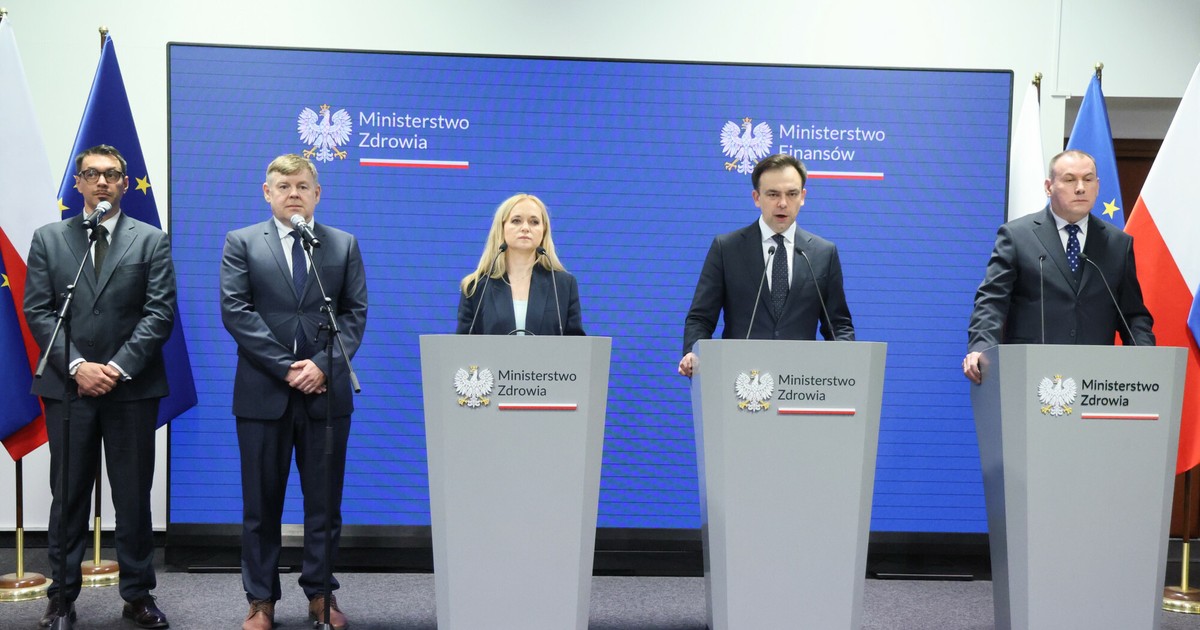
After the case is resolved government representatives emphasize that not only a legal analysis is necessary, but also a thorough examination of the circumstances of concluding the contract.
The rest of the text is below the video
The government is analyzing scenarios and announcing audits
In this context, there are announcements of audits regarding vaccine contracts – both in terms of their structure and decisions made at the negotiation stage.
The aim is to determine whether the state's interest was properly secured and whether there are grounds for further legal action or renegotiation of the provisions.
“KAS is conducting an audit at the Ministry of Health. Following the KAS notification, the prosecutor's office has initiated an investigation into failure to fulfill obligations. It concerns an unreliable analysis of the demand for vaccines and the decision to join the contract of May 20, 2021.” – the National Tax Administration reported in an entry on the X portal.
Zbigniew Stawicki from the Ministry of Finance also commented on the matter, emphasizing that control activities have a much broader scope and are not limited only to the Ministry of Health. As he noted, audits conducted by the National Tax Administration currently cover as many as 166 entities, including 17 ministries. At this stage of the audit, the irregularities detected amount to a total of PLN 119 billion, which – as government representatives point out – shows the scale of the problem and justifies the need for a detailed accounting of public expenditure in recent years.
The minister does not mince his words. “I'm honestly pissed off”
The case arouses clear emotions among government representatives.
“Personally, I'm pissed because we're constantly looking for new health funds. Suddenly, due to bungling or bad will (of the previous government – editor's note), we have to pay PLN 6 billion”– said Minister of Finance Andrzej Domański during a press conference, referring to the effects of contracts concluded during the pandemic.
- Read also: A gigantic penalty for Poland. The dispute over vaccines continues and arouses emotions
Government politicians: Poland's interests must be defended
At the press conference and on social media, government politicians commented on the matter directly, pointing out the need for a decisive response from the state.
The government communicated an analysis of possible scenarios and announced “defense of Poland's interests.”
“Since yesterday, we have not been able to come to terms with what this money will be spent on. PLN 6 billion means 64 million doses of vaccines that will have to be collected and disposed of. This is even more outrageous for us because we have been meeting with the Ministry of Finance, the National Health Fund and other representatives of the system for a long time to talk about how to rationalize expenses. 6 billion is the annual cost of educating residents or the annual cost of drugs for oncology patients. The annual maintenance of emergency medical services amounts to PLN 5 billion. For me, these are not just numbers, but specific benefits,” said Jolanta Sobierańska-Grenda, Minister of Health, at a press conference.
- Read also: Pfizer will offer cheaper drugs through Trump's website
In turn, the Director General of the Ministry of Health, Konrad Korbiński, pointed out that the contract referred to in the judgment of the court in Brussels was not – as he indicated – concluded at the beginning of the pandemic, when it was difficult to precisely predict the demand for COVID-19 vaccines, but later.
“We are not talking about an agreement concluded in 2020, when Europe and Poland were plunged into uncertainty due to the COVID-19 pandemic. We are talking about an agreement from 2021, when Poland already had 109 million doses of vaccine, and we had them in warehouses 30 million unused doses. At this point, the previous government decided to proceed with another huge volume order as it was close 89 million doses in total for 2022-2024″ – he said.
He noted that Poland was not obliged to join this agreement and had the opportunity to withdraw from it, but the Ministry of Health did not use this option. Only after 11 days from the deadline for withdrawing from the contract, the ministry asked the European Commission to reduce the ordered volume.
“All circumstances then indicated that the volume of this order did not correspond to the real health needs of Poles and was overestimated. Therefore, it would be necessary to dispose of the vaccines” – added Korbiński.
“It cannot be that someone makes decisions worth billions and today no one takes responsibility for it.” – government representatives seemed to agree at the conference.
Background to the dispute: pandemic and excess orders
The conflict has its origins in contracts concluded during the COVID-19 pandemic, when countries – including Poland – ordered huge amounts of vaccines in conditions of great uncertainty.
As the pandemic waned, the demand for preparations dropped significantly, which led to tensions between governments and manufacturers. As a result, some countries began to question the terms of the contracts or seek to change them. Romania, for example, is in the same situation as Poland.