
The coming days will be decisive for operations in Iran, Pentagon chief Pete Hegseth said on Tuesday. US officials also expressed dissatisfaction with the attitude of NATO countries towards the war. Rising fuel prices cause more countries to introduce rationing of their sales.
At the press conference in Washington, Hegseth did not elaborate on his statement that the coming days “will be decisive” for the war that Israel and the US have been waging against Iran since February 28. He also did not specify how long the war will last and assured that Washington's goal is to reach an agreement with Iran.
The head of the ministry, which since September 2025 has been equally called the Ministry of War, repeated that the goal of Israeli-American activities is, among others, “destruction of Iran's missiles, drones and navy.”
In an interview for Al-Jazeera television, US Foreign Minister Marco Rubio confirmed that Washington is conducting talks with Tehran through intermediaries. He assured that the US would “achieve its war goals in weeks, not months.”
In the opinions of both the US Secretary of State and the head of the Pentagon, the blockade of the Strait of Hormuz introduced by Iran, which causes a rapid increase in fuel prices around the world, is the responsibility of all countries affected by it.
Hegseth said that “there are countries in the world that should prepare to also engage with this critical waterway.” Rubio, however, expressed the opinion that the trail would be opened “somehow.”
Both politicians also again criticized NATO countries for not providing more support in the war with Iran. Hegseth stated that the White House is looking at the attitude of individual NATO countries towards American requests for involvement in activities around Hormuz.
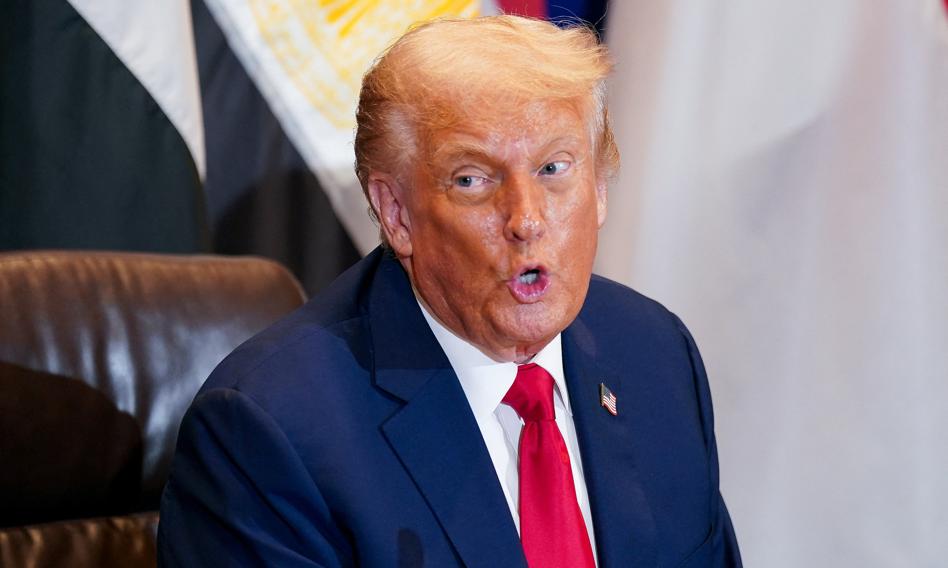
President Donald Trump suggested in a post on the Truth Social platform that countries that did not want to support the war with Iran and are currently struggling with oil shortages should buy the raw material from the US or “take it themselves from the Strait of Hormuz.”
In a separate entry, the US president criticized the decision of the French authorities, who did not agree to the overflight of planes heading to Israel, which were carrying military equipment intended for the war against Iran. Reuters reported on Tuesday, citing well-informed sources, that Paris made the decision over the weekend.
The Italian government, however, said that relations with the US “are strong and characterized by full and loyal cooperation, respecting existing agreements on the use of military bases.” Italian media reported that Defense Minister Guido Crosetto refused to allow the US Air Force to use the Sigonella base in Sicily on its way to the Middle East.
“Italy is acting in full respect of applicable international agreements and the principles presented by the government to the houses of parliament,” wrote a statement from Prime Minister Giorgia Meloni's office.
The head of the European Council, Antonio Costa, appealed to Iranian President Massoud Pezeshkian on Tuesday to stop attacks on countries in the region and take constructive diplomatic actions, including unblocking the Strait of Hormuz. In a post on the X platform, Costa said that in the telephone conversation he also appealed to the Iranian authorities to “exercise restraint.”
Costa said he called on all parties to the conflict to protect the population and civilian infrastructure and fully respect international law. He also expressed “regret over the deaths of innocent people,” including the victims of the attack on a girls' school in Minab, which killed 175 people on February 28, mostly students.
Rising prices of fuels and fertilizers caused by the blockade of the Strait of Hormuz are causing more countries to introduce fuel sales rationing. On Tuesday, the fourth most populous country in the world, Indonesia, made this decision. Ethiopia said it would “prioritize” certain vehicles at gas stations, and the South African government reduced some fuel taxes for a month. Also in Europe, most countries, including Poland, are taking administrative actions aimed at reducing fuel prices.
As PAP found out on Tuesday, due to, among others, blockade of Hormuz France and Italy demand that the European Commission urgently suspend the CBAM carbon tax on fertilizers imported from abroad or compensate farmers. Poland opposes such a solution out of concern for domestic fertilizer producers.
CBAM (Carbon Border Adjustment Mechanism) serves, among others, setting a price for carbon dioxide emitted during the production of carbon-intensive goods introduced into the EU. This involves reporting CO2 emissions during production, among others. steel, aluminum, cement, fertilizers and electricity, and is also closely related to the purchase of appropriate CO2 emission certificates under the ETS system. (PAP)
piu/kar/


