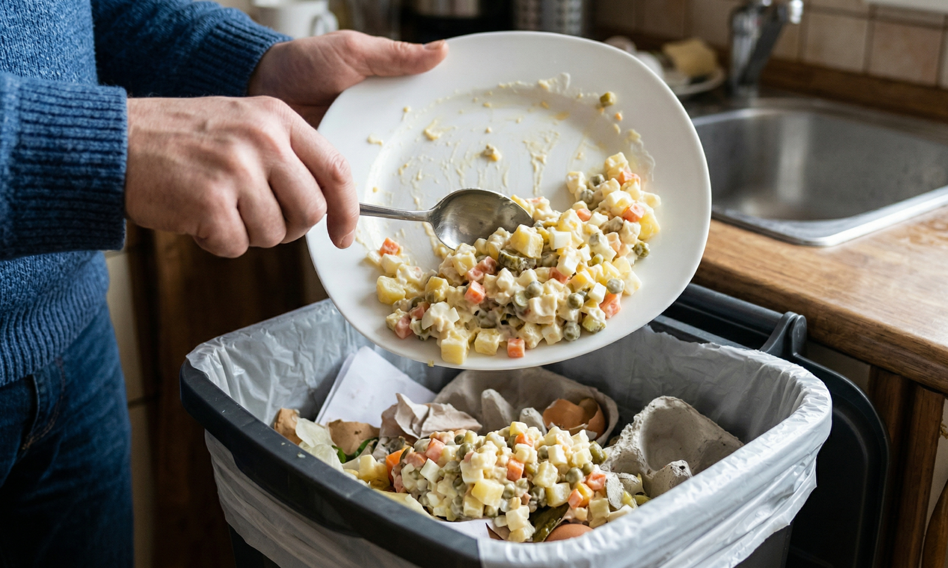
Poles are planning their Easter shopping more and more carefully and are taking advantage of promotions more often, but the scale of food being thrown away is still alarming. Data from the BLIX and UCE Research report and Too Good To Go analyzes show that although fewer people will prepare too much food for Easter – including the popular vegetable salad – a large number will still throw away Easter dishes. Organizations dealing with the problem of food waste remind about practical ways to reduce losses, and one of them are community fridges, which are gaining popularity in many cities.
Lower expenses for Easter
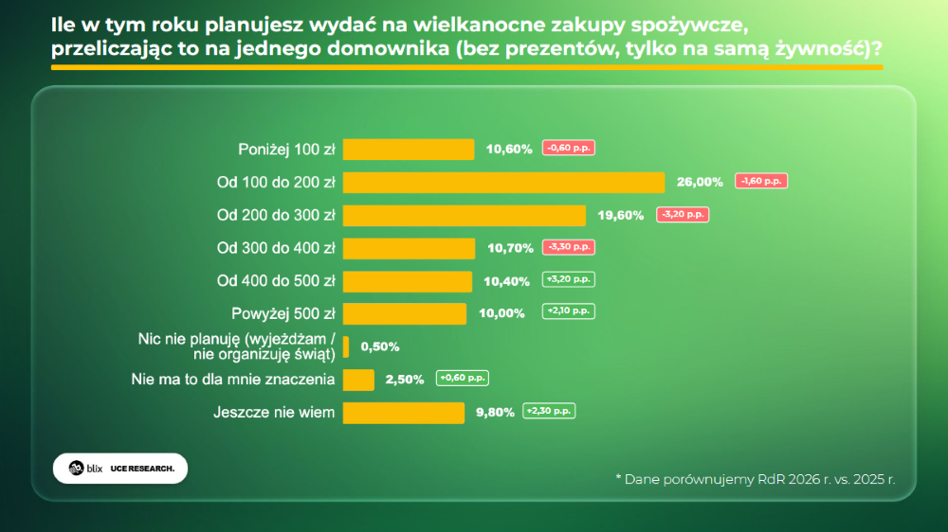
Data from the BLIX and UCE Research report “Poles' shopping plans for Easter 2026” indicate that Poles are entering the Easter season with clearly defined shopping plans. The largest group of respondents declare expenses in the range of PLN 100-200 per person (26%), and another 19.6% plan to spend between PLN 200 and 300. At the same time, the share of people who anticipate higher costs is growing – 10% of respondents plan to spend more than PLN 500 per person.
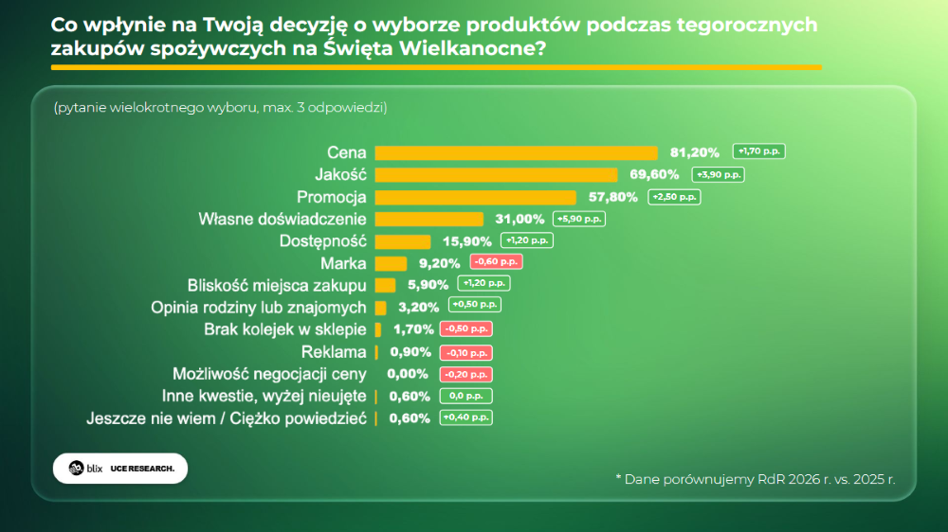
The data confirms this Primarily, price determines the choice of specific productsas indicated by 81.2% of respondents, 1.7 percentage points more than a year earlier. Respondents attach less importance to factors such as quality, promotion or brand, yet just over 38% of people indicated that they would limit their Easter spending. A positive conclusion from the study is the growing importance of planning Christmas shopping: up to 64.3% of respondents definitely declare preparing a shopping list (an increase of 10.9 pp y/y), and 85.4% of consumers intend to buy products on promotions.
Wasting food on holidays: we even throw away vegetables
Although Poles increasingly declare their desire to reduce food waste during Easter, data shows that the scale of the problem remains significant. This year's Too Good To Go study shows that as many as 37% of respondents will prepare more food than needed for two days of the holidays. This result is lower than in 2022, when such a declaration was made by 54% of respondents, but it still means that over one third of households are planning excess portions. However, almost half of Poles indicated that they will pay more attention to food waste during the holidays, not only due to the increase in prices, but also the awareness of this problem.
Although tradition still often triumphs over real needs, positive changes in planning holiday meals are already visible. This is the result not only of rising prices, but also of many years of educational activities, which is great. This is a signal that consumer awareness is growing, and it is crucial to translate it into everyday decisions – not only during the holidays – says Anna Podkowińska-Tretyn, Country Director of Too Good To Go in Poland and the Czech Republic.
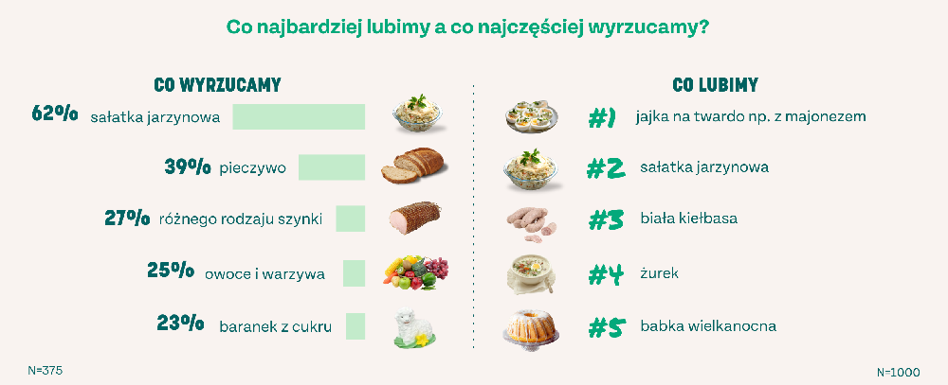
The most frequently thrown away dish – despite its popularity among Poles – is vegetable saladwhich was indicated by 62% of people who throw away food after the holidays. The next places are taken by bread (39%), cold meats (27%), fruit and vegetables (25%) and sugar lambs (23%).
Surplus food in the bin is a financial loss
The Institute of Environmental Protection-National Research Institute points out that food waste is not only an environmental problem, but also a financial one. The average Polish family loses between PLN 2,000 and PLN 3,000 by throwing away food. PLN per year, throwing away approximately 165 kg per year. This means that every week products worth several dozen zlotys end up in the trash, and on a national scale, households are responsible for 60% of food losses.
The most common causes of food waste are loss of freshness (91%), preparing too much food (86%) and spoilage of products (84%). During the holiday season, these mechanisms intensify because households prepare more dishes “in advance”, often exceeding real needs, which is why IOŚ-PIB experts advise to prepare shopping lists, not to cook in advance, to freeze surpluses and use them in other dishes.
Community refrigerators are becoming more and more popular
A practical way to fight food waste is gaining popularity community refrigeratorswhich appear in other Polish cities. Available data indicate that approx. 45 refrigerators belongs to the 2050 Association, however over 100 is the work of the WięcPomóz.pl foundation, but the devices are also set up by other organizations or cities. Although the numbers are not very impressive, it is worth remembering that community refrigerators allow, on the one hand, to get rid of surplus post-Christmas food, and on the other hand, they serve those in need who can use them.
Community fridges accept both fresh produce and prepared foods as long as they are properly described and are suitable for consumption. Food should have an expiration date and composition, including possible allergens, which is important for people with illnesses and allergies. Organizations that run refrigerators emphasize that interest in them increases especially after the holidays, when households have the greatest surpluses. However, if there is no such device in our area, it is worth contacting food banks or foundations that can help with food management.