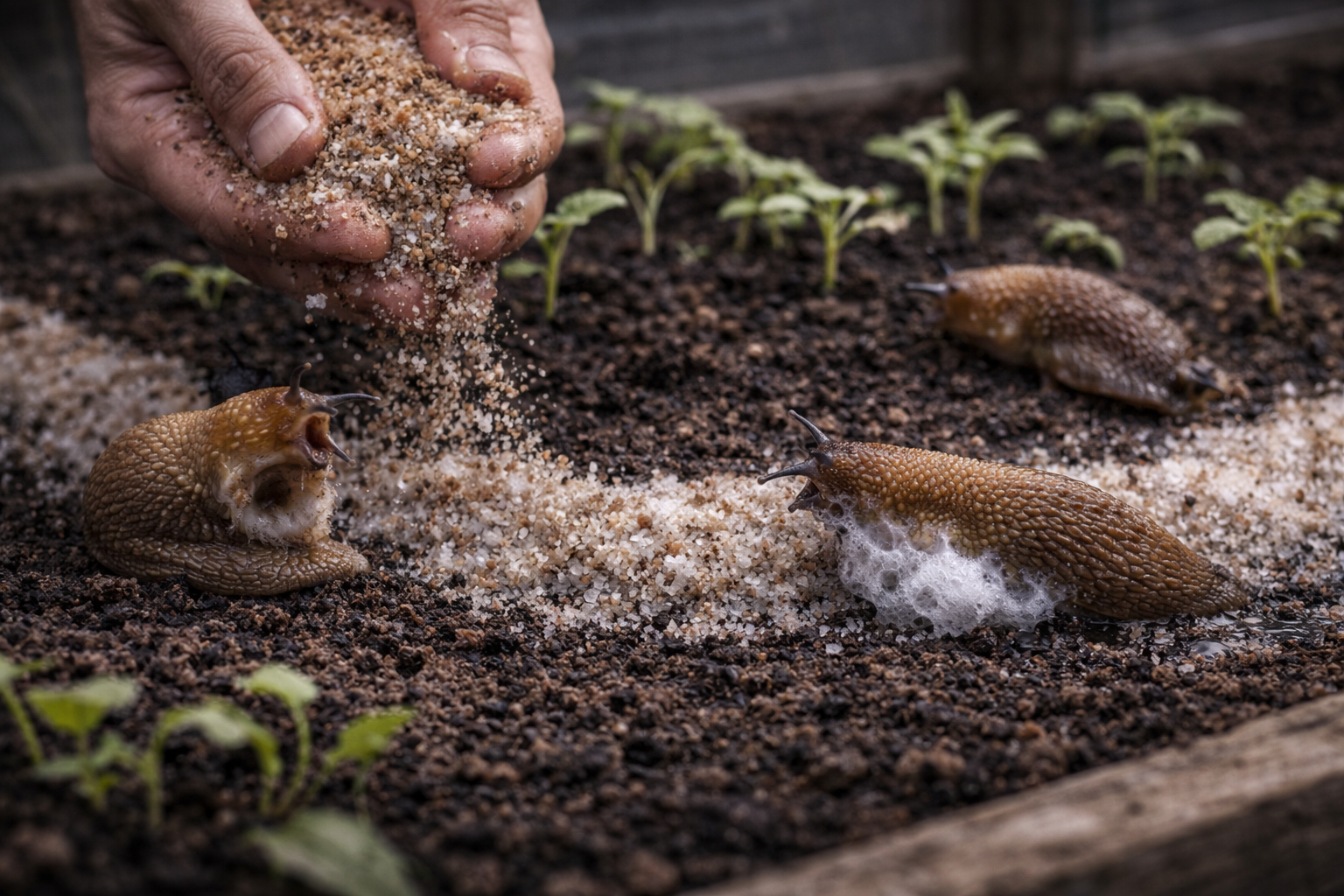
Slugs can destroy young seedlings in a few nights. They are especially active in rainy weather; they love to crawl through wet areas and leave behind traces of destruction. How to protect plants without chemicals and complex tricks? The answer is simple: a mixture of salt and sand. This is an affordable and effective way to create a slug barrier in your yard.
The body of slugs is 80% water. When salt comes into contact with them, it begins to draw water through their skin, causing the slugs to dehydrate and die. This occurs through the process of osmosis, where salt draws moisture from the body of pests.
Sand in such a mixture acts as an abrasive material. It creates a rough surface that makes it difficult for slugs to crawl. By disrupting their protective mucus, the sand prevents them from moving, and they leave to look for other, more convenient areas.
How to prepare and use the mixture?
Mix salt and coarse sand in a ratio of 1:3. This is the optimal ratio so that the salt is well distributed and the sand creates the desired texture. Sprinkle the mixture around plants or along paths where slugs often crawl. This barrier will not only protect the seedlings, but will also make the area less attractive to pests.
Repeat the treatment after rain or watering, as moisture weakens the effect of salt. Update the layer to keep it effective.
What is important to consider?
- Do not use the mixture directly at the roots of plants. This can damage the soil and plants as the salt draws moisture from the soil. It is best to apply the barrier at a distance of 5-10 cm from the plants.
- Do not use the mixture on very wet soil, because the salt will quickly dissolve and will not work effectively.
This mixture is an affordable and environmentally friendly way to protect against slugs. It is important to monitor the condition of the barrier and update it after rain. When used correctly, it will reliably protect your site and keep your plants safe.