March 30, 1943
The Lenin district committee of the All-Union Communist Party (Bolsheviks) held a meeting-seminar of secretaries of primary party organizations, at which issues of improving organizational-party, propaganda-mass and party-political work, increasing their role in mobilizing workers for selfless work and for the early implementation of state plans were discussed. Lectures and reports were given by the secretary of the regional committee of the CPSU (b) S.V. Kushnir, the secretary of the district party committee Sh.Z. Birenberg and other workers of the district party committee.
March 30, 1954
At a meeting of the bureau of the regional party committee, the issue “On the 20th anniversary of the formation of the Jewish Autonomous Region” was discussed. It was noted that in the region there are more than 70 industrial enterprises, 56 collective farms, five state farms, 11 MTS. The gross output of all industry has doubled compared to 1940. In the region there are 164 schools, six special educational institutions, 70 houses of culture and clubs, 61 libraries, a network of hospitals and children's institutions has been created. The resolution defines events in connection with the 20th anniversary of the region.
March 30, 1962
In accordance with the Resolution of the March (1962) Plenum of the CPSU Central Committee “The current stage of communist construction and the party's tasks to improve the management of agriculture”, the Resolution of the CPSU Central Committee and the Council of Ministers of the USSR “On the restructuring of agricultural management”, the bureau of the regional committee of the CPSU adopted a resolution on the formation of a committee on agriculture of the Jewish Autonomous Region in the number of seven people.
At the same meeting, the bureau of the regional committee of the CPSU approved and supported the initiative of a group of Komsomol members and youth from Birobidzhan textile, clothing and knitting factories, a timber plant, who expressed a patriotic desire in response to the decision of the March (1962) Plenum of the CPSU Central Committee to go to work on state and collective farms in the region.
March 30, 1964
The regional committee of the CPSU held a two-day seminar for lecturers from party committees and the Knowledge Society. More than 80 public lecturers from all districts of the region gathered in the city of Birobidzhan. There were party and Soviet workers, industrial and agricultural specialists, teachers, doctors and other representatives of the intelligentsia. The seminar participants listened to a number of reports and lectures. The secretary of the regional committee of the CPSU, Yu. G. Kassovich, made a report “On the results of the February (1964) Plenum of the CPSU Central Committee and the tasks of the region’s workers in the development of agricultural production.”
With interest, the public lecturers listened to the lecture of the head of the department of the Khabarovsk Pedagogical Institute, Comrade. Nadirov “The role of chemistry in the development of the national economy.” The lecture of the candidate of pedagogical sciences comrade also aroused great interest. Trukhachev “Techniques for organizing the attention of listeners.”
March 30, 1960
By the decision of the Birobidzhan City Executive Committee, a new street on the southwestern outskirts of the village of Zarechye, parallel to Turkmenskaya Street, was given the name Collective.
March 30, 1990
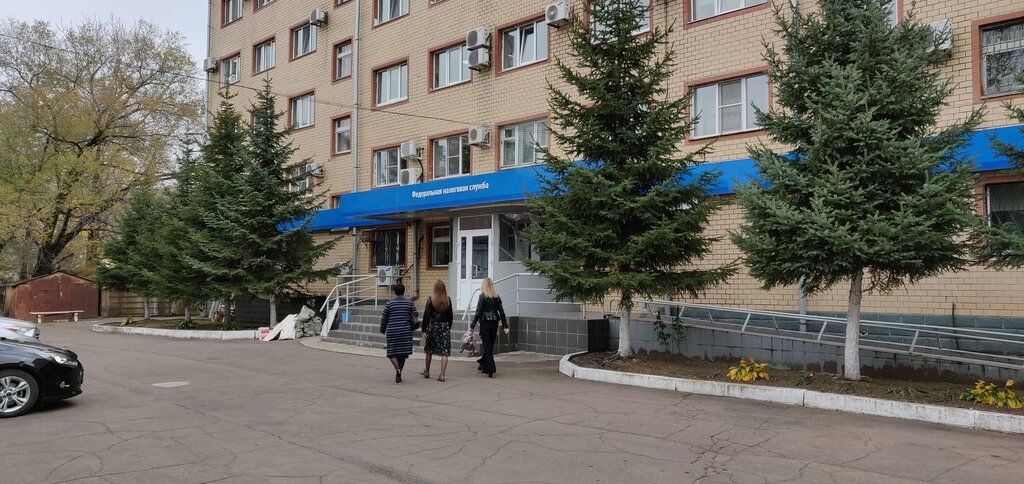
In accordance with the order of the financial department of the Khabarovsk Regional Executive Committee, the State Tax Inspectorate for the Jewish Autonomous Region was formed.
Nikolai Aleksandrovich Zhigunov, head of the financial department of the regional executive committee of the Jewish Autonomous Region, began the formation of the tax service of the Jewish Autonomous Region.
At the initial stage of the creation of the State Tax Inspectorate of the region, the basis of its personnel consisted of employees who had previously worked in the departments of state revenues, financing of the national economy, financing of the agro-industrial complex of the Ministry of Finance, and bodies of the Ministry of Internal Affairs.
March 30, 1982
The newspaper “Birobidzhan Star” (12+) in the section “On the 60th anniversary of the liberation of the Far East from the White Guards and interventionists” published an article by E. Galin “Partisan of Shevchuk's detachment” about a participant in the Civil War in the Far East Dmitry Nikolaevich Navolochkin.
In 1905, Dmitry's parents came to the village of Nikolaevka. By that time there were only 13 houses there. All around there is taiga, swamps… No one was engaged in arable farming, only two or three owners had vegetable gardens. In the summer they lived in Tunguska, fished, and prepared firewood for the shipping company.
In 1911, fifteen-year-old Dmitry went to work at a timber mill in the village of Nikolaevka.
In 1916, Dmitry Nikolaevich was called up for military service in Vladivostok and enlisted in the 4th Coast Guard Corps.
The formation of the Red Guard in the vast territory of the Far East was actually completed in February 1918. In its ranks there were significant forces of armed workers and peasants. Dmitry Nikolaevich became part of the regiment sent to strengthen the Khabarovsk garrison.”
On March 6, a White Guard rebellion broke out in Blagoveshchensk.
— Our first detachment departs from Khabarovsk on the evening of March 8. Members of the regional executive committee of the Council A. Krasnoshchekov, M. Gubelman, P. Minaev went with us. With decisive actions, the Red Guard troops suppressed the rebellion, recalls Dmitry Nikolaevich.

Clippings from the newspaper “Birobidzhan Star”. Photo: Photo: Regional Library
After the suppression of the Gamov rebellion (in Blagoveshchensk), Dmitry Nikolaevich returned to Khabarovsk. Here he joins a detachment of Red Guards heading to the Ussuri Front.
Navolochkin takes part in the battles near the Shmakovsky Monastery, in the assault on the village of Antonovka, where the detachment of Ataman Kalmykov and his headquarters were located.”
The successful offensive and defeat of the White Czechs in July-August 1918 was the first major victory of our army in the Far East. However, at the end of 1918, clouds gathered again over the Soviet Far East. The troops of the Ussuri Front, conducting holding battles, retreated along the railway line under the pressure of the Japanese invaders.
A new period began – the period of the partisan movement in the Far East.
In his memoirs, Boyko-Pavlov writes that in order to develop mass political work and establish contact with the rural population, revolutionary cells are created in villages and towns along with military squads in the city. Boyko-Pavlov, in particular, writes that such a cell was created in Nikolaevka, headed by worker Dmitry Navolochkin.
In 1919, Dmitry joined the detachment of Ivan Pavlovich Shevchuk. Participated in battles in Arkhangelovka and Lugovoi.
Before storming Volochaev's positions, Shevchuk's detachment carried out an unexpected raid on the enemy's rear, captured a convoy and the White Guard headquarters with all secret documents, including the order of General Molchanov. It was clear from the order that the enemy expected an offensive by the People's Revolutionary Army along the railway. Molchanov hoped to bleed the NRA units in Volochaev’s positions, deal them a crushing blow, and go on the offensive himself. But he miscalculated. Volochaevka was taken!
Dmitry Nikolaevich returned home. From a worker to the head of the planning department of a timber mill – this is his career path… During this time, many thanks appeared in his work book. In 1947, on the day of the plant’s 35th anniversary, the Book of Honor (0+) was established. It was opened by Dmitry Nikolaevich. The Ministry of Forestry Industry of the USSR then awarded him the badge “Excellence in Socialist Competition in the Timber Industry.”
Dmitry Nikolaevich is proud of his sons. Nikolay is a famous Far Eastern writer, editor of the magazine “Far East” (12+). Yuri, Oleg and Lev followed in their father’s footsteps – they work at the Tunguska wood processing plant.
In the story “Forgotten History” (12+) by his son Nikolai, the main character is a prototype of his father, Dmitry Nikolaevich, “a man of extraordinary biography who devoted his entire life to serving the people.