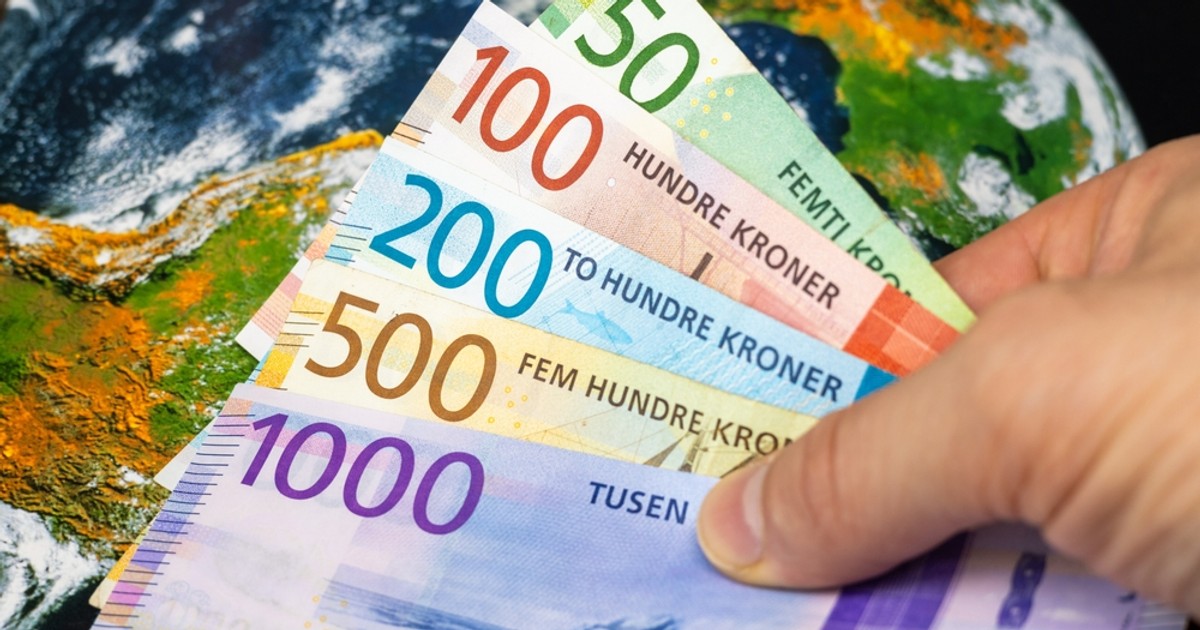
The sharp increase in oil prices following the escalation of the conflict in the Middle East has created many investment opportunities. The so-called oil currencies (petrocurrencies). Where does this name come from? Their rates are most correlated with oil prices.
We are talking mainly about three currencies:
- CAD (Canadian dollar)
- NOK (Norwegian krone)
- RUB (Russian ruble)
The rest of the article is below the video
They are the ones who benefit the most from rising oil prices, because the economies of the emitting countries and their budgets are based on the export of raw materials.
See also: US Ultimatum on Iran Drives Oil Price. Experts warn
It is worth noting that after the rise in oil prices the American dollar was gaining strongly. However, its relationship with raw material prices is completely different than in the case of typical oil currencies. We write more about this later in the article.
Canadian dollar (CAD) – the most important oil currency in the world
Canada is one of the largest oil exporters in the world, and this raw material accounts for approximately 20-25 percent. its exports, which makes the economy highly dependent on the prices of “black gold”. When oil prices rise, export revenues also increase, the country's trade balance improves, and demand for Canadian dollars increases.
During previous increases in oil prices (e.g. after supply shocks, OPEC+ decisions or export restrictions), CAD systematically gained in value. In turn, sharp price declines, e.g. during the pandemic market collapse in 2020 or other supply crises, led to a strong weakening of the CAD.
Special offer
Norwegian Krone (NOK) – European currency pegged to Brent
Norway is one of the key exporters of oil and gas to Europe. Despite a diversified economy, the energy sector has a large impact on the budget and current account. When oil prices become more expensive, the revenues of the state and oil companies increase, which strengthens NOK. Additionally, the local central bank (Norges Bank) tends to tighten its monetary policy amid high oil prices.
During previous geopolitical tensions affecting Europe's oil supply, the NOK often appreciated faster than most European currencies. In turn, during periods of declines in Brent prices, the krone recorded sharp depreciation, especially after 2014, when oil prices plummeted along with increased production of the raw material in the USA.
Russian ruble (RUB) – a currency that is extremely dependent on raw materials
Russian exports – including the state budget – are also heavily dependent on oil and gas revenues. Hence, a large part of the sanctions after the outbreak of the war in Ukraine focused on these assets.
Oil prices almost directly affect the condition of the ruble. When oil prices go up, it often strengthens, and when it gets cheaper, it loses sharply. It should be noted, however, that in recent years this correlation has been distorted by political decisions.
US dollar – relationship with oil: it's complicated
For decades, there was a classic relationship on the market:
- when the dollar strengthened, oil usually became cheaper
- when the dollar weakened, oil prices rose
Oil is settled globally in dollars, so when the US currency rose in price, the commodity became more expensive for countries paying in other currencies. This limited demand and put downward pressure on raw material prices. In turn, a strong dollar attracted capital to US bonds and the money market, weakening interest in USD-denominated assets such as oil.
See also: The “dollar smile” has returned to the markets. See what this means for your savings
In practice, this meant that the dollar was not an oil currency – it often behaved in the opposite way to CAD, NOK or RUB.
Following the shale boom and the lifting of the oil export ban in 2015, the US became a net oil exporter in 2019 and has since the dollar-oil correlation is sometimes positive, not just negative.
What does this mean? The stronger position of the USA as an exporter makes rising oil prices may support the dollarbecause it increases revenues from American energy exports.
After the March attack on Iran, oil prices skyrocketed, and the USD value went up with it. This was mainly due to the dollar being treated as a safe haven rather than the dollar being treated as an oil currency. This is a classic risk-off effect during global crises.
Note: The information contained in the text is for informational purposes only and does not constitute an investment recommendation, information recommending or suggesting an investment strategy within the meaning of applicable regulations, or any other form of advice regarding the purchase or sale of financial products.