“Hotarul”, a Moldovan comedy about petty conflicts. Director Ion Borș: “In my childhood, neighbors used to fight over fences and boundaries”

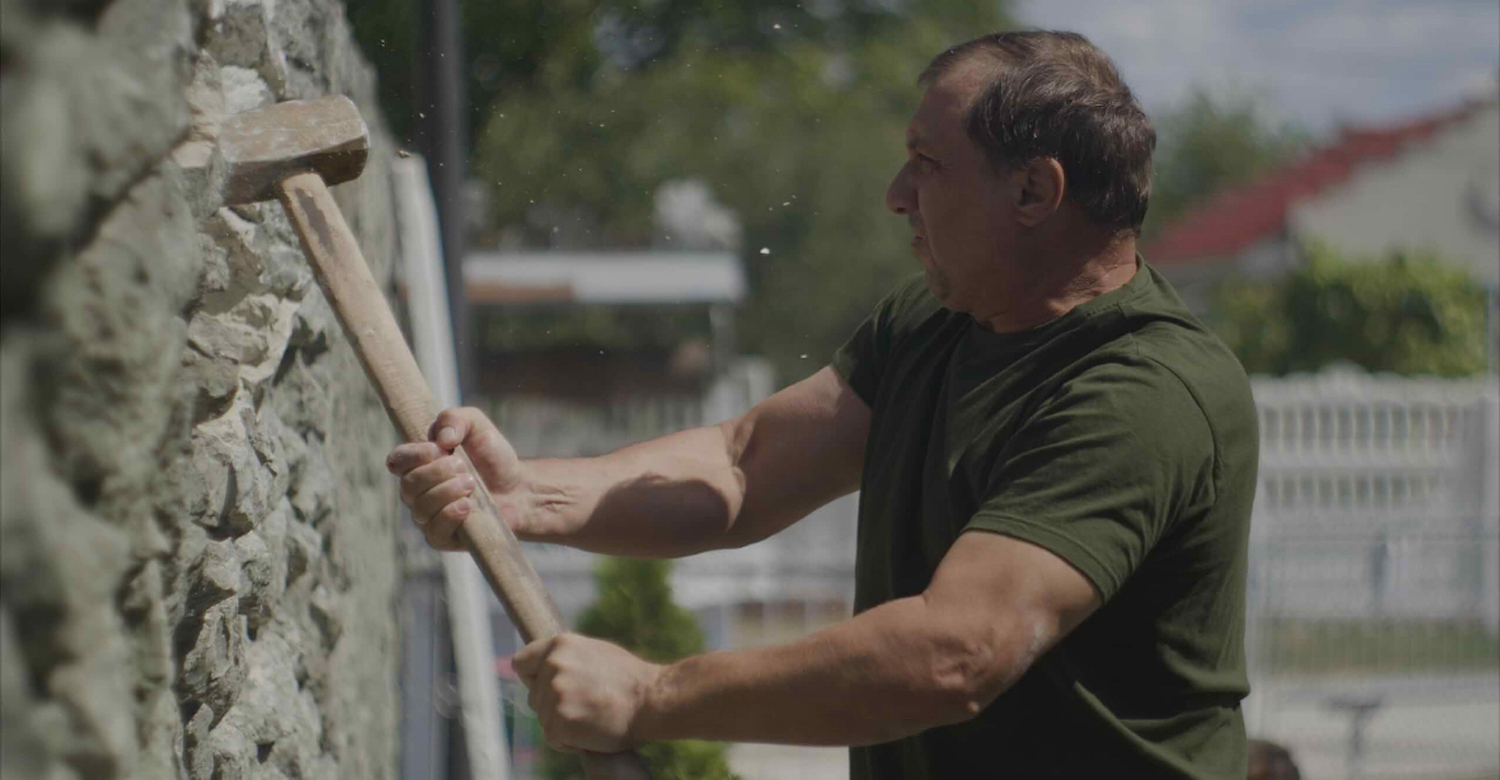
The Moldovan comedy “Hotarul” is set in a village across the Prut River, where two families end up arguing over a piece of land. “It's a film in which Romanians and Moldovans can easily find themselves,” says director Ion Borș, in an interview for HotNews about the symbolism of a simple border and how genuine humor, inspired by real life, reveals essential truths about people.
- The film “Hotarul” can be seen in cinemas all over the country.
Behind the film “Hotarul”, we can find the same team that signed “Carbon”, the first Moldovan film to enter cinemas in Romania, after its impressive success at the Moldovan box office.
Directed by Ion Borș and Ruslan Moroșan, based on a script by Mariana Starciuc and Artur Erhan, “Hotarul” takes us to a village in Moldova, where two families with a rich history end up arguing over a piece of land.
“We started from the idea of a border and how much a simple fence can mean. We wanted to talk about how small conflicts can say something essential about people. The characters and situations come from reality, from a mixture of fun and reflection,” the director explains to Hotnews.
“In the village you see most clearly what really matters”
Filmed over 28 days in the villages of Recea, Miclești, Drujba and Scoreni in the Republic of Moldova, the film has a lot of rural energy and a lot of attention for the village people. “I like the sincerity of the people, the naturalness with which they live and react. In the village you see most clearly what really matters. Perhaps the message is not to forget where we come from and to value the simple things”, explains the director about what he likes most about the world and the simplicity of country life.
Ion Grosu, Andrei Locoman, Igor Caras, Cătălin Lungu, Maria Onica, Pavel Sîrbu, Sergiu Voloc, Anatol Melnic, Lilia Cazacu, Natalia Bernaz and Tudor Țurcan are the actors who give life to savory, human and, at the same time, complicated characters.
“Hotarul” came to life also thanks to the success that “Carbon” had both in Moldova and in our country. “I feel that the public in Romania has started to be more curious and open to films from the Republic of Moldova. “Carbon” has opened a kind of gate and I think the world is interested in seeing new stories, told from a somewhat closer, but still different, perspective. I think there is a thirst for authenticity, and our films come with that,” states Ion Borș.
His first film gave him the confidence to make his second, but the story, as he describes it, had been with him for years and was waiting for the right moment to surface. “The idea is related to my childhood and memories of neighbors fighting over fences and borders.”
“Moldovan humor is not strident, it does not force the point”
Even if it takes us to a rural world across the Prut, we will easily find defining elements for our villages, but above all we will meet the typologies of familiar people, as well as comical or tense situations present in any family. The connection to land and property remains in our DNA and can even push the limits of logic when confronted with inflamed egos, cranky relatives and a background where everyone knows what everyone is doing.
“Hotarul” is a comedy, but not a forced one, but one that gives you the feeling that you are sitting at a table with some people who tell stories from the village. “Moldovan humor is direct, honest, with a lot of self-irony and a special naturalness. It's not strident, it doesn't force the point, but it makes you laugh because you recognize the truth behind the story,” says Ion. Although he sees small differences between Moldovan and Romanian humor, he believes that, in essence, we laugh at the same things.
“Perhaps with us, with Moldovans, the humor is a little more subtle, with more hidden irony, but I think we quickly find common points when making jokes,” emphasizes Borș.
We also brought to his attention the Romanian mainstream comedies of the last period, the ones that rely on very obvious jokes or on almost Hollywood situations, and invited him to talk to us about how he sees the difference between this type of comedy and the more natural, more “life” humor that we see in his films.
“The humor in “Hotarul” is inspired by real life, not a comedy recipe. The situations are recognizable to anyone who has lived in the village, and the jokes are not just put on for show, but come naturally from the story. I think that catches the public differently, it's a different energy,” he claims.
“In hard times, it's humor and solidarity that help us endure”
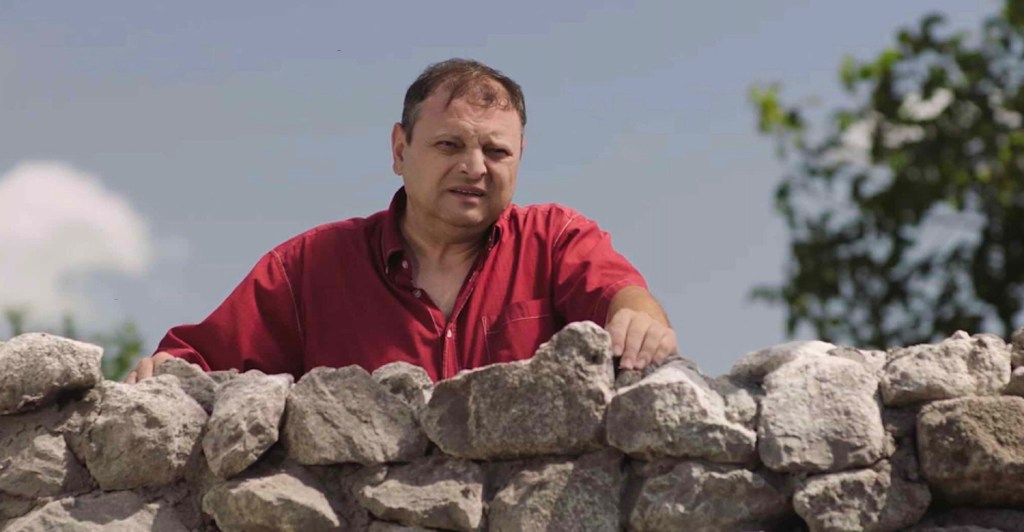
Regarding the essence of “Border”, the director also created a metaphor in the middle, where the piece of land that the families are fighting over is just a pretext. “In reality, we're talking about how easily we can argue and distance ourselves over small things, forgetting what really matters. I wanted to show that with humor so we can recognize each other more easily.”
The global context at the present time, the instability that we all feel at the individual level, also seems to demand initiatives that remind us of values for friendship or family. Borș took these aspects into account and this is precisely what he wanted with the new production, to offer us an opportunity that shows us again what is important, from the relationships and support between people, to the community. “In difficult times, humor and solidarity are what help us to resist. Humor is a survival mechanism. It helps us to face the difficult, to get over absurd or painful situations. We, Moldovans, have learned to laugh even when it's hard, it's a kind of self-defense”, as he says.
Borș talks about how prides, conflicts and reconciliations are universal, which is why “Hotarul” is a film in which Romanians and Moldovans can easily find themselves. “That's exactly what I wanted. For it to be a story that, although it starts from a village in Moldova, is recognizable to anyone, anywhere.”
“I want a united Moldova, where people are not divided by borders and ideologies”
As for the film industry in Moldova, compared to the time when he produced “Carbon”, in 2020, in the midst of a pandemic, with few resources and a lot of work from the whole team, Ion believes that the field has developed, but there is still a lot of work.
“There are more films, more interest, more openness from the public and institutions. It's hard, but it feels like there is progress. I would like to see more real financial support, infrastructure, and a clear system for productions. We have talented people, they just need to be given the chance to create without so many obstacles.”
As for his country, which, in an interview from 2023, he said he wanted “to be a country and not half on the left and half on the right”, Ion Borș maintains his statement, but also hopes for better times.
“I still want a united Moldova, where people are not divided by borders and ideologies. I hope that the future will be about closeness, about finding solutions together, not about separating us even more”, he concludes.