Trump loosens sanctions on oil from Russia. Why? It's about another power

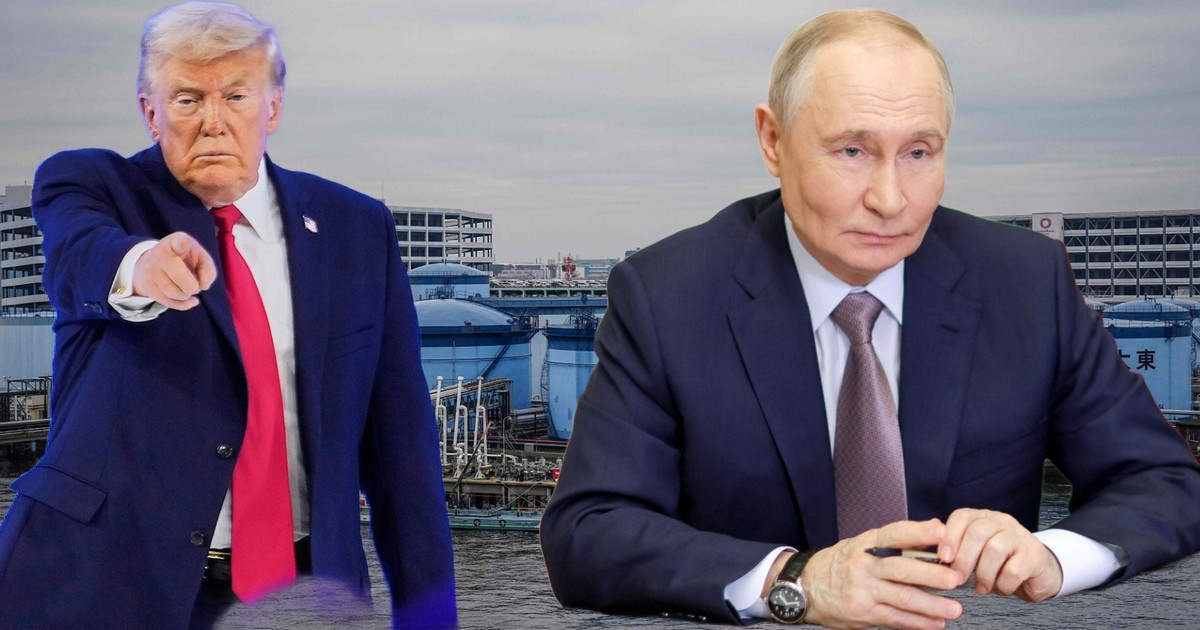
The US “window” for Russian oil already loaded at sea is intended to quell the supply shock following the blockade of Hormuz.
What is the American game, what role does India play in it and how much will Russia's budget benefit from it? We translate and present experts' calculations.
Read also in BUSINESS INSIDER
On March 13, the US Office of Foreign Assets Control (OFAC) of the Treasury Department issued General License 134. The document allows the sale, delivery and unloading of Russian crude oil and petroleum products already “on the water” until April 11.
The authorization also covers shipping services (insurance, classification, ship management), but does not apply to new cargo and does not abolish the entire sanctions architecture or maximum price. This is a “narrowly tailored” and “short-term” derogation, intended to increase the global reach of existing supply amid the crisis in the Middle East.
The rest of the article below the video:
How will this affect oil prices?
The war in the Middle East has caused the largest supply disruption in years, with flows through Hormuz down to a “stream”, some refining capacity in the region has been shut down, and the I.E.A. mobilized up to 400 million barrels of emergency reservesto stabilize the market. This is the background against which Washington decided to tactically “unfreeze” cargo at sea.
However, this will not bring any significant change in terms of global prices. — The easing of sanctions against Russian oil should not significantly move global prices. In recent months, stocks of Russian oil on tankers have been increasing – approximately 100 million barrels. This may alleviate the situation only temporarily: it will allow for a temporary increase in available volumes, but does not change the structural supply constraints, says Rafał Zywert, oil market analyst at Reflex.
What is the point of Trump's actions? It's about India
Therefore, it is difficult to count on a decline in global prices due to this maneuver. However, the US has an interest in supporting India – a country whose favor Washington is strongly trying to win.
The blockade of the Strait of Hormuz has hit New Delhi's interests hard. — The Persian Gulf supplied India with approximately 2.1-2.4 million barrels per day (approx. 40-45% of imports). If the flow through Hormuz is limited, there is nowhere to get the missing volumes in the short term. — India imports approximately 5.5 million b/d, of which approximately 40 percent passes through the strait. To become completely independent, a “second Russia” would be needed. It's impossible, says Rafał Zywert.
At the same time, Americans owe a kind of “debt of gratitude” to India. They actually turned away from importing oil from Russia at the recent request of Donald Trump. — India was a key buyer of Russian oil, at one point purchasing 1.7-1.8 million barrels per day. After pressure from the US (increasing tariffs) and then the announcement of the trade agreement between the US and India, these purchases dropped sharply to approximately 0.5 million barrels per day in February, or approximately 30%. last year's volume – says Rafał Zywert.
As he says, now Russia is dictating much higher rates to India than before the conflict in Iran. — Russia now sells oil to India at a higher price than before the war. For comparison: Urals in Rotterdam recently cost about $76.5. per barrel, Urals ex Baltic approximately USD 70, and Urals DAP India – nearly USD 100. Before the war it was approximately USD 42 and USD 36–37, respectively. and $59 Russia appears to be price-cutting India by taking advantage of alternative supply constraints – he enumerates.
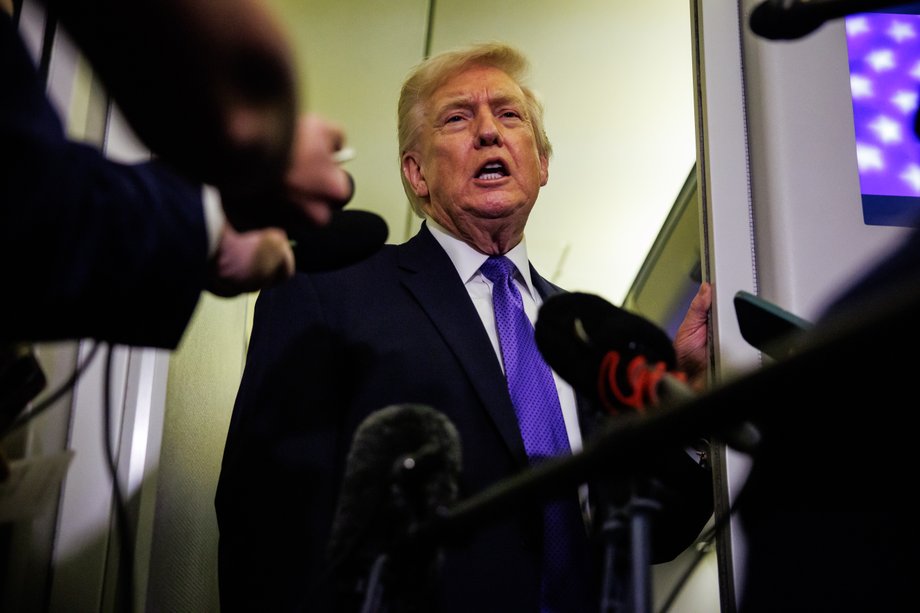
Donald Trump after signing the waiver of additional tariffs on India aboard Air Force One en route to Palm Beach, Florida. The president will spend the weekend at Mar-a-Lago, his private club.
|
Samuel Corum/Getty Images
Russia's budget will benefit, but it has a serious problem
Expensive oil and the easing of sanctions favor Russia's budget. This is evidenced by the data – recently, the prices of Urals oil delivered to India approached $100. per barrel, and the price difference to the global benchmark – Brent crude oil – shrank to a few dollars.
— Estimates suggest March revenues alone they may be higher by several billion dollars compared to the previous months, which would practically double the revenues compared to February. However, it should be remembered that the income obtained in January and February was exceptionally low, says Iwona Wiśniewska, chief specialist in the Russian team of the Center for Eastern Studies (OSW).
However, he argues that this does not mean a lasting improvement in Moscow's coffers. — After the first two months of the year, the federal budget deficit reached the level planned for the entire year. This is the result not only of lower revenues – both from the oil and gas sector and from other sectors – but also of the accelerated pace of spending, mainly on armaments. The search for savings continues and I would expect a real budget adjustment only around April, says the OSW specialist.
Despite the increase in oil prices, the government in Moscow has not withdrawn from its plans to reduce spending. The Ministry of Finance has proposed budget cuts of 10 percent this year. This is a clear signal that the authorities are preparing for a negative scenario: the end of the war in the Middle East and another decline in oil prices to levels significantly lower than currently, he adds.
A breach in Western sanctions
Even if U.S. decisions have a moderate impact, they may set a precedent for further lifting restrictions. — This is undoubtedly a breach in the Western sanctions regime. After several years of consistent tightening of restrictions, they have been temporarily loosened – for now for a month. We will see what decision the US administration will make in April, but it is already a bad signal and a success for the Kremlin, says Iwona Wiśniewska.
However, according to Iwona Wiśniewska, such a risk is small. — American energy interests are fundamentally opposed to Russian ones. The United States traditionally strives for the lowest possible oil prices on global markets, which affects Russia's income. At the same time, the USA is interested in increasing the export of its own LNG, which makes it a direct competitor of Russia on gas markets, he claims.
He also does not believe that this could be a prelude to changes in European sanctions policy towards Russia. — The sanctions imposed on Russia by Europe are not a symbolic gesture. This is a basic tool for limiting Russia's ability to pursue aggressive policy. Their withdrawal would mean providing Russia with fuel to continue and escalate its actions, which would directly increase the threats to EU countries, says Iwona Wiśniewska.
— In 2022, the situation on energy markets was even more difficult, and yet EU countries decided to tighten sanctions, considering that security considerations take precedence over economic costs. This calculus has not changed: Europe's security requires us to be willing to bear the costs – sums up.
Grzegorz Kowalczyk, journalist of Business Insider Polska