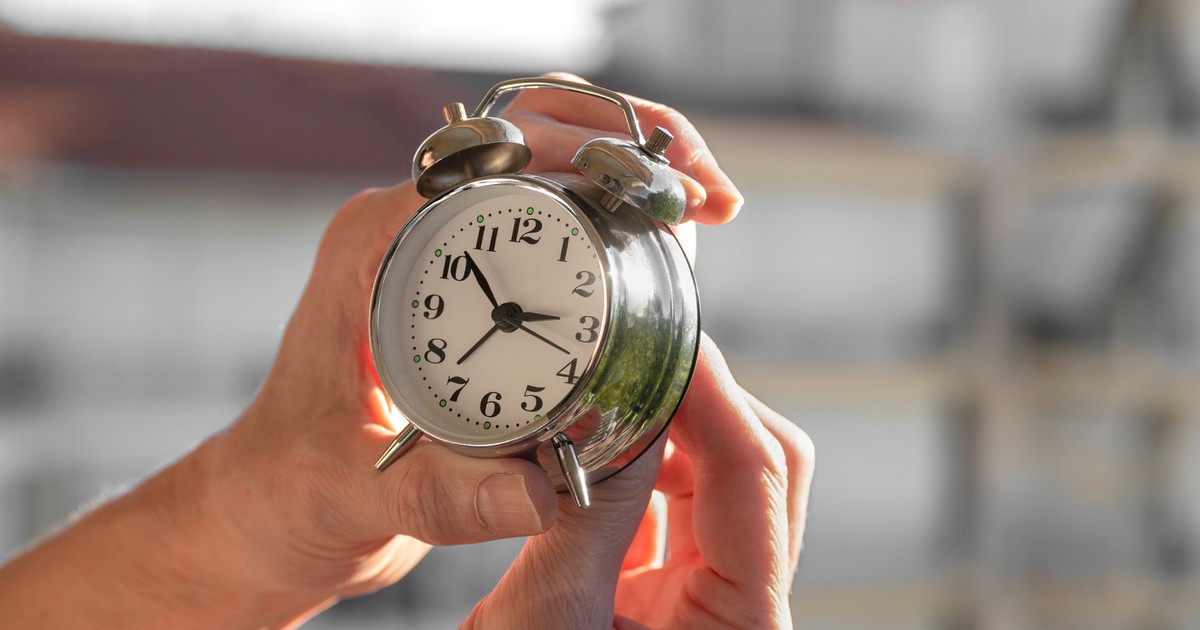
When the holidays end, the upcoming moment when we will have to change the time again. Because although a discussion has been going on for years, in 2025 there will also be a change of time to winter. What's more, this year will happen earlier than in previous years.
See also: Who is losing time? Here is the costs for the economy
As a rule – as Onet reminds – a change in summer to winter is set from above, but not a specific day. In Poland, summer time is valid from the last Sunday of March to the last Sunday of October. This means that the winter time starts on the last Sunday of October. This year, the moment when the time will be changed will take place quite early.
The change in time in 2025 will take place on October 26, 2025, when we withdraw the instructions from 3.00 to 2.00. The aforementioned date change is earlier than those we had in previous years. As Onet recalls, in 2024 the winter time began on October 27, in 2023 on October 29. Three years earlier, we moved watches on October 30, and four years ago on October 31.
This year, the change of time to winter will take place faster than usual
For years, there has been a discussion in many countries about changing the time and the consequences that it brings for individual citizens, as well as entire economies. In the whole of the European Union, for winter time it is passed on the last Sunday of October. The date and time of starting and ending of the period of use of summer time in all Member States are regulated by the directive in force since 2001.
In Poland, a change in time is regulated by the Regulation of the Prime Minister regarding the introduction and cancellation of Central European summer time in 2022-2026.
See also: Are you 30 or 40 years old? You enter the golden period. That's how your peers earn [TABELE]
Experts have repeatedly indicated the impact of the change of time on winter on our organisms. Cited by PAP prof. Marta Jackowska from the University of Social Sciences and Humanities in Sopot explains that “change of time is therefore nothing but a disturbance of the functioning of our biological clock by manipulating light availability.”
The expert reminds that the functions of our body, such as sleep, vigil, digestion, body temperature or even mood, are regulated by our biological clock. Its functioning is closely related to the availability of light or its lack, i.e. darkness.