A year ago, at the Security Conference in Munich, after the statements of the American Vice President JD Vance about the cancellation of the presidential elections in Romania, we seemed like an almost isolated country, cornered, although those statements did not correctly describe the Romanian reality. It was a difficult moment, one in which Romania was at risk of no longer being viewed as a serious ally (rather as a problem) by our main security partner within NATO.
Since then, however, Romania has worked enormously to regain trust and rebuild the relationship with the United States, and this was done through a real political effort, through the seriousness and strategic clarity of President Nicușor Dan and Prime Minister Ilie Bolojan. The president said very clearly, since January, that the Strategic Partnership with the USA remains a fundamental direction of Romania's foreign policy, and in March Prime Minister Bolojan discussed with the new American ambassador both the security component and the economic and investment one.
In other words, the partnership with the Americans is visible again and is concrete again. It's as if we passed over this extremely important achievement for national security too easily!…
Everything I say is also seen in the facts.
Major expansion and modernization investments continue at Mihail Kogălniceanu, in a project of more than 2.5 billion euros that must transform the base into a strategic NATO hub on the Black Sea.
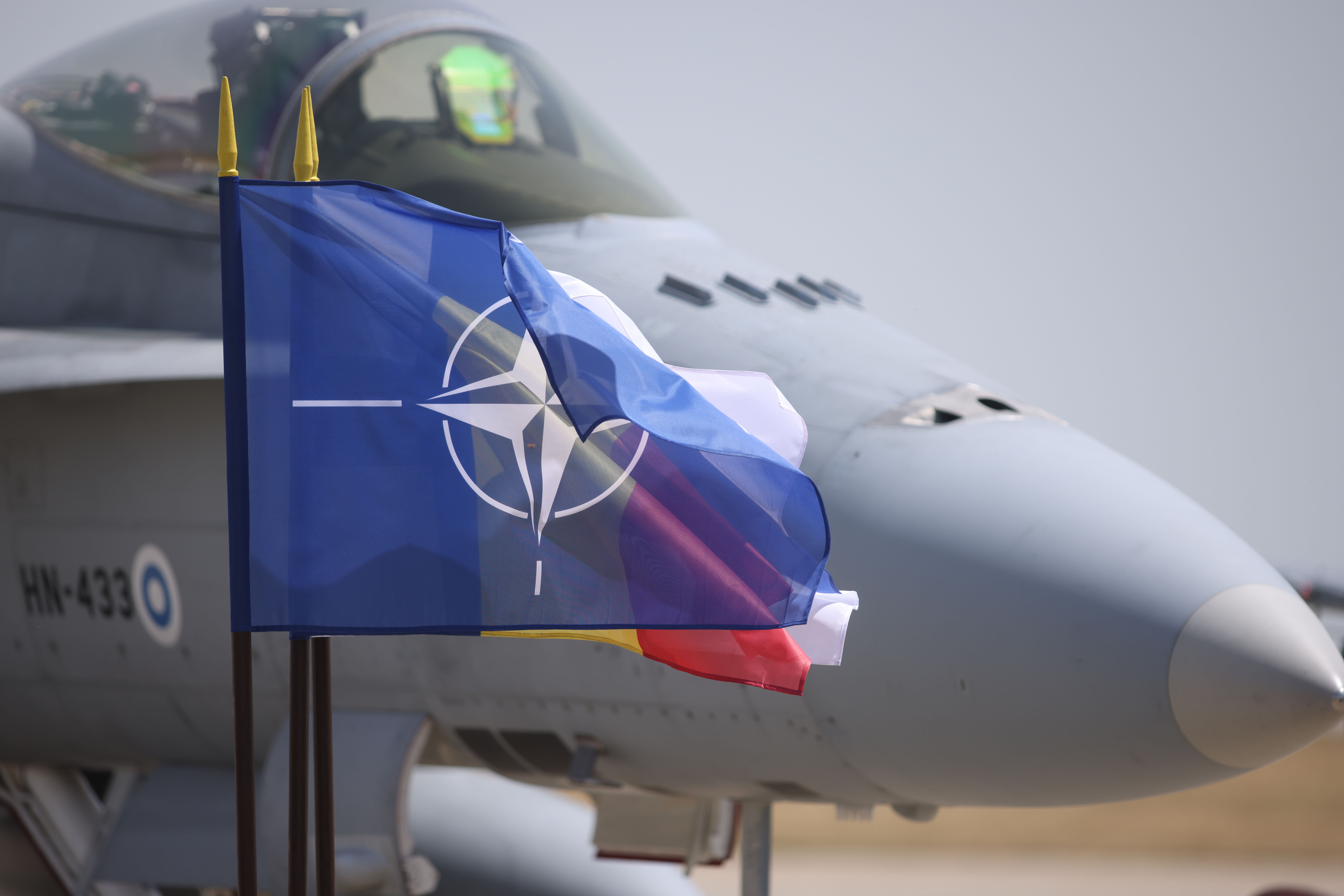
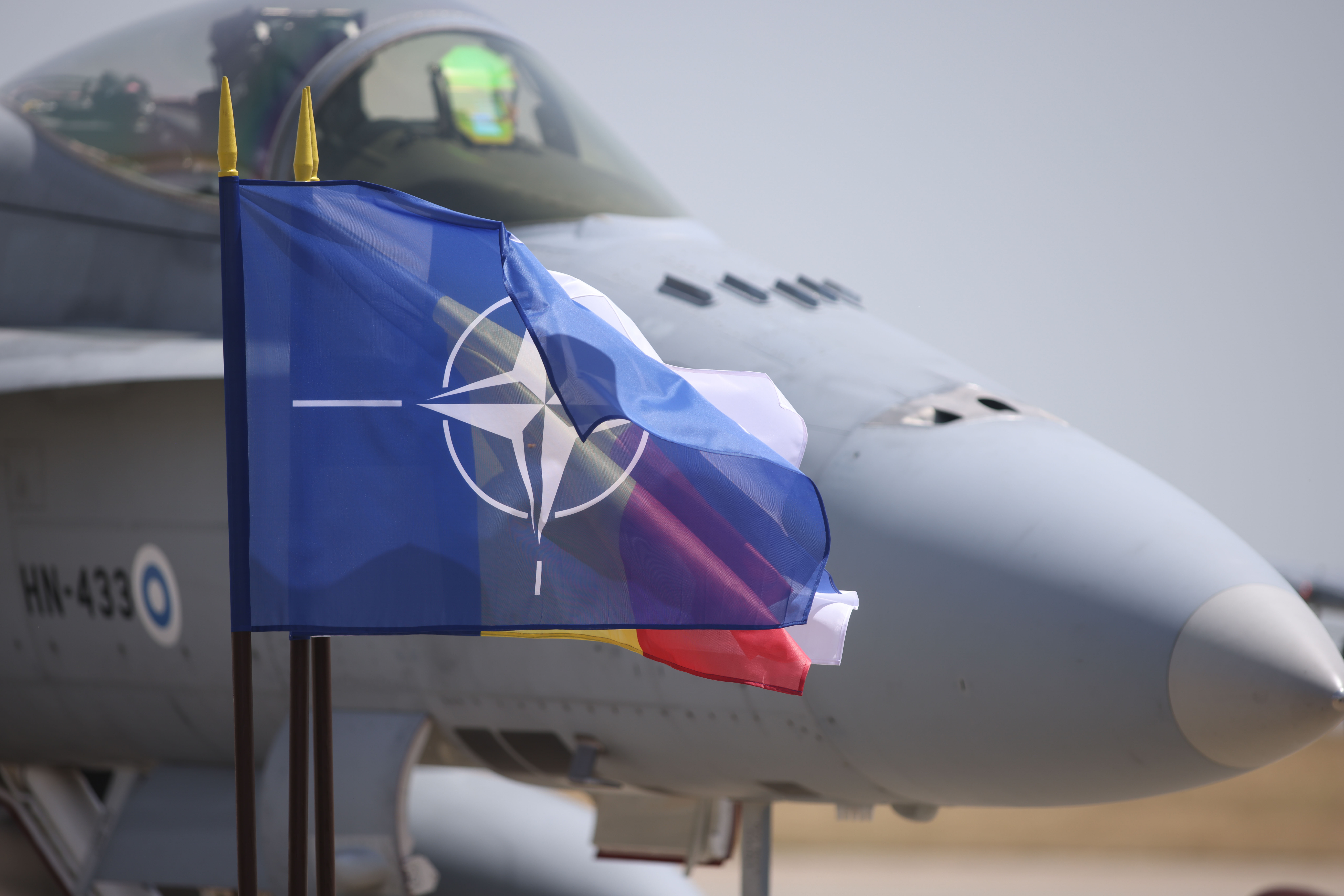
Also these days, Romania also approved the temporary deployment of defensive equipment and American military personnel, in accordance with our strategic partnership with Washington. This means that Romania is treated as part of the security architecture of the eastern flank. It is obvious.
Moreover, Romania enters more and more clearly into the logic of the new European defense industry!
The declaration of intent has already been signed with Ukraine for cooperation in the production of defense systems, including drones, on the territory of Romania. Such an investment means, of course, technology and military security, but it also means employment, i.e. engineers, technicians, operators. And it means wages, skills and well-paid jobs in a strategic field.
In Mediaș, at Automecanica SA, the production of Cobra II armored vehicles, intended for the Romanian Army, begins, an investment made possible through a strategic partnership, which included technology transfer, between the SKB group, through Automecanica SA, and Otokar, a Turkish company, one of the most important in the automotive and defense industry in the region.
So, Romania goes beyond the position of security beneficiary! Our country now also comes with an increased capacity as a security provider.
Through the European SAFE program, Romania was allocated 16.68 billion euros for defense investments, one of the largest allocations in the European Union. That is no small thing.
I want to emphasize. We have before us a historic chance for our defense industry, for infrastructure and for strengthening Romania's position in a Europe that finally understands that security costs, yes, but its absence costs infinitely more.
It is also worth remembering what NATO Secretary General Mark Rutte said yesterday, March 19, at the meeting with President Nicușor Dan: Romania has been a steadfast ally for over 20 years and plays a strategic role on the Eastern flank of the Alliance, including the Black Sea, a vital region for common security. These are words that show that Romania has returned, through the efforts of the president and the prime minister, to where it should be: in the circle of credible states.
But from now on it is not enough to be credible only militarily and diplomatically.
Romania needs credibility and budget.
The government led by the PNL has given a great sign of seriousness, it has respected its agreements with the European Commission, and it is moving towards a deficit target of 6.2% of GDP in 2026, with a decrease in the following years. The European Commission projects a deficit of 5.9% for 2027, and the path agreed at the European level continues in 2028. It is not easy, but it is mandatory, because without budgetary discipline you have neither confidence, nor cheap access to financing, nor, let's not forget, stability. And without stability, we return to the improvisations of the socialist-led government! Do we really want this? Can we really afford to go backwards?
At the same time, we have a great moral and political obligation to care for vulnerable people. But here, I think the truth must be told to the end.
Although, everywhere in the world, socialists try to monopolize the discourse about the vulnerable (strictly through words), the reality is that the best solutions are offered by liberals and Christian Democrats, because they work punctually, concretely, with the man in need, BUT not to leave him there, but to support him to climb, become productive and realize his potential in life.
Unlike socialists, Christian Democrats do not subsidize everything for everyone and buy votes through mechanisms that perpetuate and deepen poverty while creating even more dependence on the state! Christian Democrats do not condemn able-bodied people to government-administered poverty through more and more loans that impoverish us all!
To really help is to lift the man up.
What I want to tell you, dear readers, is that military security and individual security are by no means worlds apart. They are one and the same reality, seen on a different scale. When the state is safe, the border is defended, the alliances are solid and the budget is credible, the person has better chances to have a job, salary, public investments, peace and perspective, that is, trust both now and in the future. On the contrary, when the state is weak, confused and wasteful, the common man pays first and dearest.
In all this context, I want to tell the cardboard socialists (those who fly private planes!..) to stop attacking multinationals. Here's why.
First of all, some of us worked for years to bring them to Romania, and I know very well what I'm talking about. In Arad, when I took over the city administration in 2004, there were around 39,000 jobs and high unemployment. what did i do
We opened industrial zones, brought in large companies, created conditions for investment, and in 2015 the municipality reached 90,000 jobs and an unemployment rate of 0.2%. Was it better without them? Would it have been better to live on unemployment benefits?
That, I believe, and most of you, means administration that understands the real economy. This means that jobs do not appear out of nowhere, and certainly not from socialist slogans against foreign capital (which we need like air!), but from investments, which come when there is infrastructure (including administrative) and when there is trust.
When you hit multinationals hard, as socialists do, you actually hit people's jobs and push them (knowingly!) back into unemployment, vulnerability, poverty and state dependence.
The case of Dacia should simply be a national lesson.
The 1% turnover tax imposed by the socialists was criticized including by Prime Minister Ilie Bolojan as a factor that affects the competitiveness of large manufacturers; meanwhile, Renault has confirmed that a new C-segment Dacia model will be produced in Turkey, not in Mioveni, and the union warns that around 1,200 people could be made redundant, with knock-on effects for supplier firms, for those who make cables, steering wheels and other components. We are not talking about ideology here. We are talking, dear readers, about people's bread! Socialists don't seem to care. Do you understand the monumental hypocrisy? In fine.
Today, now, Romania is in a moment where it can choose, as a way forward, either the liberal and Christian-democratic maturity, or the poverty-inducing noise of the socialists.
I think we have to choose maturity. I think we need to be strong in NATO, serious in the budget and economically intelligent in the EU. I think we need to be humane to the vulnerable.
But I also think we need to understand that you can't defend the country if you destroy investment, you can't help people if you kill their jobs, and you can't demand respect from the outside if you don't build credibility inside.
Romania has emerged from an extremely risky moment of isolation. Now, he must prove day by day that he has learned his lesson.