Finland breaks nuclear taboo. The Kremlin responds with threats. “We will take appropriate steps”

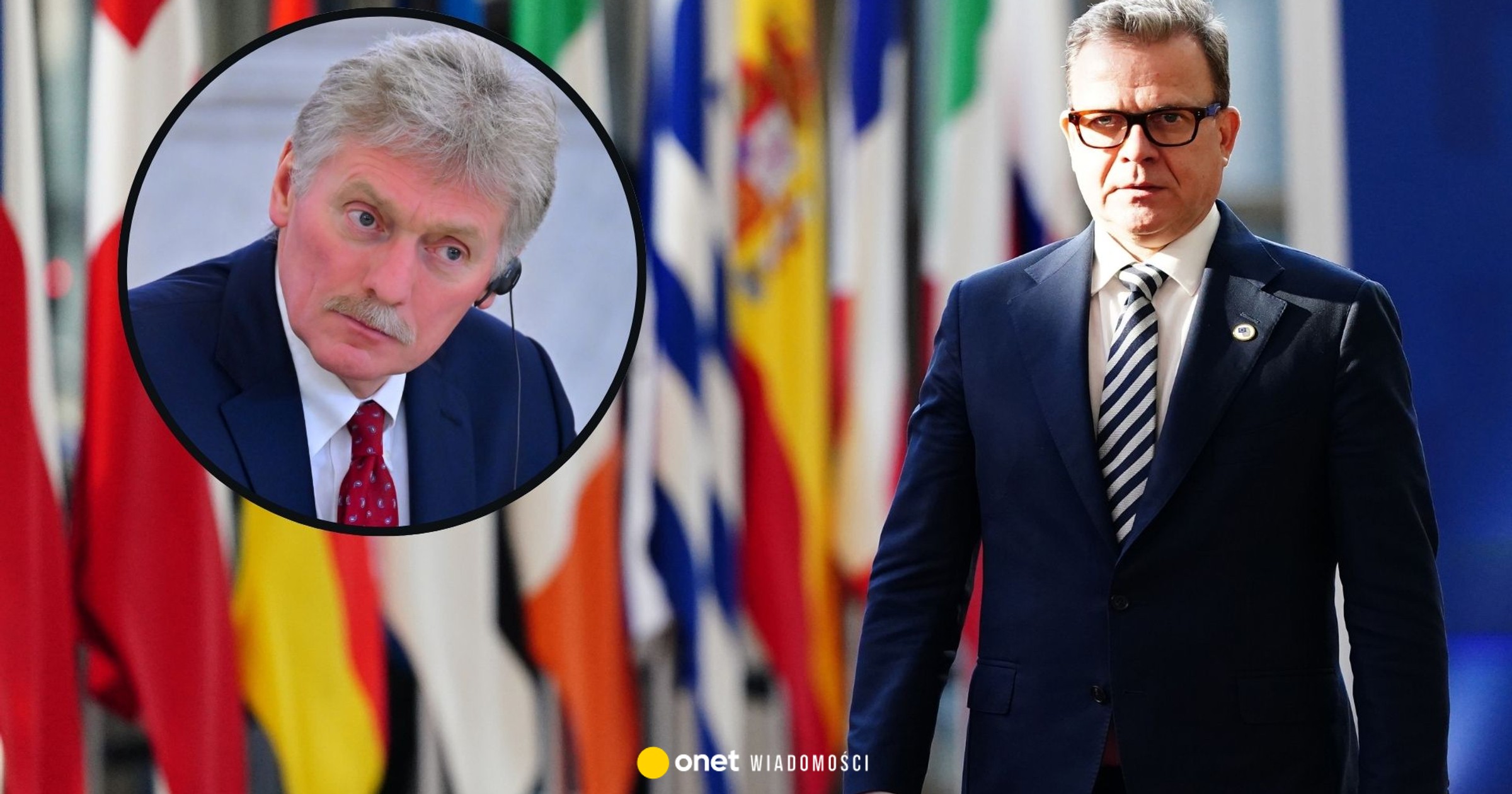
The Kremlin reacted immediately. When it was announced earlier this month that the Finnish government wanted to allow the presence of nuclear weapons on its territory for the first time in decades, threats came from Moscow. — By deploying nuclear weapons on its territory, Finland is beginning to threaten us, said Kremlin spokesman Dmitry Peskov. — If Finland threatens us, we will take appropriate measures.
Vladimir Putin's entourage is constantly trying to intimidate the Finns. Recently, his people claimed that Finland was preparing for war with Russia. And after Helsinki submitted an application to join NATO in 2022, Moscow even threatened to deploy nuclear weapons in the Kaliningrad Oblast – located less than 900 km from the Finnish capital.
The reason for Russia's violent reactions, as well as the heated debate in Finland, are the plans of the conservative government of Prime Minister Petteri Orpo to change the regulations on nuclear weapons. The current Nuclear Energy Act of 1987 prohibits the import, production, possession and use of nuclear weapons within Finnish territory.
However, under the planned reform, the transit and temporary storage of nuclear weapons for defense purposes could be allowed. The government emphasizes that the goal is not to permanently station nuclear weapons in Finland. Government officials portray this change as more of a deterrence issue.
Defense Minister Antti Hakkanen, presenting the proposal, referred to the concept of “strategic ambiguity”. “This means that issues of nuclear deterrence and nuclear doctrines are deliberately presented and defined publicly in an ambiguous way to make calculations more difficult for potential adversaries,” Hakkanen said.
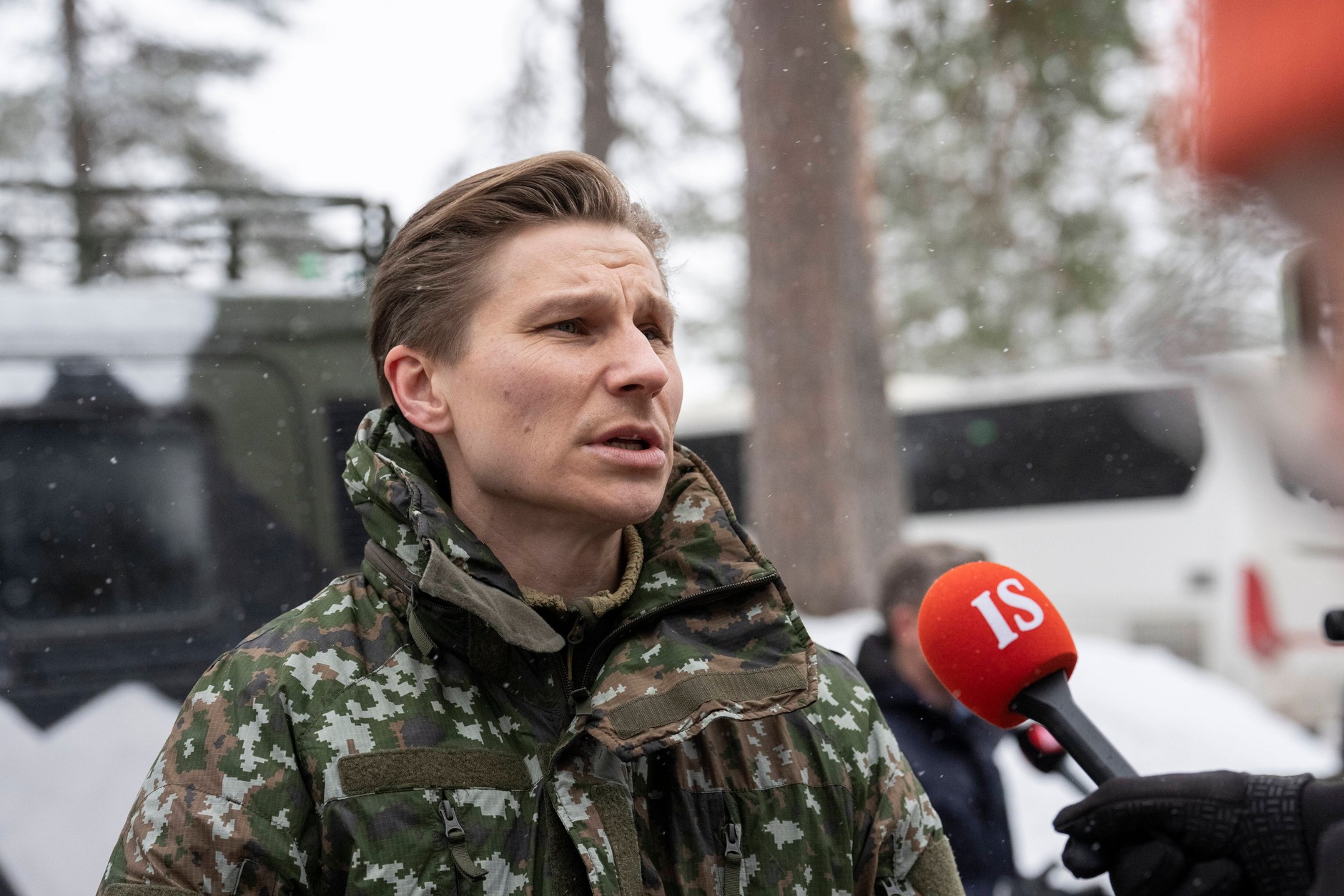
Finnish Defense Minister Antti Hakkanen addresses the media during the NATO Cold Response 26 military exercise in Rovaniemi, Lapland, Finland, March 16, 2026.KAISA SIREN / PAP
According to experts, there are strategic reasons why NATO would prefer to deploy its nuclear weapons further from the border with Russia than in Finland. Nevertheless, it makes no sense for Finland to limit its legal options in advance, thus signaling to Russia how the country and the alliance would behave in the event of a conflict.
This step would be a logical consequence of NATO membership – says Finnish foreign policy expert Charly Salonius-Pasternak in an interview with “Die Welt”. — One of the three basic arguments for membership was the nuclear shield. It would be quite strange if we wanted to benefit from nuclear deterrence but were not prepared to participate in it. It would also not fit the Finnish mentality, he notes.
There are several scenarios where current law makes the situation extremely impractical, explains Salonius-Pasternak, managing director of the Helsinki-based think tank Nordic West Office.
— We must prepare for a situation in which a fighter with a nuclear warhead must or is forced to land in Finland for strategic reasons, he says. —Such scenarios cannot be planned for unless they are legally permitted. Otherwise it would mean planning to commit a crime.
When asked about the Kremlin's statements, the Finnish Defense Minister explained that Finland reacts to threats from Moscow “calmly and with distance.” In his opinion, the new law would reduce the risk of Russian military actions rather than increase it.
Opposition against changes
In the coming months, the Finnish Parliament will vote on the project after consultations, committee deliberations and parliamentary debates. The largest opposition party, the Social Democratic Party (SDP), has already announced that intends to vote against the planned changes.
The party led by Antti Lindtman has a chance to lead the next government after the parliamentary elections in 2027. In its motion, which it presented to the president on Friday, SDP demands the suspension of the government plan and the restart of discussions with the parliamentary working group.
Critics say the main problem with the project is the way it was prepared. The government developed it largely in secret rather than following standard parliamentary procedure. Prime Minister Orpo defended this course of action, arguing that nuclear weapons are a sensitive topic and a more open preparatory process could increase the risk of information leakage.
The current regulations date back to the Cold War. Finland then consciously passed very strict laws to ensure that the Soviet Union could never legally bring nuclear weapons into the country, invoking the 1948 Treaty of Friendship, Cooperation and Mutual Assistance between Finland and the Soviet Union.
However, the situation today is completely different than it was during the Nuclear Energy Act of 1987, says the Defense Minister. With its accession to NATO in 2023, Finland became part of the military alliance. The government argues that the reform will bring Finland in line with the practices of other Nordic NATO members.
There is an explicit ban on nuclear weapons except among NATO countries, says Hakkanen. In Denmark, Norway and Sweden, restrictions are defined primarily by political commitments and defense agreements and to a lesser extent by strict regulations.
In Germany, according to a YouGov poll from April last year, the majority of citizens are against having their own arsenal of nuclear weapons. 59 percent respondents oppose the deployment of American nuclear weapons in the country. Currently, about 20 American nuclear bombs are stored in Germany.
In Finland, nuclear weapons were already a topic before the Defense Cooperation Agreement (DCA) with the United States entered into force in 2024. It was discussed whether Finland should introduce provisions prohibiting the United States from introducing nuclear weapons into its territory.
Ultimately, this idea was rejected – primarily because nuclear weapons on Finnish territory were prohibited by law anyway. Social Democrats now argue that these restrictions would disappear with a change to the Nuclear Energy Act.
Orpo told the Finnish newspaper Helsingin Sanomat that the government, together with President Alexander Stubb, is preparing a written statement against stationing nuclear weapons in Finland in peacetime.
Tytti Tuppurainen, leader of the SDP faction in parliament, criticized this, saying that a political statement was not enough and that the restriction must be enshrined in law. — Relying solely on the declaration in this phase, after the DCA train has already left in 2024, would be problematic for Finland, adds opposition leader Lindtman.
When Finland joined NATO in April 2023, the country was still led by Social Democratic Prime Minister Sanna Marin. She then emphasized that Finland's application for accession should be submitted without preconditions – also in the field of nuclear policy. She believed that there was no point in maintaining unnecessary legal restrictions.
“A vote of no confidence in Finnish democracy”
Finnish foreign and security policy has historically been characterized by broad political consensus. When Finland decided to apply to join NATO in May 2022, only eight out of 200 members of parliament voted against it. Six of these votes came from the Left Alliance and one from the right-wing populist True Finns party.
The eighth vote belonged to Ano Turtiainen, who was previously excluded from the True Finns and has now moved to Moscow and has reportedly been granted political asylum in Russia. At that time, the Left Alliance was part of the government coalition led by Marin – this means that only two opposition MPs voted against joining NATO.
This tradition of unity has much to do with the historical experience of surviving the Cold War with the neighboring Soviet Union, Salonius-Pasternak says. This is why the current dispute over nuclear weapons legislation stands out as an extraordinary moment in Finnish politics.
In his opinion, it was a government mistake. — It was basically a vote of no confidence in Finnish democracy and public debate. This could have been avoided entirely if the government had followed normal parliamentary procedures, says Salonius-Pasternak.
Operational matters are kept secret for good reasons. However, he emphasizes, the fundamental discussion about whether nuclear weapons should be allowed or not could have taken place in public. — This just shows that the discussion about nuclear weapons in Finland is still in its infancy, he adds.