When nature avenges people's negligence. Praid floods remind of mining disasters that could be prevented

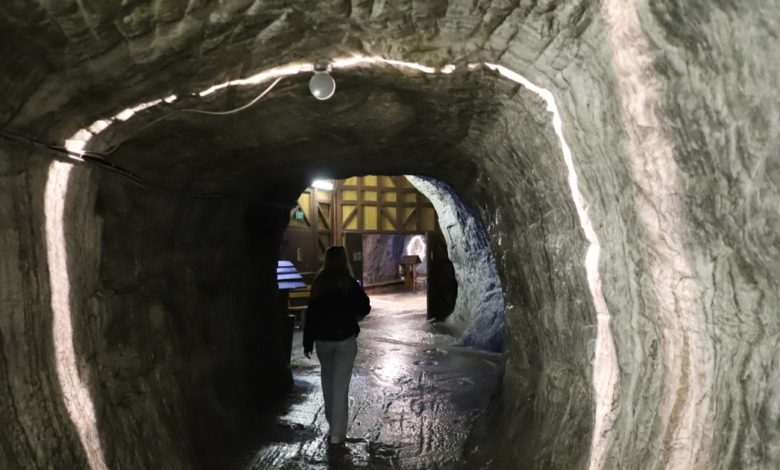
The anger of the waters was unclear with Salina Praid, the salt mine and the tourist attraction around which the entire region was developed economically. The Praid disaster is not an isolated accident: over time, natural phenomena and lack of prevention measures, caused other mining disasters.
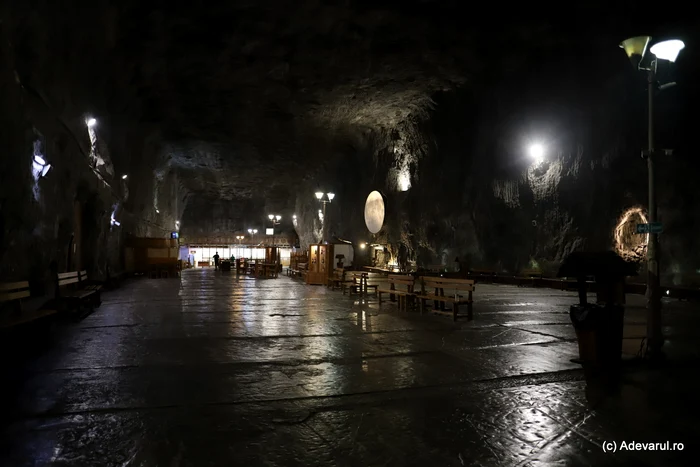
Salina Praid. Photo Daniel Guță, the truth
Salina Praid, one of the oldest salt exploitations in Romania, could have the fate of other former salt that collapsed and, in time, formed saline. Since the beginning of May, following the abundant rains in the Harghita region, Salina was flooded by the waters of the Corund River, whose flow was almost 100 times higher than normal.
Devastating floods at Praid
After flooding the Praid mine and the treatment base, some locals accused the management of the Salrom mining company in the way he managed Salina, claiming that he failed to prevent floods. Salina Praid has been flooded in the past because of the infiltration, but the streams of the Corund stream never caused such damage.
“The company NA wanted help. Now, when the works in an emergency began, it was already too late. They tried to stop the flood with fresh concrete. That's the supreme proof of incompetence”, A local report, during a protest action at the mining exploitation gate, organized at the end of May.
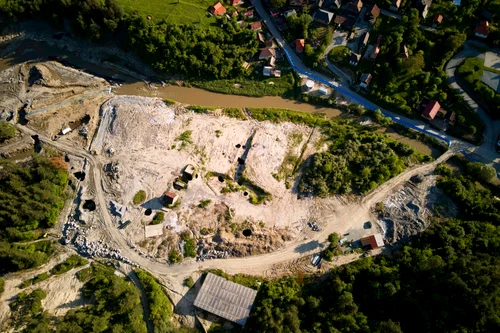
Image 1/17:
Instant Praid Salina 02 Inquam Photos Alex Nicodim JPG
On Tuesday, the Minister of Economy, Bogdan Ivan, announced that the interior of the saline is monitored with the help of advanced technology scanners. These are used for the mapping of the basements and for evaluating the degree of erosion. Solutions for evacuating part of the water will be established later.
“For the time being, there are no signs of imminent collapse of saline, and the suffusion of the old mine has stopped, which is considered a positive sign. The priority of the authorities is to protect the population and, if possible, the reopening of the tourist segment”said the minister.
According to him, Mina Joseph, established in 1762 and distinct from Salina Praid, was the source of water infiltration in the saline used for visitors. This is where the suffusions were recorded, that is, the dissolution and transport of sand and salt through the water, which led to the formation of gaps underground. These processes started on Sunday, but did not have a significant evolution, which is considered a good sign, the minister said.
Although they did not make victims, the floods in Salina Praid are a disaster for the local community. The salt mine offers jobs for more than 150 locals, and Salina, where a treatment base works, is visited annually by over 400,000 people.
Prevention measures taken in time by authorities could have limited the effects of floods, some locals say.
When nature avengs people's negligence
The disaster at Salina Praid reminds other similar events, due to mining exploitations. In 2010, a huge crater appeared in the center of Ocna Mureș, after the underground galleries of the salt mine. The underground collapse devastated a supermarket, several houses and a portion of road.
The most tragic mining accident, caused by both the forces of nature and the human negligence, took place on October 30, 1971, in Certej (Hunedoara county), where the dam of the metaliferous mine decantation, and almost 300,000 cubic meters of sterile were over the commune, swallowing a few minutes.
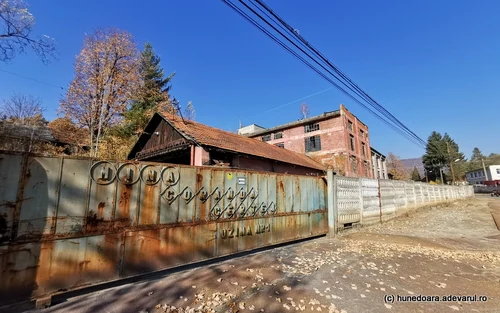
Image 1/20:
Certej photo Daniel Guță (16) JPG
A government commission and the Hunedoara County Prosecutor's Office investigated the circumstances of the catastrophe in Certej. After almost two years of investigation, they were not found guilty, the tragic event being considered unpredictable.
“The hypothesis that is the basis of the event produced, admitted almost unanimously by specialists and also by the government commission, consists in the loss of the stability of the sterile massif in time, on one of the decanter's sides, under pushing the rear material, due to the increase above the critical height limit, causing the massive to the mass of 250.000is shown in the Certej file 1971.
In the case of the sterile pond whose dam gave up during torrential rains, no preventive measures were taken, because, according to the existing pond exploitation regulation, the problem did not put, because the pond should have practically removed from the operation, it is mentioned in the file.
“The specialists appreciate that the pond was incorrectly located, incorrectly designed, incorrectly built and incorrectly exploited ”, noted the investigators.
In fact, five years before the catastrophe, the pond dam had broken once; However, being winter, the sterile was frozen, so the shopping of a large volume could not take place and there were no victims. After the 1971 tragedy, the mine continued to operate until 2006, when the Romanian state gave up operation.
Salted lakes on the bottom of the former saline
The long exploitation of salt mountains, natural phenomena and underground works caused, in Romania, the collapse of several mine and mining galleries, leading to the formation of saline lakes. Some have become, over time, tourist attractions.
Located less than 15 kilometers from Praid, the lakes of Sovata resort were formed in salted dolines, following the collapse of the mines, of the slight dissolution of the salt, as well as after the infiltration. Lake Ursu, the most famous of them, formed around 1875, when a cloud break flooded the pasture in the lake area, over time due to the water infiltration melted.
“” The process of forming the lake was triggered by a break of clouds, by the excess of the pasture instead of the lake and the closing of the water absorption thus formed. The salt movement that led to the excess of the pasture has already begun in 1860, but Lake Ursu has gained the similar form of today, for more years, for more years, In several stages and the streams that were shed in the lake did not immediately fill the basin ”, says The history of Lake Ursu.
The breaking of clouds that forever flooded the dolina formed in Sovata spent in the summer of 1875, the locals reported.
“Prior to noon, at 11.00 am, there appeared from the clouds gathered rapidly accompanied by storms, and the two streams from the Cseresznyés Mountains swelled frightening and took the hay gathered by us, going under Mount Zoltán. After the storm was quiet, I noticed that the water did not run, but, in the place where it was gathered, a huge lake was formed. I think the water never went from there, on the contrary, it has been multiplied and slowly has acquired today ”, Two villagers from Sovata informed, in a report published by a newspaper in Budapest, in 1897.
Lake Ursu is the largest Helioterm Lake in the world and has a high concentration of salt. Around it, other lakes have formed over time, under similar conditions. The Black Lake, the oldest salted lake in Sovata, formed after a salt octopus in 1710.
Another lake, called Piroska, appeared in the late 1980s of the precipitations accumulated instead of old Mine Piroska. Its water is sweet, because it did not reach the salt layer.
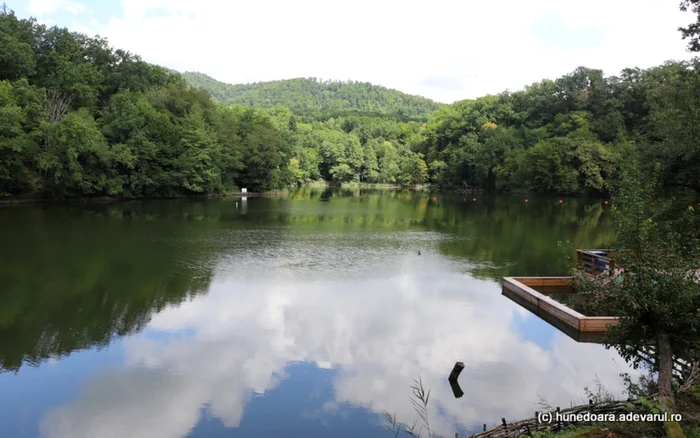
At Ocna Sibiului (Sibiu county), now a resort, there are over 15 saline lakes, many of them appeared after the collapse of the galleries of the old salt. Lake Avram Iancu, the deepest of them, reaches a maximum depth of 128 meters. And at Ocna Mureș (Alba County), the collapse of the saline led to the formation of lakes, which also become tourist attractions.
However, in 2010, underground collapses also created problems in the locality. Salted lakes were also formed in Ocna Dej, in Cluj county, and at Slănic Prahova, after the surprise of some mining galleries.