Fuel prices are the highest in years. Germany and Italy are hitting the margins of corporations and speculators


Many European governments have taken action in connection with the increase in fuel prices caused by the conflict in the Middle East. In Germany and Italy, fuel prices exceeded EUR 2 per liter. The authorities in Berlin plan to introduce a solution so that gas stations can only increase prices once a day. Italians announce a fight against speculators.
According to the German car club ADAC, fuel prices in Germany are clearly stabilizing at a high level, exceeding EUR 2 per liter. On Monday, the average daily price of Super E10 gasoline was more than 2 euros per liter, an increase of about 26 cents compared to the last day before the outbreak of the war with Iran. The price of diesel increased by around 41 cents to €2.15 per liter.
Germany: One raise a day and stronger supervision
The government in Berlin is planning a package of protective measures. According to the proposal, gas stations would in the future be able to raise prices only once a day, at 12, while their reduction would be possible at any time. This solution is based on the Austrian model, which, however, has been tightened and now allows only three increases in fuel prices per week. Germany also plans to expand the powers of the Federal Antitrust Office to control the activities of fuel companies. The relevant draft laws are scheduled to be submitted to the Bundestag this week.
Italy: Tax on windfall profits of speculators
At gas stations almost all over Italy, fuel prices exceeded EUR 2. Petrol costs around 2.10 euros per liter and diesel – 2.10-2.30 euros. The price of diesel oil is the highest in four years.
In the government's opinion, the main reason for the increases are the activities of speculators. Prime Minister Giorgia Meloni told parliament on March 11 that her government “will do everything to prevent speculation on the crisis, including, if necessary, recovering the profits from speculation by higher taxation of the companies that would be responsible for it.” Minister of Infrastructure and Transport, Deputy Prime Minister Matteo Salvini, announced that he had invited the heads of major fuel companies for talks on Wednesday. – If there is no willingness to stop prices, we could demand another appropriate financial intervention from oil companies, Salvini noted.
Hungary and Slovakia: Fight against “fuel tourism”
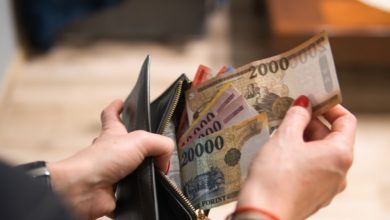
From March 10, Hungary has a fuel price cap, set by the government at 595 forints for gasoline and 615 forints for diesel oil (PLN 6.5 and PLN 6.7, respectively). The limit only applies to vehicles with Hungarian license plates and registered in Hungary. The authorities explained that this measure was introduced in response to the war in the Middle East and the suspension of crude oil supplies via the Druzhba pipeline running through Ukraine at the end of January. The oil pipeline became the target of an attack by Russia. The government in Kiev assures that this transmission route is still being renovated, but Budapest accuses the Ukrainian authorities of deliberately delaying the restoration of transit.
Prime Minister Robert Fico stated on Tuesday, after a meeting with the management of Slovnaft, the only refinery in Slovakia, that fuel prices in the country should remain in the coming weeks more or less at the level of the remaining Visegrad Group countries, i.e. Poland, the Czech Republic and Hungary, and are expected to be lower than in Austria. The Prime Minister said that during the meeting it was brought to his attention that lower prices of diesel oil in Slovakia mean that it is purchased in the northern regions of the country, near the border with Poland.
The head of Slovnaft, Gabriel Szabo, believes that “fuel tourism” should be limited and a ban on refueling in canisters should be introduced. Fico announced that any restrictions on the amount of fuel when refueling will remain the responsibility of sellers, but the government will consider introducing higher diesel prices for foreign drivers. He emphasized that existing regulations allow for such a solution.
Scandinavia: Fuel as the main topic of the election campaign
In Sweden and Denmark, mainly right-wing opposition parties are demanding a reduction in fuel taxes in order to cause a drop in prices at gas stations. The far-right Sweden Democrats are pressing the government to reach an agreement with the European Commission on this matter.
Similar voices are heard in Denmark, where the campaign before the parliamentary elections scheduled for March 24 is underway. The nationalist Danish People's Party sold gasoline at a promotional price at seven stations last week. The campaign was financed from the party's electoral budget.
Benelux and Portugal: Excise tax cuts and official prices
The Netherlands has not yet announced an ad hoc protection package, but maintains the previously implemented tax solution: in the 2026 plan, the government extended the excise tax reduction on gasoline, diesel oil and LPG until January 1, 2027. The rates are to remain at EUR 0.79 per liter of gasoline, EUR 0.52 per liter of diesel oil and EUR 0.19 per liter of LPG, which the government directly justifies with its willingness to maintaining prices at stations at an acceptable level.
In Belgium, the key instrument remains the system of official maximum fuel prices, updated by the Federal Ministry of Economy. The latest official tariff has been in force since March 18, and the ministry explains that the changes result from fluctuations in the prices of petroleum products and biocomponents and from technical corrections in the pricing formula under the current program contract.
The government of Portuguese Prime Minister Luis Montenegro decided in March to reduce tax rates on petroleum and energy products twice. These included the prices of diesel and gasoline. The latest reduction in this tax came into force on Monday. In the case of diesel fuel it was 1.4 cents per liter and for petrol it was 2.7 cents per liter. According to the government, without this cut, the price of diesel would increase by 9.8 cents per liter and petrol by 10.5 cents per liter from this week. The government's plans also include actions aimed at reducing gas prices.
Czech Republic: Monitoring margins instead of hard intervention
The Czech government of Andrej Babis does not intervene in the fuel market. Coalition politicians argue that the situation is not as dramatic as in 2022. After Russia's full-scale aggression against Ukraine, gasoline prices reached CZK 50. Currently, they do not exceed 40 crowns. The situation with diesel fuel is worse. The price of one liter exceeded 42 crowns (PLN 7.14).
Another argument for not reducing excise duty and other similar market decisions is a completely different, much more favorable inflation situation. The statements of government representatives are criticized by the opposition, which demands quick action. However, the government remains adamant and limits itself to monitoring the margins of fuel sellers. From Monday, they are obliged to submit information on prices and their components to the Ministry of Finance on a daily basis.
Spain: Release of 11.5 million barrels of strategic reserves
In Spain, the government decided at Tuesday's meeting to release 11.5 million barrels of strategic oil reserves, equivalent to about 12 days of national demand. On Friday, at an extraordinary meeting, the Council of Ministers is also expected to approve a package of measures aimed at counteracting the effects of the conflict in the Middle East, including reducing fuel prices for the agricultural and transport sectors.
The United States and Israel attacked Iran on February 28. In response, the Iranian army began shelling military and civilian targets in the region, including American bases and embassies, and blocked the Strait of Hormuz, which is crucial for the transport of oil and gas. US President Donald Trump called on allies to help unblock the strait, but many European countries rejected the possibility of joining the military action. (PAP)
mrf/ zys/ pmk/ ptg/ zat/ sw/ ipa/ jbw/ rtt/