Instead of unity – chaos and declines in the polls. Even Donald Trump's most loyal voters stop applauding

The ongoing US military operation against Iran has become a serious blow to the Republicans' electoral positionwho face the difficult task of maintaining a majority in both houses of Congress in the midterm elections scheduled for November 3.
Instead of the expected effect of uniting society, the president saw declines in support among key demographic voter groups, as well as a deep split in both his own party and the MAGA movement.
Trump is trying to balance between factions: he allows the “hawks” to believe in the continuation of hostilities until complete victory, while at the same time giving opponents of the intervention and financial markets hope that the “short-term operation” will end quickly.
However, maintaining this balance becomes more and more difficult every day.
In 1970, American political scientist John Mueller, in a scientific article, first described the effect of “unity around the flag” – a sharp but short-lived increase in support for the incumbent president in moments of serious international crises or the outbreak of war. In such moments, society instinctively gathers around the commander-in-chief, and the political opposition limits criticism, fearing accusations of lack of patriotism.
US history has repeatedly confirmed this theory.
After the Japanese attack on Pearl Harbor in 1941, support for Franklin Roosevelt increased from 72 percent. up to 84 percent
The launch of Operation Desert Storm against Iraq in February 1991 boosted George H. W. Bush's approval ratings from 58 percent. up to 89 percent
In turn, his son, George W. Bush, reached a record 90% after the attacks of September 11, 2001 and the start of operations in Afghanistan. support – the highest in the history of Gallup research.
However, the operation against Iran did not bring such an effect for Trump. On the contrary – according to The New York Times, it was the most unpopular war in modern US history from the very beginning. Trump's initiative received only 41 percent. support (data from a CNN poll from the turn of February and March).
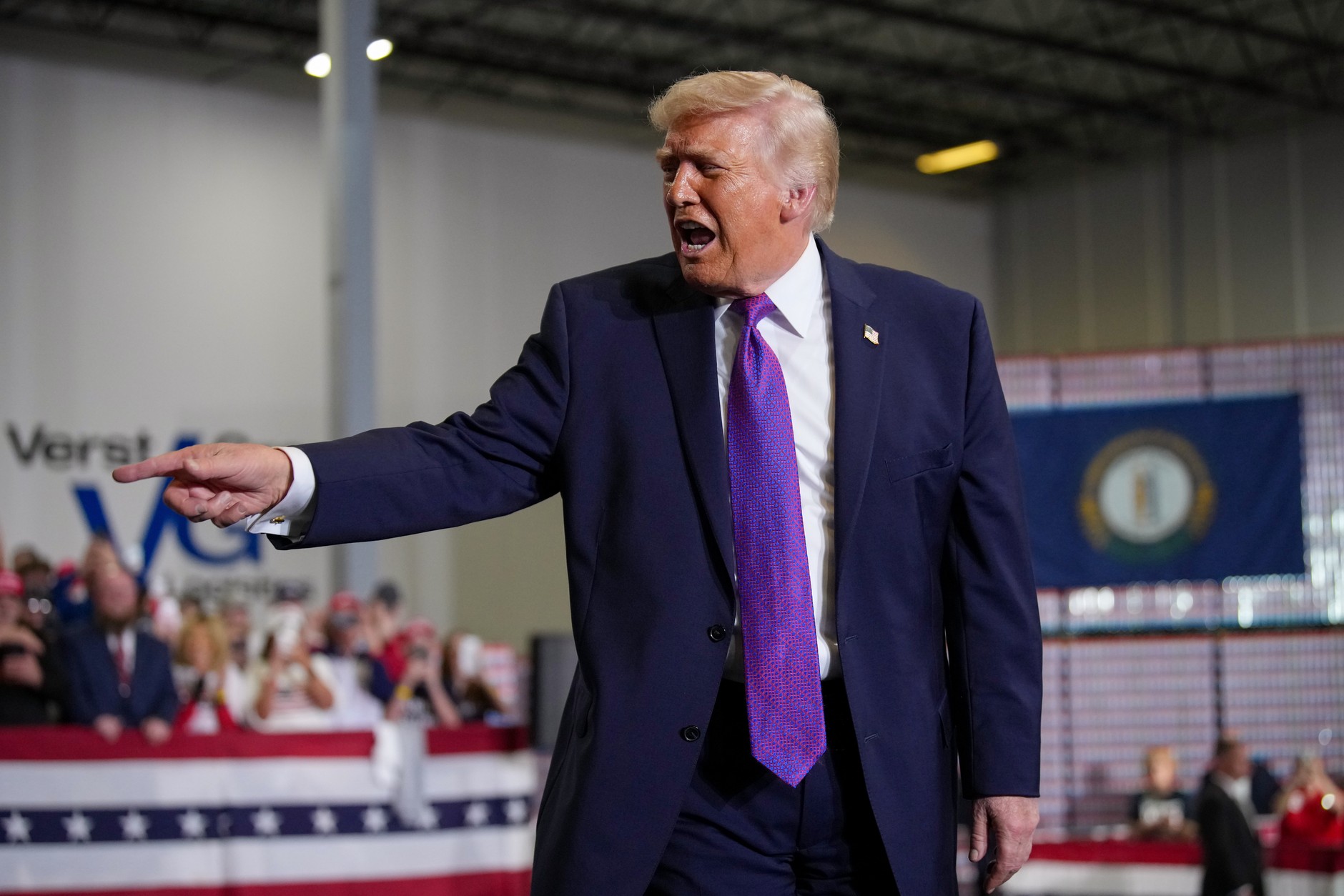
US President Donald Trump, March 11, 2026ANDREW HARNIK / Getty Images
Donald Trump himself cannot count on high ratings either. The average “net” level of support (the difference between positive and negative ratings) is currently -13.9 percentage points. This is worse than in the same period of his first term (-12.5), and also worse than the results of Joe Biden (-9.3) and Barack Obama (-7.9).
Lost in the reasons
In the 1940s it was a fight against fascism, and at the beginning of the 21st century it was to prevent further attacks on the scale of September 11. These narratives resulted from real social traumas and gave citizens moral justification for inevitable human and financial losses.
Moreover, the authorities actively built public support. Before the 2003 invasion of Iraq, the George W. Bush administration for a year she prepared the ground for information — Condoleezza Rice published articles in the media, Colin Powell presented evidence at the United Nations, and the president himself regularly explained the necessity of war.
The statement of the White House spokeswoman was symbolic: she said that the president was guided by a “fact-based feeling” that Iran was preparing an attack.
As a result, 62 percent voters believe the administration has not provided a clear justification for the war effort.
Importantly, as many as 51 percent voters say Trump's policies have made the US less safe, and 77 percent fears that the conflict will increase the risk of terrorist attacks in the country.
How to lose an electorate?
This situation is particularly disturbing in the context of the upcoming elections. Trump's biggest losses are among the groups that ensured his victory in 2024: young voters, Latinos and black men.
Their support was not based on ideology but on pragmatism – they expected an improvement in the economic situation and an end to foreign interventions.
The data is alarming for Republicans:
- only 21 percent voters aged 18–34 support the war,
- as much as 71 percent is against it,
- among “non-white voters without higher education” the proportions are almost identical,
- Trump's approval among Latinos dropped from 40% in a week. up to 28 percent
According to the “bread and peace” theory of political scientist Douglas Hibbs, election results depend on two factors: the number of victims in conflicts and the growth of real incomes.
Both of these factors are currently working against Trump.
At least 13 Americans have already died, and the president says that number will increase. At the same time, economic concerns are growing – 74 percent voters are afraid of the increase in fuel prices. Morgan Stanley analysts warn that disruptions in the Strait of Hormuz could lead to higher inflation and lower consumption.
Effect? Approval for Trump's economic policies has fallen to a record low of 35%.
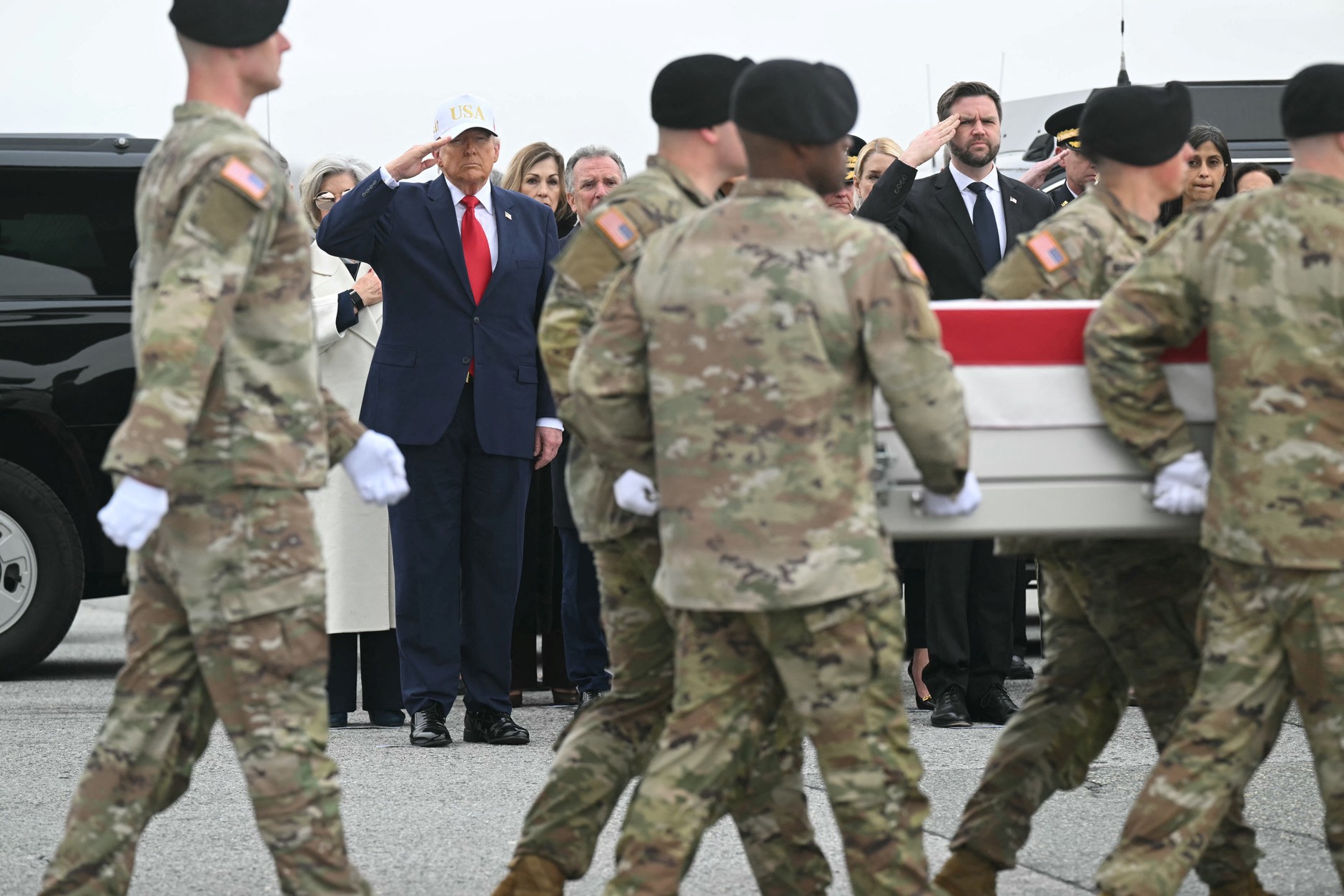
United States President Donald Trump and Vice President J.D. Vance salute as members of a U.S. Army band carry a flag-draped casket containing the remains of an American soldier killed in Iran, March 7, 2026.ROSLAN RAHMAN, SAUL LOEB / AFP / AFP
Additionally, there is outrage over the costs of the war – estimated at $1-2 billion. per day (i.e. approx. PLN 4–8 billion per day). One day of bombing is equivalent to the annual Medicaid budget for 124,000 people. Americans.
A crack in the Republican Party
The second one – pragmatists – calls for a quick end to the operation, before the political and economic costs become irreversible.
Vice-President JD Vance, a former critic of foreign interventions, finds himself in a particularly difficult situation, as he now has to balance between his own views and loyalty to the president.
An even bigger problem for Trump is the rebellion within his own MAGA base. Famous figures such as Tucker Carlson and Joe Rogan sharply criticize the war, calling it “madness” and a betrayal of election promises.
There is a clear generational divide in the MAGA movement:
- younger voters lean towards isolationism,
- elders remain supporters of tough policies, often motivated by religious reasons.
Trump appears to ignore this division, claiming that it alone defines the MAGA movement.
Although the president continues to try to navigate between conflicting expectations, this strategy is becoming less and less effective.