Why the Strait of Hormuz crisis does not automatically mean a global economic crisis. Director of IREF Paris: “We have faced such situations before”


The blockade in the Strait of Hormuz pushed the price of oil above $90 a barrel and held it there for nearly two weeks, fueling growing fears of a domino effect on the global economy. Pump prices are already visible in Romania, and concerns about inflation and disruption to supply chains are growing. “Adevărul” talked with Bogdan Călinescu, the director of the Institute of Economic and Fiscal Research (IREF) in Paris, about how serious the situation is and what tools the states still have at their disposal to prevent the harmful effects of rising crude oil prices.
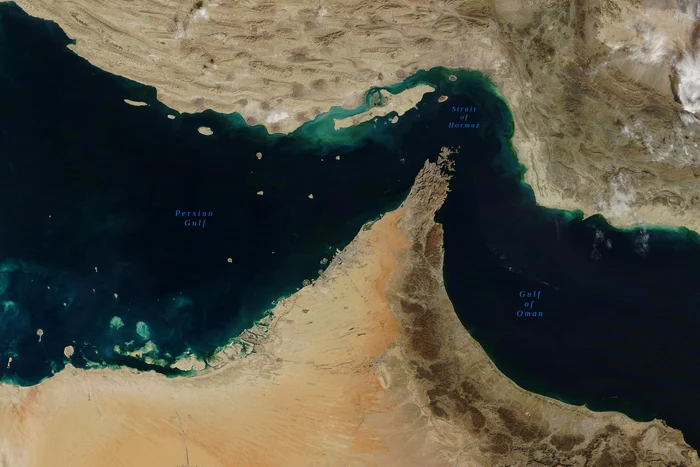
Strait of Hormuz. PHOTO: Shutterstock
Oil prices continued to rise amid concerns about the United States' ability to form an international coalition to protect shipping through the Strait of Hormuz. The price of Brent oil rose in 24 hours by 3.5% and exceeded the threshold of $112 per barrel, while the US crude oil WTI exceeded $98. The increase comes after President Donald Trump said NATO allies are reluctant to get involved in operations to secure sea lanes amid tensions with Iran.
Although Washington has called for international support, reactions have been limited and traffic through the Strait of Hormuz has dropped significantly amid Iranian attacks.
The Strait of Hormuz, one of the world's most important energy arteries, has seen a flow of about 13 million barrels per day in 2025, accounting for nearly a third of global crude oil shipping.
“We must remain optimistic”
Instead, Bogdan Călinescu calls for calm and reminds that the world has gone through similar episodes with success. He points out that there have been other major conflicts in the Persian Gulf area, such as the war between Iran and Iraq or, much more recently, the invasion of Ukraine.
“This is not the first time that there has been a conflict in the Persian Gulf area. There have been wars before: the Iran-Iraq war between 1980 and 1988, or the two conflicts in Iraq in 1991 and 2003. We have faced such situations before and the world economy went through them. The price of oil went up then as well. In 2003, the Iraqis set fire to many oil wells. And yet, the situation stabilized, and economic development continued globally. In February-March 2022, gas and oil prices rose sharply, reaching even below pre-conflict levels. Prices may rise in the short term, for days or weeks, but may subsequently fall, even below pre-Iran attack levels.” explained Bogdan Călinescu.
Who suffers the most: China and Japan, not Europe
The image of a West paralyzed by the Gulf crisis is, according to Călinescu, far too simplistic. Exposure to the current oil shock varies enormously from one economy to another, depending on how much of the hydrocarbon demand comes from the region. This differentiation matters enormously when assessing the real risk of recession and is, in the economist's opinion, insufficiently reflected in the public debate.
Trump is implying that the US is withdrawing from Iran and letting others handle the Strait of Hormuz issue
“The most affected is China – about 50% of its oil imports come from this area. In contrast, France, for example, only imports 10-11%. So China and Japan are more exposed, while Europe is less affected. One country that is not affected at all is the United States. America has enough resources and is currently the largest oil producer in the world. Europe is becoming more and more dependent on American shale gas and imports very little from the Gulf”, emphasizes the economist.
Beyond the price of the barrel, there is a less visible mechanism that amplifies the effects of the crisis and which, in Călinescu's opinion, receives entirely insufficient attention. This is the marine insurance market, an essential element of global trade.
“There is a lot of talk about oil and gas prices, but very little about insurance. Insurance companies no longer want to cover oil or liquefied gas shipments because the risks have increased so much. Insurance costs had already increased by about 50% before the Iran attack, and now they are even higher. This is a major problem and directly contributes to the increase in oil prices.” says the director of IREF.
What can states do?
At a time when governments around the world are looking for answers to the growing pressure on purchasing power, Bogdan Călinescu proposes a clear hierarchy of available tools.
“The first intervention is to lower fuel taxes. States can reduce taxes, and thus prices could remain stable or even fall. The second solution is to use oil reserves. The third solution is for the countries most dependent on oil and gas in the Gulf to reorient to other sources, especially to the United States. The problem is that the state often prefers to maintain or even increase these taxes in order to ensure constant revenue. For example, in France, about 70% of the price of petrol at the pump is collected by the state. It is important that the state does not take advantage of the situation and collect more taxes. About 13% of the world's fertilizer exports go through the Gulf area, but it is very important, which will have direct and indirect effects on agriculture. emphasizes Bogdan Călinescu.
Beyond the economic calculations, Bogdan Călinescu is of the opinion that the European NATO member states are wrong if they decide to stay out of any intervention in the Strait of Hormuz.
“From a political point of view, I consider that the decision of France and some European NATO member states not to intervene in the Strait of Hormuz is a wrong one and may have serious geopolitical consequences. Donald Trump, as we know him, could react and take measures against Europe or even NATO. And Ukraine could suffer, as well as, indirectly, Romania and other states”concluded the director of the Institute of Economic and Fiscal Research (IREF) in Paris, Bogdan Călinescu.