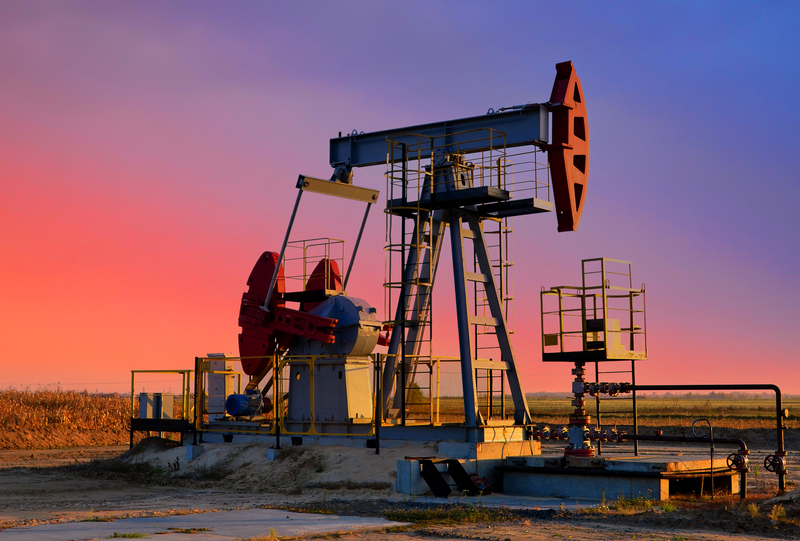
The blockade of the Strait of Hormuz has pushed the price of oil up more than 50% in just a few days. A barrel of oil is now trading around $100 — a level that seems high, but which, adjusted for inflation, is almost a third lower than the 2008-2014 average, writes Laurian Lungu, co-founder of the think tank Consilium Policy Advisors Group (CPAG), in an opinion piece published on the CPAG page
The paradox, he believes, is that while oil is cheaper in real terms than it was a decade ago, fuel at the pump is more expensive. The explanation largely lies in the increase in excise taxes over the years.
Moreover, the current price of oil does not fully reflect the geopolitical risks in the region. If tensions escalate, the price of oil could exceed, in real terms, the levels of the post-2008 energy crisis. In nominal terms, the equivalent of those prices would be around $150 a barrel today.
Faced with this shock, the Romanian authorities have several options. None of them are free of costs, writes Laurian Lungu.
The first option: the state does not intervene
The simplest option would be for the state to do nothing and let the market adjust itself.
This approach would fully transmit the oil shock to the economy. In the short term, the consequences would be clear: higher inflation, slower economic growth and higher financing costs for the state, Lungu explains.
The signs of this pressure are already visible. Over the past month, government bond yields have risen by about a percentage point for longer maturities.
There is one advantage to this strategy, however: high fuel prices accelerate the transition to electrification and other alternative energy technologies.
Second option: selective support
The government has already tried a form of intervention: the subsidy of 0.85 lei per liter of diesel fuel given to transporters.
“This is politically understandable and administratively manageable. But as a stand-alone response, it is inadequate. The main problem is that selective support for transport operators does not prevent the wider inflationary spread of high fuel prices across all goods and services. The scheme is prone to leakages and administrative complexity in determining eligible volumes, especially for operators who combine commercial and non-commercial use,” notes the economist.
The third option: reducing excise duties
Another idea being discussed is the temporary reduction of excise duties on fuels.
On paper, the calculations are simple. On paper, the fiscal arithmetic is attractive: for example, the current excise duty on petrol, of 3,059.80 RON/1,000 litres, translates into approximately 3.06 RON/litre; reducing it by 20% would reduce pump prices by approximately 0.6 RON/liter, an important decrease. However, the reduction of the tax ceiling could be absorbed in the margins of producers and distributors. There is no guarantee that the excise duty reduction will be fully reflected in the drop in the price at the pump, Lungu explains.
In addition, the reduction of excise duties would decrease budget revenues precisely at a time when Romania's fiscal position is already fragile.
The fourth option: a temporary price cap
A more balanced solution would be to introduce a temporary fuel price cap mechanism that would share the cost of the shock between the state, companies and consumers.
In such a system, the government could set a maximum price at the pump, calibrated to a benchmark oil level — say $85 a barrel.
If the price of oil exceeds this level, part of the additional cost would be absorbed by the state and the rest passed on to consumers.
This mechanism would preserve the market's price signals while avoiding a burst of inflation and a collapse in demand.
For example, capping diesel at 8.50 lei per liter would have an estimated budgetary cost of approximately 4 billion lei per year — the equivalent of approximately 0.2% of GDP.
The cost is not negligible, but it could be offset by maintaining economic activity and limiting the pressure on the interest rates at which the government borrows.
To avoid turning the measure into a permanent subsidy, the mechanism should include an automatic exit trigger: if oil prices fall below $85 per barrel for a sustained period, the cap should be removed.
The decision that cannot be postponed
With the passing of each day of the conflict, the probability that the price of oil will remain at high levels for a longer period is increasing. The rapid adoption of a clear strategy to respond to this shock would help the economy navigate the next period more predictably, concludes the Romanian economist.