Secret mountain. This is where the guerrillas are preparing to overthrow the regime in Iran


About 5 km in a straight line from Iran, the roar of planes can be heard. American, Israeli, Iranian? The Kurdish guide shrugs and urges us to hurry. The last section to his unit's base can only be covered on foot, along a steep, rocky path. In the open air, everyone is an easy target.
The exact location is top secret. Before entering the mountain, visitors must switch their phones to airplane mode and deposit them. The signals could give away the position. The adit hidden under a camouflage net leads deep into the rocks, to the underground world.
This is a world ruled by the Iranian-Kurdish guerrilla organization PJAK. Its fighters operate right next to the border with Iran and are waiting for the regime in Tehran to weaken enough for them to enter western Iran by force.
Whether it actually happens or not, the war has already completely upset the balance of power in the region. This is most clearly visible in Iraq. This state does not operate as a unified entity, but rather as a mosaic of political parties, militias and foreign influences. This fragile balance has been disturbed. And none of the scenarios currently being considered are optimistic.
The regime in Tehran has never been as weakened as it is today
A system of tunnels stretches deep into the mountain. There is light and running water inside. In the bathroom, there are flip-flops with the word “Amazon” on the tiles. The kitchen is an elongated room with a table in the middle.
There are photos of the fallen on the walls on both sides. Many of the faces belong to young people – men and women in their twenties and thirties. Screens hang overhead. The largest of them is played by Aryen TV, a Kurdish station based in Sweden, affiliated with PJAK [Partia Wolności Kurdystanu, partia irańskich Kurdów].
Four more monitors show the image from outside. The cameras are activated by motion sensors – when a bird appears in the frame, the image automatically switches. Some entrances of the tunnels leading deep into the mountain are covered with blankets.
The group's co-chair invites you to talk in a room specially prepared for video recordings. Spotlights under the ceiling illuminate the interior; the rock walls were covered with yellow and gray curtains. Peyman Viyan is her wartime nickname, not her official name.
He prefers to talk not so much about the possible participation of the Kurds in the war in Iran, but about the political and ideological goals of his group. For example, about Jineology – something like Kurdish feminism, which, according to Viyan, is the answer to social and ecological problems.
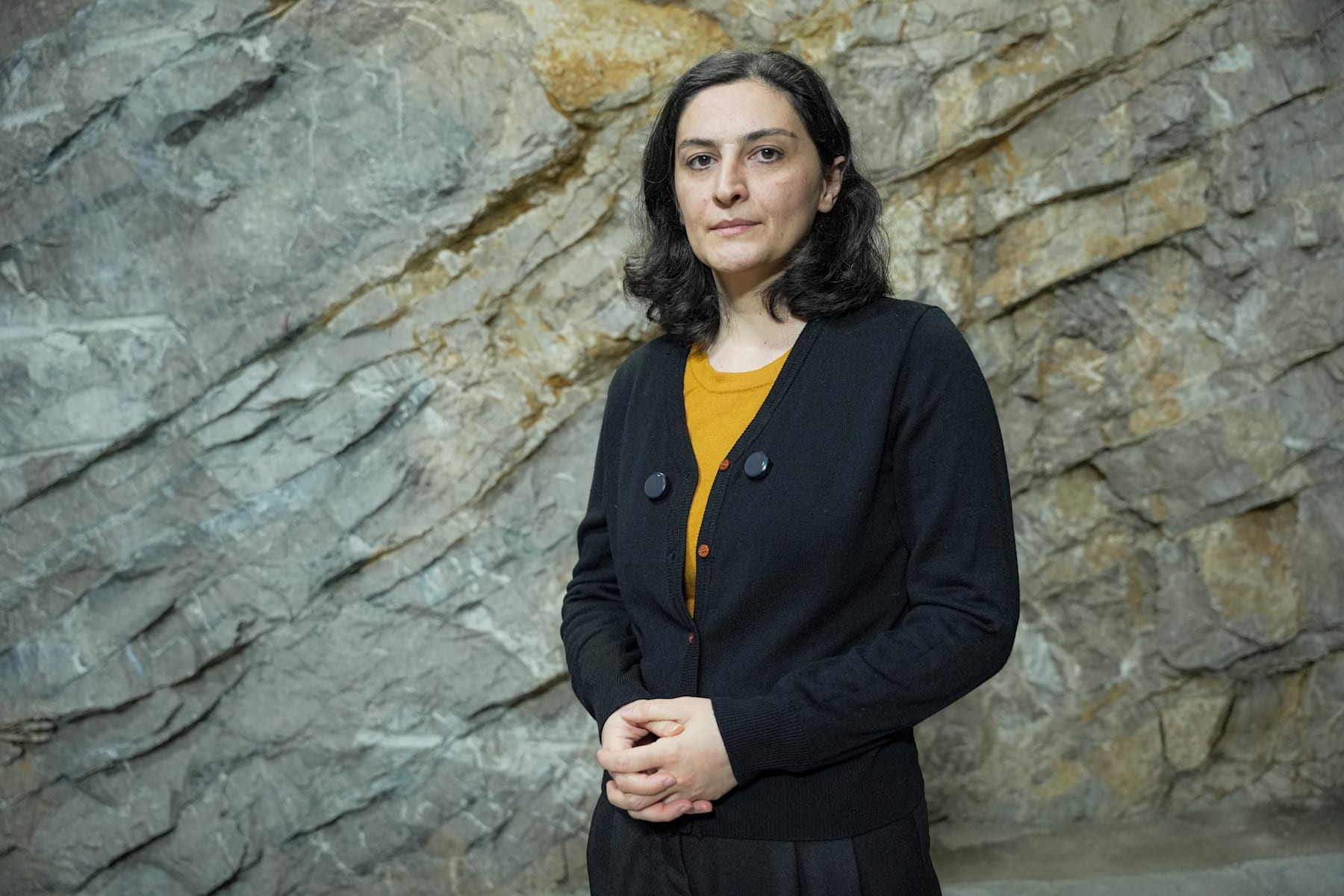
Peyman ViyanDie Welt
— The root of many problems is the collective oppression of women – says. This concept comes from Abdullah Ocalan, the founder of the PKK [Partii Pracujących Kurdystanu]which is on the list of terrorist organizations in Turkey, the EU and the USA.
For Iran, Viyan sketches a vision of a federal structure that would end “annihilation,” as he puts it. She doesn't mean only physical attacks and killings – in her opinion, “cultural annihilation, linguistic annihilation” has been going on in Iran for years. Every nation should lead a “free life” in its own culture and native language.
The most important question today is whether Kurdish militias are ready to fight to achieve their political goals. PJAK is part of a six-party coalition of Iranian-Kurdish groups in exile in Iraq.
In 1979, Kurds in Iran supported a revolution against the Shah. However, the new Islamic Republic rejected demands for autonomy, which led to bloody fighting in Iranian Kurdistan. Many groups moved to Iraq, where they still operate today.
Their names keep coming up in the context of a potential ground offensive in Iran. The US is unlikely to decide to send its own troops. At the same time, it is unlikely that the regime will fall solely as a result of the airstrikes. According to reports, President Donald Trump's administration has therefore established contact with Kurdish groups to check whether they are willing to participate in the ground offensive.
Some groups from the Iran-Kurdish coalition seem positive about this idea. Reza Kaabi, secretary general of the Komala of the Toilers of Kurdistan party, appealed in “Welt am Sonntag” for the US to create a no-fly zone as a condition for the Kurdish offensive. The opportunity seems favorable – the regime in Tehran has never been as weakened as it is today.
PJAK, in turn, with close ideological ties to the PKK and anti-imperialist traditions, approaches Washington with great reserve. Viyan says her party “has never waited for any force to bring change.”
In other words: if Kurds in Iran go to fight, it will be of their own free will. Caution also results from lack of trust in the US, especially after the Americans unexpectedly withdrew support for the Kurds in Syria.
When asked under what conditions PJAK would decide to cross the Iran-Iraq border as part of an offensive, Viyan replies that the organization already has forces “in place”. The border between northern Iraq and Iran runs through the Zagros Range and is considered easy to cross by smugglers, locals — and militias.
Viyan does not provide details; the fact of mentioning the forces already present in Iran suggests, however, that in the event of escalation, PJAK would not have to organize structures anew.
From Tehran's perspective, these militias are a serious threat. The previous day and the same morning, Iranian artillery shelled the border areas, hitting villages right next to the border. These attacks mainly hit civilians because the Kurdish guerrillas are protected in their mountain hideouts.
“We don't want help from foreign powers”
A 20-year-old girl stands in a dark tunnel in the mountains with an assault rifle. He introduces himself as Zilan. In the photos, her face is covered with a black and white patterned scarf.
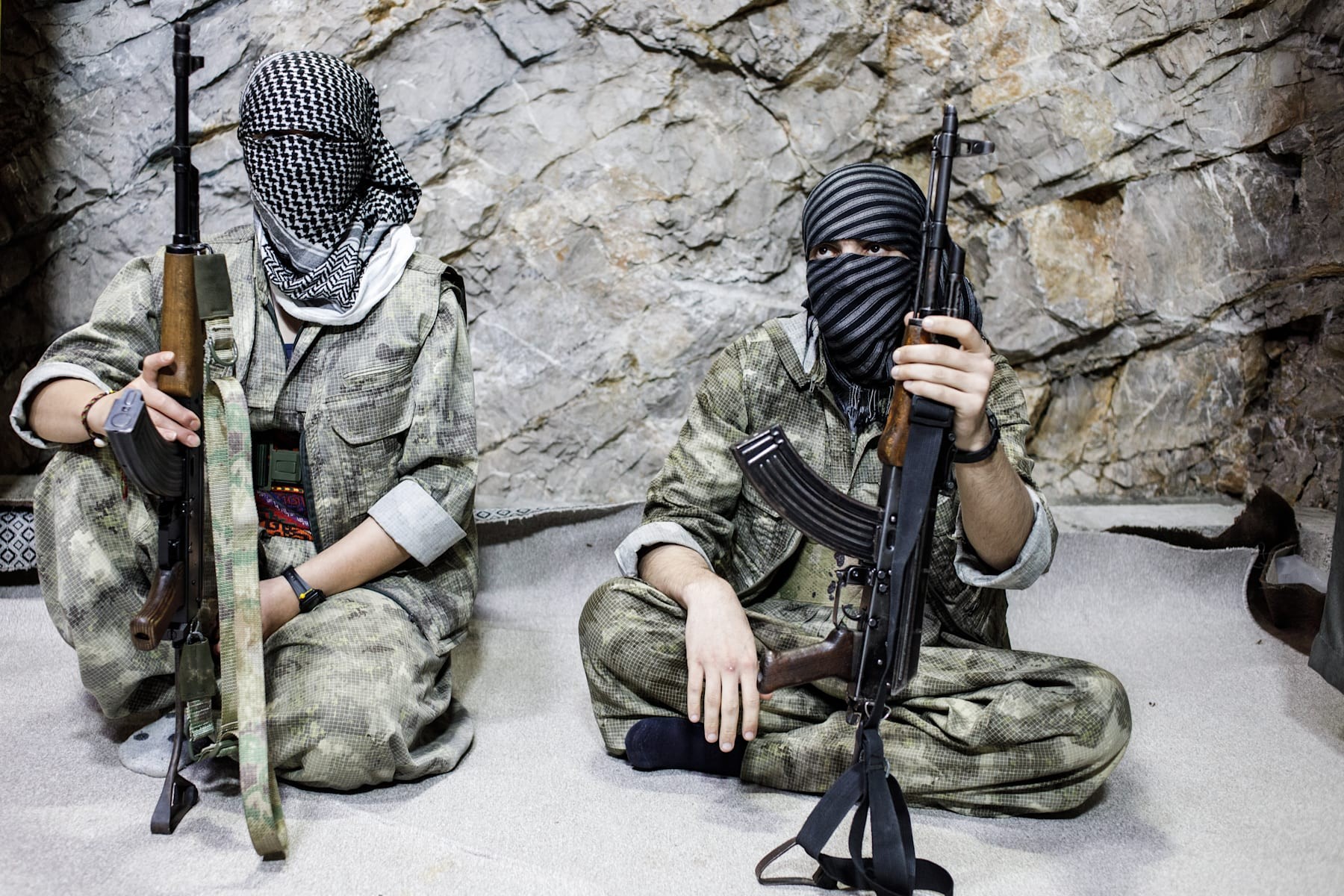
Zilan (left) does not want help from abroadDie Welt
Each day starts at 5:30 a.m. and is strictly planned. “Our everyday life is based on discipline,” he says. He has no time for entertainment, he focuses on his goals and work.
The ideological training is intended to prepare for building a democratic society, and the military training is to prepare for the defense of the Kurdish nation.
We will never rely on foreign powers like Israel or the United States for help. We are an independent party
– says.
Sulaymaniyah, a city in northeastern Iraq. Hence, it is closer to Iran than to Baghdad or Irbil. Kamaran Osman is a human rights observer for Community Peacemaker Teams (CPT) and has been documenting attacks on the region. He is sitting in a cafe, and at the neighboring tables young people are working on laptops.
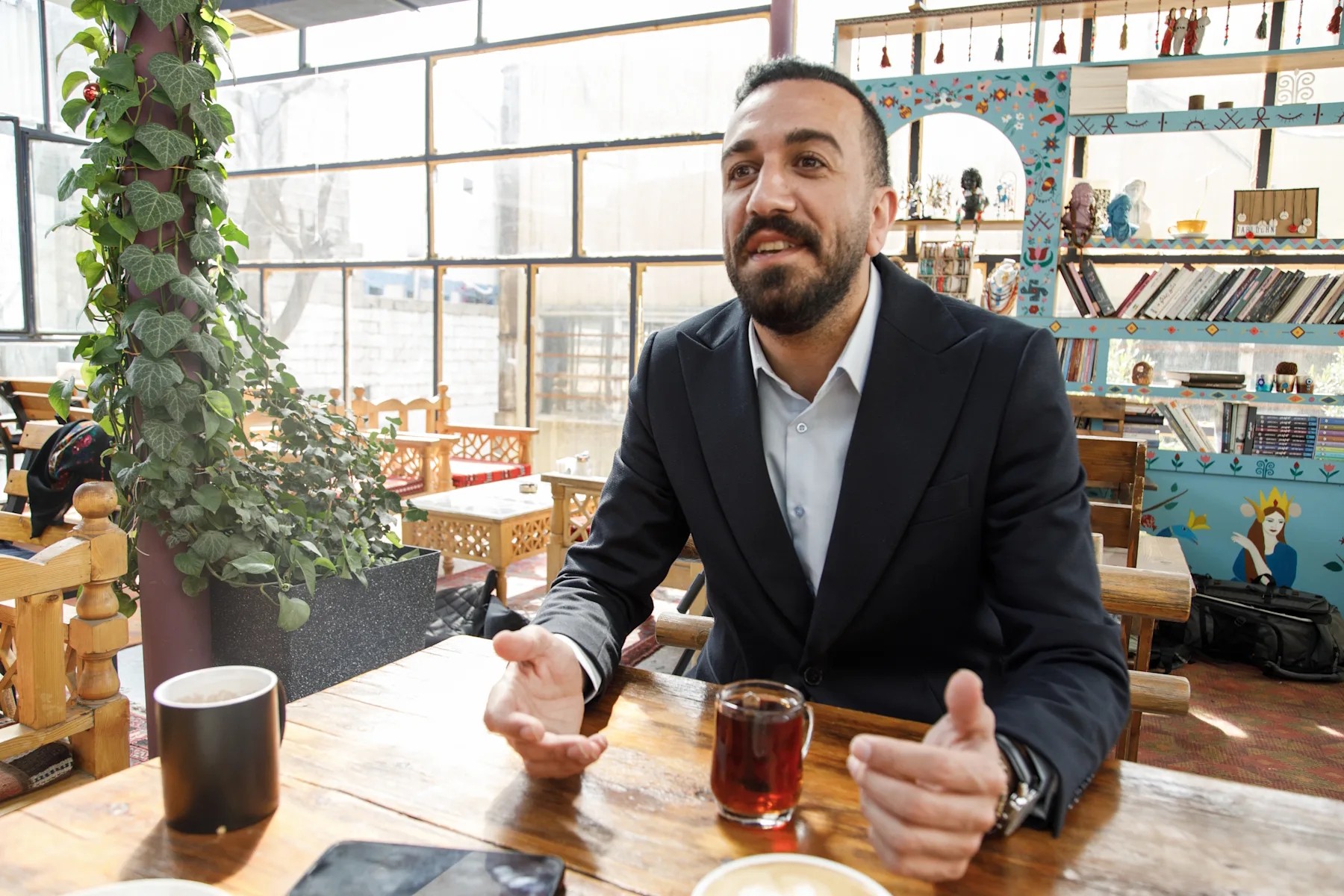
Human rights defender Kamaran OsmanDie Welt
Iran began indiscriminate shelling of border villages with artillery, Osman says. The situation is “very difficult for people.” He counted 250 Iranian attacks on Iraqi Kurdistan in the last 12 days. Five people died and 21 were injured.
He does not see a good scenario for the Kurds in Iran. — If the regime falls, we risk civil war in Iran itself, he says. And if it persists, he fears Tehran will retaliate against Kurds in Iraq — both against Iranian-Kurdish opposition groups and the Kurdistan Regional Government.
Iranian-Kurdish opposition groups operate in the Kurdistan Autonomous Region, which is itself divided between two rival parties, while the central authorities in Baghdad are tasked with containing Kurdish militias on Tehran's behalf, something they have virtually never succeeded in doing.
Tehran considers the agreement a failure
The Iran-Iraqi security agreement of 2023 obliged the authorities in Baghdad to disarm Iranian-Kurdish opposition groups, liquidate their bases and resettle them deeper into the country.
Kurdish groups are currently considering an offensive against Iran. This, according to Osman, led the Iranian authorities to acknowledge that the agreement had failed. “Now they decided they had to target these groups, break them up and defeat them.
If, as a result, northern Iraq is destabilized, a power vacuum will be created. When chaos reigned here earlier, the so-called fighters strengthened their positions. Islamic State. Trump may believe he can end the raids at any time. But even then, there will be no return to the old status quo. This war has started a process that cannot be stopped.