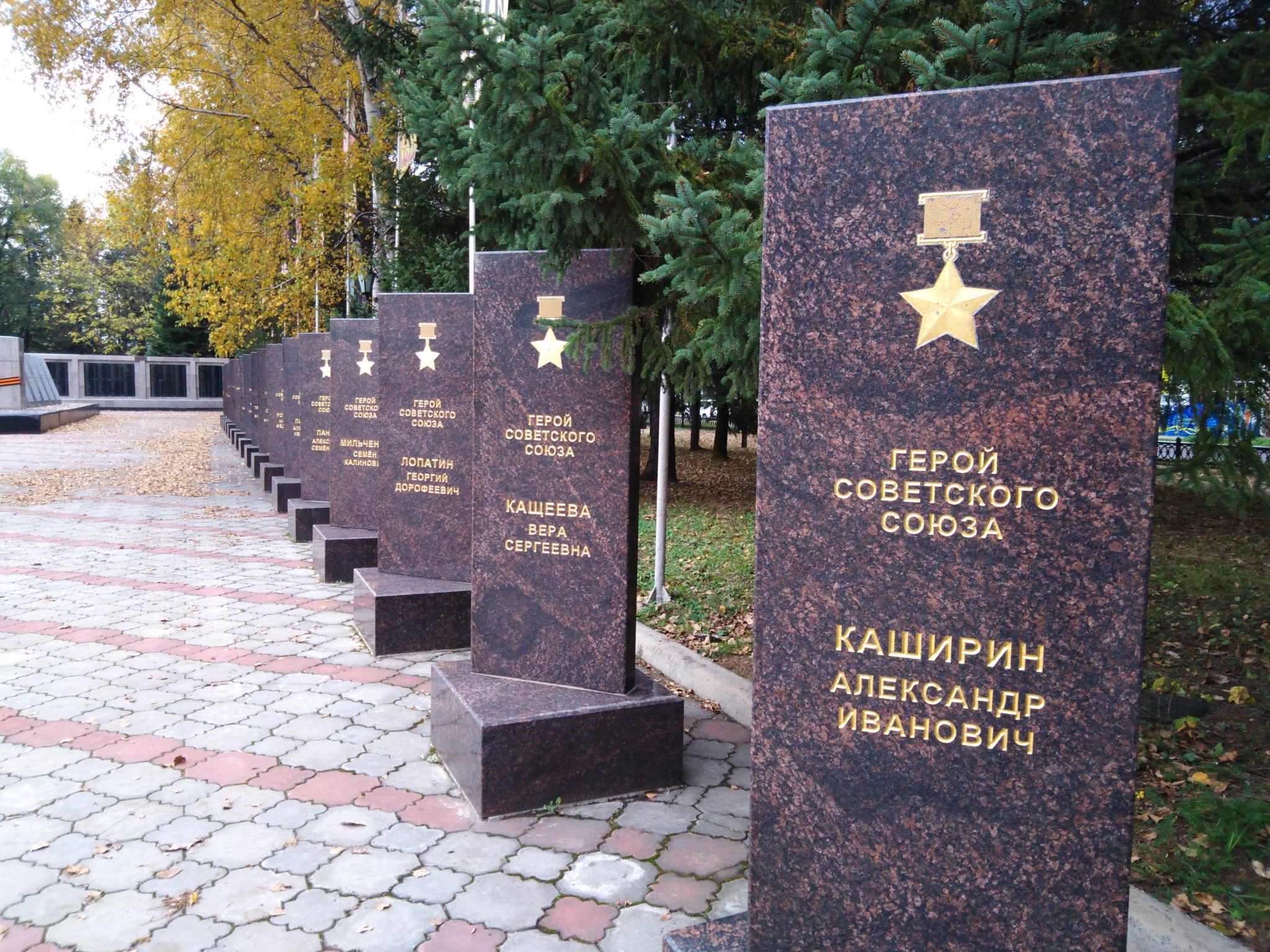
March 15, 1911
Hero of the Soviet Union Alexander Ivanovich Kashirin was born on March 15, 1911 in the village of Pichaevo, Tambov region.

Graduated from 6th grade. In 1930 he left for the Far East. Lived in the city of Khabarovsk. He worked at a factory, in construction organizations, and unloaded barges. At the end of 1933 he was drafted into the Red Army. He served in the city of Vladivostok, served in the artillery regiment of the 1st Pacific Rifle Division. He graduated from veterinary school with the title of junior veterinary assistant.
In August 1941 he was drafted into the army. He served in the Far East. By the fall of 1943, Sergeant A. I. Kashirin was the commander of the 45-mm gun crew of the 529th Infantry Regiment of the 163rd Infantry Division. For the destruction of a heavily fortified enemy firing point, he received his first combat award – the medal “For Courage”. He particularly distinguished himself in the battles for the liberation of left-bank Ukraine in the summer and autumn of 1943.
By a decree of the Presidium of the Supreme Soviet of the USSR dated October 29, 1943, for the successful crossing of the Dnieper River, the strong consolidation of a bridgehead on the western bank of the Dnieper River and the courage and heroism shown, Sergeant Alexander Ivanovich Kashirin was awarded the title of Hero of the Soviet Union with the Order of Lenin and the Gold Star medal (No. 4351).
In a battle near the city of Belaya Tserkov, he was seriously wounded by shell fragments in the back, neck and legs. In 1945, senior sergeant Kashirin A.I. was demobilized. Returned to the Far East. He died on October 28, 1993, and was buried at the Central Cemetery of Khabarovsk.
March 15, 1916

Hero of the Soviet Union Nikolai Fedorovich Romanov. Photo: Photo: Heritage EAO
On this day, in the village of Martynovo, Tver Region, the future Hero of the Soviet Union Nikolai Fedorovich Romanov was born.
Nikolai Fedorovich graduated from five classes. In 1937, Nikolai Fedorovich Romanov moved with his parents to the village of Babstovo, Leninsky district. He worked as a foreman of combine operators.
In 1937 he was drafted into the Red Army and served in tank forces in the Far East. Here, on the eastern borders of the country, he met the beginning of the Great Patriotic War. He entered hostilities only in August 1945, in the war against the Japanese militarists.
By decree of the Presidium of the Supreme Soviet of the USSR dated September 8, 1945, for the exemplary performance of combat missions of the command on the front of the fight against the Japanese imperialists, valor and courage, Lieutenant Romanov Nikolai Fedorovich was awarded the title of Hero of the Soviet Union with the Order of Lenin and the Gold Star medal (N 9130).
After the war he continued to serve in the army. Since 1957, Major Romanov has been in reserve. Lived in the city of Kaliningrad. Nikolai Fedorovich died on April 11, 1963. He was buried in Kaliningrad in the old city cemetery.
March 15, 1925

Khaya Abramovna Karasik. Photo: Photo: Regional Library
Hero of Socialist Labor Khaya Abramovna Karasik was born on March 15, 1925 in the city of Kremenchug. Together with her parents, in 1932 she moved to the Far East to the newly formed Birobidzhan region (since 1934 – the Jewish Autonomous Region).
At first, the family lived in the Stalinsky district of the region, and from 1938 – in Birobidzhan. She graduated from 6 classes of Birobidzhan School No. 2.
In April 1941, at the age of 16, she came to the Birobidzhan State Garment Factory as a seamstress apprentice. She worked at this enterprise until her retirement.

Khaya Abramovna Karasik (right) at a garment factory. Photo: Photo: Newspaper “Birobidzhan Star”
For her high performance in work, she was awarded numerous commendations, certificates of honor, and state awards. By decree of the Presidium of the Supreme Soviet of the USSR dated April 5, 1971, for outstanding success in the early fulfillment of tasks of the five-year plan and great creative contribution to the development of the production of fabrics, knitwear, footwear, clothing and other light industry products, Karasik Khaya Abramovna was awarded the title of Hero of Socialist Labor with the Order of Lenin and the Hammer and Sickle gold medal.
Along with her labor successes, Kh. A. Karasik carried out great public work and was elected as a deputy of the regional Council of Workers' Deputies.
By the decision of the executive committee of the Birobidzhan City Council dated June 18, 1987, Khaya Abramovna Karasik was awarded the title “Honorary Citizen of the City of Birobidzhan.”
Khaya Abramovna passed away on October 4, 2009, and was buried in Birobidzhan.
March 15, 1936
The newspaper “Birobidzhan Star” (12+) wrote on this day that Komsomol members collected half a million rubles for the construction of the Palace of Pioneers and Octobrists in Birobidzhan.
March 15, 1942

Clippings from the newspaper “Birobidzhan Star”. Photo: Photo: Regional Library
The newspaper “Birobidzhan Star” wrote on March 15, 1942 that in Birobidzhan, on the premises of the State Jewish Theater named after. L. M. Kaganovich gave two concerts to the song and dance ensemble of the Moscow House of Culture of Railway Workers. The ensemble was led by its artistic director, Honored Artist, Stalin Prize laureate, and order-bearing composer Isaac Osipovich Dunaevsky.

The main entrance to the building of the State Jewish Theater. Birobidzhan. Mid-1930s. Photo: Photo: Heritage of the Jewish Autonomous Region
The newspaper also published a review by composer I.O. Dunaevsky about Birobidzhan and the Jewish Autonomous Region. From the speech of Isaac Osipovich:
“As an artist, a few years ago I creatively plunged into the heroism of Birobidzhan everyday life. I mean my work on the music of the film “Seekers of Happiness” (6+). Even if the script of this film was imperfect, like the film itself, which was probably only a weak reflection of reality. Still, at least a little the Soviet audience was imbued with a sense of the way of life, the life and affairs of the people of Birobidzhan, who came here to build their lives anew and on new foundations…”
March 15, 1977
The first stage of a complex of buildings of a psychiatric hospital in the city of Birobidzhan (now the regional state budgetary healthcare institution “Psychiatric Hospital”) was put into operation.