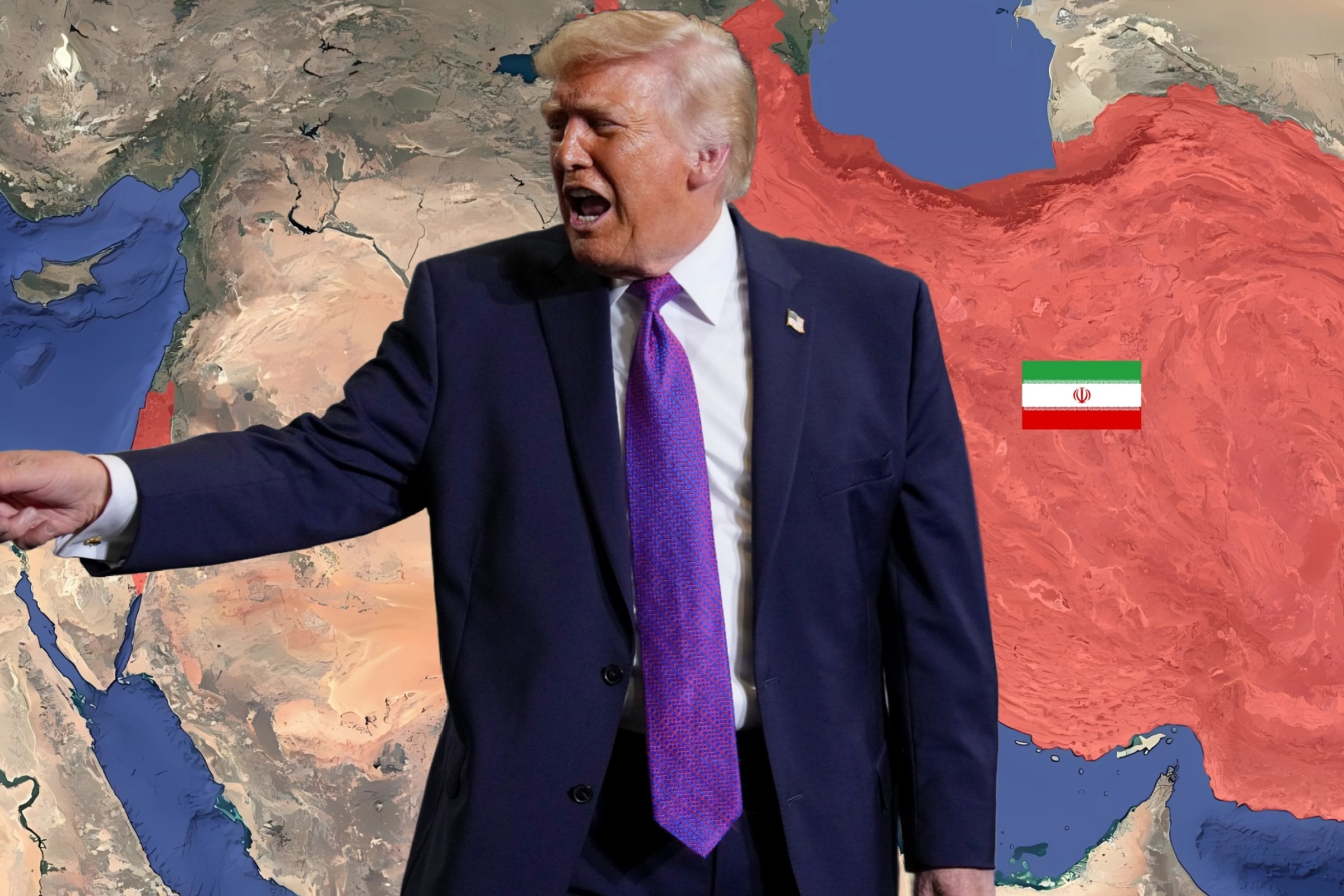
The current rush of the American leader is nothing more than a political calculation. Trump is reacting to enormous domestic pressure caused by the oil price shock, which has reached $100. [374 zł według obecnego kursu walut] — and the resulting decline in stock markets.
Former US military intelligence officer Michael Pregent, in an interview with BILD, outlines three scenarios for ending the US-Israeli offensive in the Middle East.
According to Pregent, the campaign is carried out precisely in military terms. – We are hitting the infrastructure of the Revolutionary Guard, rocket and drone launchers – he says in an interview with the Bild daily. If the goal was to massively weaken Tehran, it has already been achieved.
Pregent expects another two weeks of intense air raids. – Then 95 percent Iranian ballistic missile launchers will be destroyed, he emphasizes. This would be the perfect moment for Trump to officially declare “mission successful.”
Scenario 2: opposition support
What if the mullahs remain in power? According to Pregent, it is difficult to force regime change solely from the air. “The question is whether the Iranian people will rebel against their leaders,” he notes. So far, there are no clear signs that this will happen.
However, the US and Israel could change their strategy: move away from large-scale attacks towards the targeted elimination of those security forces that repress the population. The emerging opposition movement could then be massively supported with intelligence, weapons and point air support.
The article continues below the video
Scenario 3: Long-term air war at low speed
According to the expert, it is also possible to maintain constant air superiority in order to immediately eliminate new threats. The fight against the so-called fighters serves as an example. Islamic State. “For years we fought them from the air and destroyed terrorist targets,” he recalls. If this model of operations were implemented, Iran would remain under constant surveillance.
The United States and Israel would strike at any time whenever targets appeared – that would be it long-term, low-intensity conflict. Pregent, however, believes that the use of ground forces is not a realistic option. There is too great a risk that, as during the Iraq war, Americans will find themselves caught between the fronts of an opaque civil war.
There is also the Strait of Hormuz
Meanwhile, calming down the situation in the Strait of Hormuz may take up to several months, says Jonathan Schroden, one of the leading American maritime experts. This is not good news for a world that is waiting for oil, food and fertilizers for farmers. And the clock is ticking.
The blockade of the most important oil route due to the war with Iran is choking the world economy: oil and gasoline prices have skyrocketed, and tankers in the Persian Gulf and near the critical Strait of Hormuz they burn after subsequent attacks.
Only a handful of freighters have passed through the strait since U.S. and Israeli forces attacked the Middle Eastern nation, almost all of them Chinese-flagged.
It is transported through this narrow strait one fifth of world oil demand. According to experts, reopening it requires huge military efforts. The most likely development Schroden mentions will be extremely costly. But everything indicates that the world will have little choice. Marine Corps veteran predicts 'war within a war'.
I’m Ashley Davis as an editor, I’m committed to upholding the highest standards of integrity and accuracy in every piece we publish. My work is driven by curiosity, a passion for truth, and a belief that journalism plays a crucial role in shaping public discourse. I strive to tell stories that not only inform but also inspire action and conversation.