On March 2, Sheikh Mohamed bin Zayed, the president of the United Arab Emirates, walked the corridors of the Dubai Mall, greeting shoppers with the calm of a leader determined to project normality, the WSJ reports. He shook hands with children and strolled down the mall's crowded escalators. “Are you happy?” he asked a Ghanaian shopper. “Very happy,” came the reply.
shutterstock photo
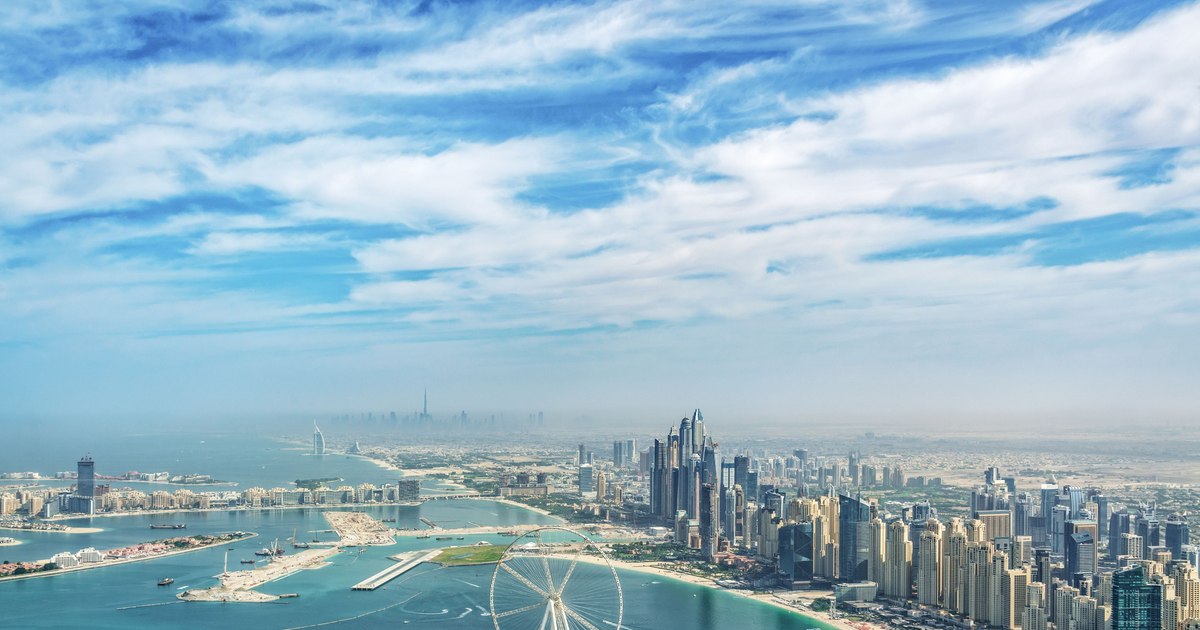
But the soothing image could not hide the grim reality beyond the air-conditioned luxury of the city. For days, Iranian missiles and drones have been raining down on Dubai, targeting the airport, the famous Burj Al Arab hotel and the Emirate's deep harbour. The attacks have claimed lives, disrupted trade and shaken a city that has long prided itself on invulnerability in a volatile region.
“Everything is fine in the UAE,” Sheikh Mohamed said at a public event a few days later. But on the streets, in offices and at home, uncertainty persists.
A city built on stability
Dubai's rise to the global stage is based on a simple but powerful idea: the city can rise above the chaos of the Middle East. Although located in a volatile region, it was immune to conflict – a haven, untouched by the wars, corruption and turmoil around it. Its glittering skyline, world-class commercial centers and financial power were meant to project permanence and prosperity. Dubai has become a magnet for global capital, luxury tourism and expatriates, inspiring neighboring countries such as Saudi Arabia and Qatar to follow suit and diversify their economies beyond fossil fuels.
The current conflict, however, has shattered the illusion that the towering skyscrapers, financial clout and embrace of luxury and diversity in the Persian Gulf can act as impenetrable shields against unrest in the region. The impact is already evident.
Asset managers report calls from anxious clients who want to move their money to places considered safer. Real estate deals are put on hold and expats reassess their long-term plans. The shadow of a hostile Iran across the Gulf remains a disruptive threat, even if immediate attacks cease.
“One drone a day keeps stability in the Gulf in check,” commented Andreas Krieg, senior lecturer at King's College London's School of Security Studies.
For some residents, the sudden danger is a visceral reminder of vulnerability. Quinten François, a 30-year-old cryptocurrency analyst, fled to Bangkok for what he called a “really dark atmosphere,” compounded by the constant noise of fighter jets and explosions. “Five years from now, when people are thinking about moving to Dubai, they'll remember this episode,” he says. “Such things are not easily forgotten.”
Shock waves in the Persian Gulf
Saudi Arabia's ambitious Vision 2030 plan, which aimed to transform the kingdom into a Dubai-style luxury and entertainment hub, is facing new challenges. Budget constraints and dependence on foreign investors make the project vulnerable to risk perceptions. Qatar, heavily dependent on aviation and liquefied natural gas exports, faces air restrictions that affect trade and tourism. Smaller Gulf states such as Bahrain and Kuwait, which are more fiscally vulnerable, may struggle to attract capital amid the crisis.
But no country has more to lose than the United Arab Emirates.
Much of the country's success was based on “the belief that you are not in the Middle East,” said Bernard Hudson, a former head of the Central Intelligence Agency with extensive experience in the Gulf states, including the United Arab Emirates. “The region woke up and was reminded that it lives in a volatile part of the world that can affect them.”
The problem is that “there will still be an Iran on the other side that is armed, that has experience in crossing red lines vis-à-vis the Emirates,” he said.
Anxiety elitekor
Among Dubai's wealthy elites, frustration has turned to Washington. Khalaf Al Habtoor, a prominent developer, criticized the US decision to engage in the conflict on social media, questioning whether collateral damage had been taken into account, although he later deleted the posts.
“On what basis did you make such a dangerous decision?” he wrote.
Meanwhile, President Trump assured the public that the war would end “very soon,” and his advisers pressed for an exit ramp that would stabilize oil prices and regional security.
Dubai, in particular, offers numerous advantages, including low taxes that will likely continue to attract residents; moreover, it emerged stronger from previous crises.
Still, a wounded but undefeated Iran would retain the ability to terrorize cities like Dubai and disrupt oil tanker traffic through the Strait of Hormuz, making it more difficult to attract capital.
On the other hand, the hostility sparked by the war could also complicate Iran's circumvention of sanctions through shell companies in Dubai's free trade zones, halting a substantial flow of dollars that has benefited both sides.
Emirati officials, however, maintain that Dubai remains a safe haven. Omar Sultan Al Olama, minister of state for artificial intelligence, argued that the city's systems had withstood the unprecedented pressure and predicted a quick return to normalcy if the attacks subside.
“The system is working, and people can operate safely in the city, and they're doing so at a time when we're being tested in ways we've never been tested before,” he said after 10 days of war.
A dream project come true
Dubai's transformation from a modest port of divers and pearl traders to a global metropolis has always been daring. With limited oil reserves, leaders adopted a vision of cosmopolitanism, wealth, efficiency and tolerance – attracting expatriates, investors and tourists.
Beach attire ranges from hijab to bikini, bars and mosques co-exist, smart police stations promise to let 'customers' do 'smart' things like pay fines without interacting with a policeman. It has a Minister of State for Happiness and Welfare. There is little street crime or corruption.
The UAE has attracted expatriates and investors with business-friendly regulations, minimal red tape and the promise that the city will not be dragged down by its neighbors' problems.
The leaders have backed their vision of stability and security with a high-tech surveillance state that has silenced opponents and jailed extremists, ensuring Dubai remains largely untouched by terrorism.
The tolerant version of Islam still discourages public displays of affection, and homosexuality remains illegal, although the law is rarely enforced. Public dissent can be punished. Authorities now frequently issue public warnings against sharing images and videos of “scenes of incidents or damage” caused by Iranian strikes, warning that violators will be dealt with “without leniency.”
Leaders have gone to great lengths to make the place attractive to Westerners.
The city has become synonymous with luxury: the tallest skyscrapers, the deepest indoor diving pool, the longest urban zipline, desert ski slopes, Michelin-starred restaurants and more than 170 five-star hotels.
The city's contemporary roots date back to the late 1970s, when the construction of a deep-sea port at Jebel Ali and free trade zones that removed taxes and local property requirements attracted the first wave of immigrants and expats.
The establishment in 1985 of state-owned airline Emirates, now one of the world's largest long-haul carriers, was another milestone, followed by a boom in hotel and apartment construction, turning Dubai into a real estate and tourism powerhouse.
The 2008 financial crisis burst Dubai's housing bubble, forcing a bailout from Abu Dhabi, the UAE capital with much larger oil reserves. But when the Arab Spring broke out a few years later, Dubai benefited as investors sought a safe haven. These investors eventually included wealthy individuals from countries such as Lebanon, Syria and, more recently, Russia and Ukraine.
Dubai's population has grown to around 4 million at the end of 2024 – around 90% of whom are expatriates – up from less than 1 million at the turn of the century. Last year, the United Arab Emirates attracted a record 9,800 millionaires, bringing with them more than $60 billion – the largest flow globally, followed by the US with 7,500 millionaires, according to estimates by consulting firm Henley & Partners.
Crisis in real time
However, the Iranian strikes shattered the illusion of an idyllic city. Companies rushed to protect staff: KPMG chartered planes, Google evacuated more than 1,000 employees, and banks such as Deutsche Bank suspended travel. A tennis tournament near Dubai was abruptly canceled after drone attacks threatened players mid-match.
Reactions from expatriates varied. Federico Ferraro, co-founder of logistics platform Quiqup, decided to stay, appreciating the city's efficiency and management.
Drones and missiles are “in shock,” he said. But he still hopes to get a long-term visa and buy a house in Dubai. I still feel safe.”
Others, like hedge fund recruiter Thomas Hennelly, watched the rockets cross the sky from their balconies, but noticed that everyday life – traffic, beaches and businesses – went on around them.
Economic damage
Even temporary instability threatens Dubai's economic engine. The residential housing market, already growing by 60% between 2022 and early 2025, faces the risk of a correction. Commercial real estate is being hit as banks evacuate buildings, and tourism has seen tens of thousands of cancellations. Experts estimate spending by international visitors to the Middle East could drop by as much as $56 billion this year, a 27 percent decline.
“We have presented Dubai as a safe place for international investment,” says Nabil Milali, portfolio manager at Edmond de Rothschild Asset Management. “Now the geopolitical risk premium is high and will remain so.”