Lake Cinciș, unrecognizable after the era of May 1 holidays. From hundreds of tents to jungles, islands and forbidden places

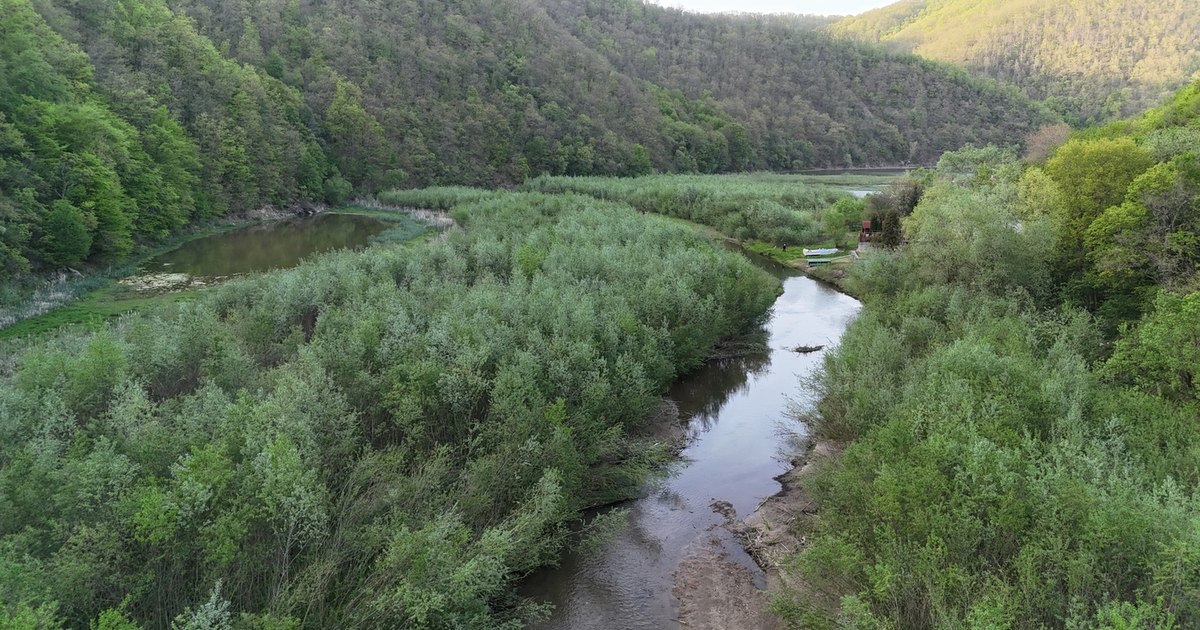
Once occupied by hundreds of tents during the May 1 mini-holidays, the shores of many reservoirs have been completely transformed. Lake Cinciș was one of the favorite destinations for thousands of Romanians, but the era of tent tourism on its shores has set, and its landscape has become unrecognizable.
Lake Cinciș upstream. Photo: Daniel Guță. TRUTH
A more than two-century-old church, flooded and ruined in the 60s by the waters of the Cinciș reservoir, from Hunedoara, was for a long time the destination of tourists who took boats, hydro-bicycles and steamboats on the waters of the lake, arranged over a length of more than seven kilometers on the Cerna river.
Most of the guests of the recreation area in the vicinity of Hunedoara were, in the past decades, families who, on weekends, “moved” with their tent to the lake shore.
“Hundreds of people came here with their tents every weekend, starting from May 1, when it was a holiday for workers in the combine and mines in the area, until September, if it was warm enough and the weather was with us. And when it rained, people came with their tents on the banks. Until the 80s, there were not many places for recreation, and going out with a tent on the green grass, with food prepared at home, had become a habit for my family, for neighbors, work colleagues and friends“, recalls a local from Hunedoara.
The dry “bite” from the old lake
The reservoir was set up at the beginning of the 60s on the hearths of several villages in the Cerna valley, after the construction of its dam, about 10 kilometers from Hunedoara. At first, its banks were occupied by pastures, orchards and forests, and tourists could set up their tents in numerous places.
In the 60s and 70s, the Cinciș motel, the Casa Albă tourist complex and two camping areas were built.
The landscape of Cinciș Lake began to change gradually from the 90s. Since then, most of the land on the shore of the lake has become private, including the old roads that went down to the villages on the Cerna valley being retroceded as land. The new properties were fenced off, and gradually, a small resort with homes, holiday homes, boarding houses and motels took shape on the right bank.
On the opposite bank, the forest covered the old hamlets of the Cerna valley, abandoned by people, although they were not flooded during the hydrotechnical development of the 60s.
Access to the water has been almost completely blocked, and the tents have almost completely disappeared from the banks. The May 1st holiday, which in the past attracted thousands of people to the banks of the Cinciș, has become a mere memory for many locals.
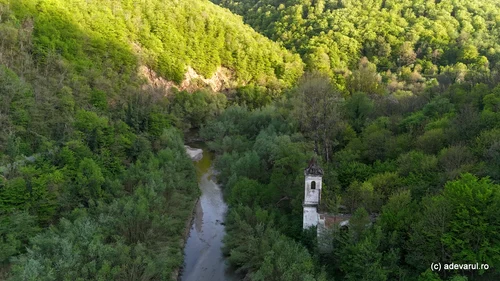
Image 1/22:
Lcul Cinciș 2026 Photo Daniel Guță THE TRUTH (7) JPG
Meanwhile, in addition to the anthropization of its shores, another phenomenon has increasingly affected the appearance of Cinciș Lake. The upstream area became clogged, and the alluvium formed islands occupied by vegetation specific to meadows and clumps of forest. The floods of recent years have accelerated the accumulation of alluvium, which has reduced the surface of the water more and more.
Simian Island, the island that was supposed to save Ada-Kaleh. The story of the fortress moved to the Danube after the construction of the Iron Gates
The ruins of the old church at the “tail” of the lake, one of the two ruined places in the former disappeared village of Baia Craiului, once partially flooded, remained on land. Access by boat to them is no longer possible, and those who want to reach the church on foot have to cross a veritable jungle on the wild shore of the lake.
The “coastline” at the edge of cities
In a situation similar to that of Cinciș Lake, there are several reservoirs built in the second part of the 20th century on the outskirts of some cities. For years, artificial lakes have been among the most sought-after destinations for Romanians to spend their free time.
Around the 1st of May, at the opening of the nature outing season, hundreds of tents piled up on their banks, occupied by families who came to the green grass. Sunny days were dedicated to swimming in reservoirs and barbecues, evenings ended with bonfires, and at night, improvised discotheques kept the party-loving Romanians awake.
In some recreational areas, hydro-bicycles and steamboats completed the minimal offer of tourist services on the shores of the lakes, along with small recreational bases, restaurants and kiosks open only on busy days.
Reservoirs such as Poiana Mărului and Trei Ape, from Caraș-Severin, Cinciș and Valea de Pești (video), from Hunedoara, Firiza, from Maramureș, and Surduc, from Timiș, were among the favorite destinations for thousands of local residents of the cities located hundreds of kilometers from the Black Sea coast.
Camping holidays in nature are conquering Europe. How the camping fad appeared and died out in Romania
For many of them, the reservoirs on the shores of which they could camp and sunbathe meant the “coast on the mountain” or the “sea on the edge of the cities”, as these recreation areas were called.
“Here are the expeditioners, a few hundred kilometers from Bucharest, from their homes and parents. They are on the shore of Lake Cinciş. The tents are set up, the food is boiling in pots on the hearth, there is silence and peace all around and it is so beautiful that you feel like saying that only here and like this, as an expeditioner, should you spend all the days of your life”. informed Cutezătorii magazine, in 1984, in a report about Lake Cinciș.
The decline of lakeside campsites
The outings with the tents also revealed a less pleasant aspect of the behavior of many Romanians.
The branches of the trees growing on the banks and those of the neighboring forests were used for fire, the hearths left behind frequently became places where household refuse was thrown, together with the scraps gathered from the bushes, and the waters were often polluted. After the revelers, the recreation areas on the banks remained dirty for a long time.
After 1990, both the privatization of lakeshore land and changing preferences for tourism services made camping trips less and less attractive to families. Tourist offers have diversified and become more accessible, and in some areas bathing in reservoirs has been prohibited, for safety reasons.