The US-Israel strategy against Iran has failed – now they are moving to plan B, the Dahiya doctrine

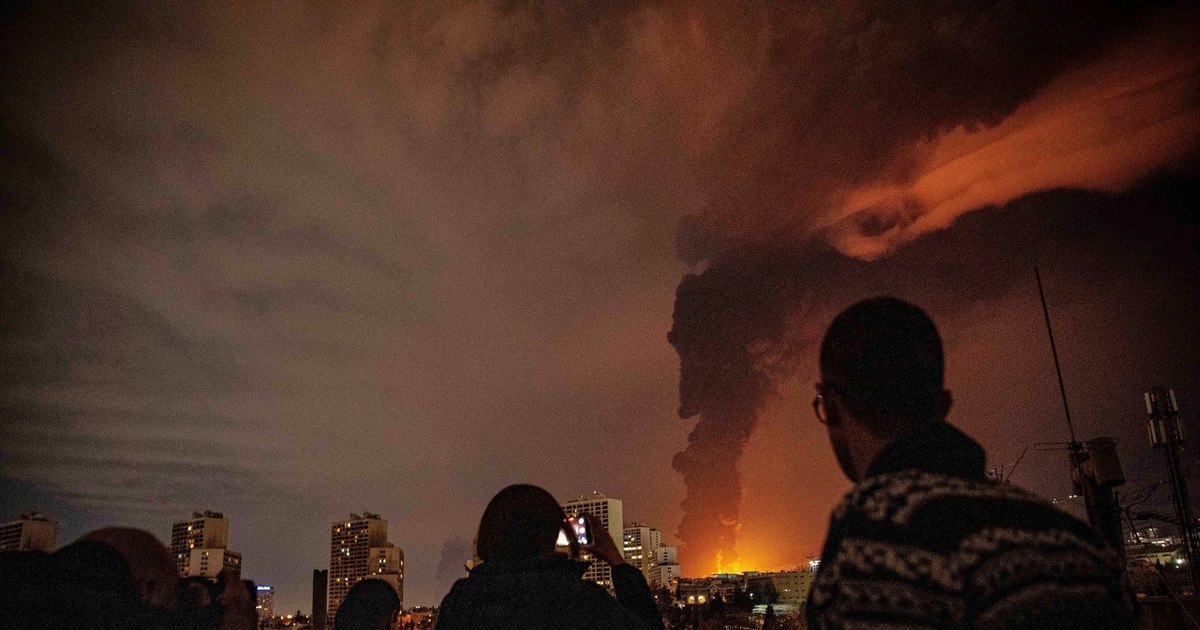
The war against Iran did not go according to the original plan of Washington and Tel Aviv. After the attempt to quickly oust the leadership in Tehran failed, Israel and the United States are now resorting to what is known as the Dahiya doctrine, a strategy aimed at undermining domestic support for the Iranian regime through strikes on the civilian population and infrastructure.
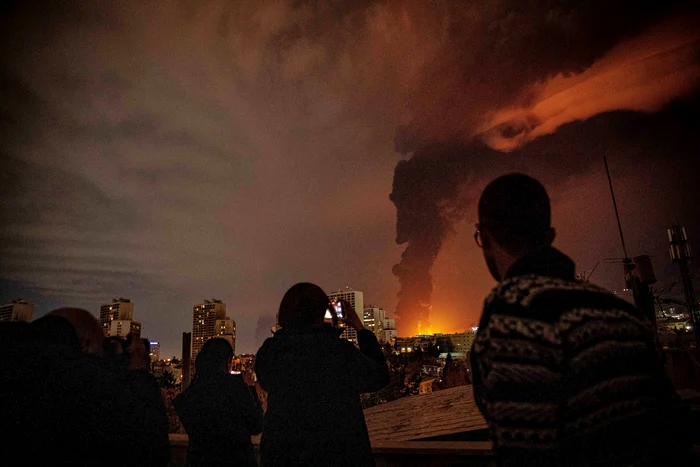
Iranians helplessly watch the Israeli-American bombings PHOTO: Profimedia
Emeritus Professor of Peace Studies at Bradford University, Paul Rogers, points out that the war “must end in total victory” for Israel. Anything less than the complete destruction of the Iranian regime's capability is not enough. If the regime survives, even severely damaged, Iran will be able to focus technical resources on developing a nuclear weapon to prevent future attacks.
Plan A failed
Initially, the US-Israel strategy involved the assassination of the supreme leader and the leadership of the Revolutionary Guard Corps (IRGC), to weaken the power of the state and destabilize the theocracy. The operation failed. The Iranian regime has a new leader and, according to US intelligence services, “reserves” are already being selected to take over in the event of an attack, The Guardian writes.
Plan B: fracturing and punishing the population
The secondary plan, more complex and significant, has two directions. The first is aimed at encouraging the minorities – Kurds and possibly Baluchi – to revolt, thus fragmenting Iran. The impact would be limited: minorities do not trust the Israelis, nor the US under Trump.
The second component is much more significant and is based on an Israeli military doctrine known as the Dahiya doctrine.
This involves the systematic destruction of civilian infrastructure and intense pressure on the population to weaken the adversary's domestic support when the political or military leadership cannot be quickly defeated.
The doctrine takes its name from the Dahiya neighborhood in southern Beirut, which was massively destroyed by the Israeli army during the 2006 war against Hezbollah.
Critics say a similar strategy has been widely used against Hamas in Gaza over the past two and a half years. According to estimates cited by Rogers, the conflict would have caused at least 70,000 deaths and massive destruction, but not completely eliminated Hamas.
Now the IDF (Israel Defense Forces) and the US Air Force are applying the same doctrine in Iran, attacking civilian and industrial infrastructure. US Secretary of War Pete Hegseth warned that operations would intensify.
Prospects and risks
Rogers points out that with a population of around 93 million people – more than 40 times the size of Gaza – the impact on Iran will be limited and last for months. There is also the risk that the IRGC will expand its attacks on the oil and gas industries of the Gulf states – the United Arab Emirates, Qatar, Kuwait or Saudi Arabia – which could cause a global economic crisis comparable to the oil embargo of 1973-1974.
The professor suggests that Trump's optimism about “victory almost won” is exaggerated, and some Israeli officials may already be looking for a way out. In Washington, the idea of an alternative to escalating the war may be gaining ground.