
What riches are hidden underground in the Apuseni Mountains. The metals of the future and the minerals that have baffled scientists

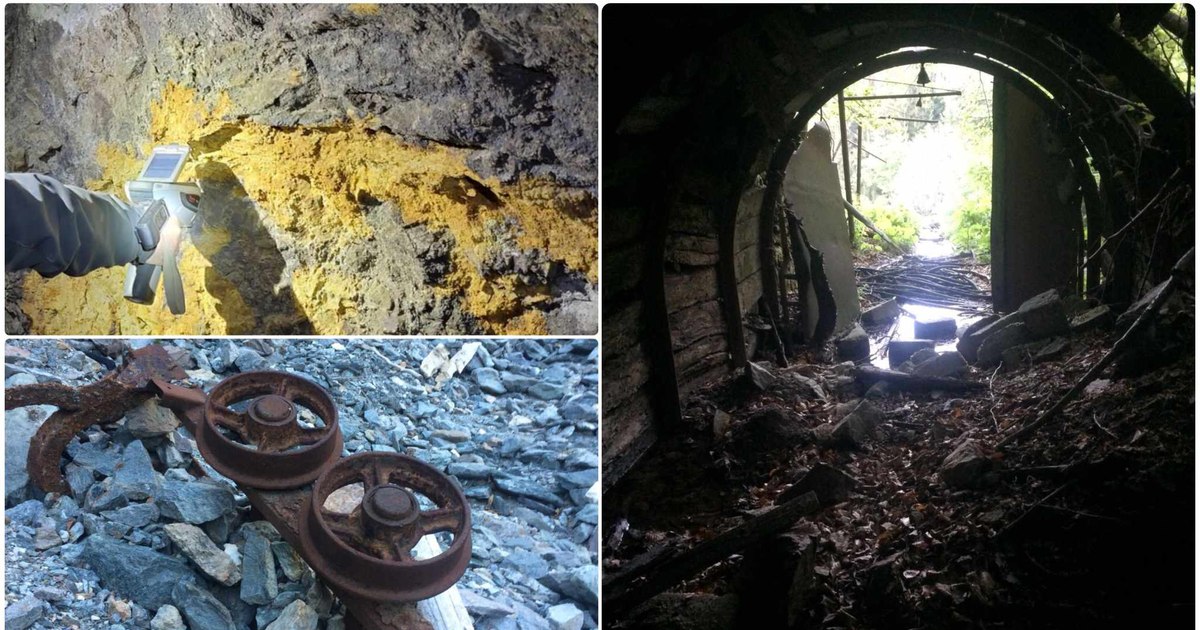
Along with impressive amounts of gold, silver and copper, the Apuseni Mountains hide in the depths some of the most precious metals “of the future”. Some deposits have been identified and mined in the past on a small scale.
Leucia Valley. Photo Mountain Voluntary Service and Leadingedgemateials.com
The Apuseni Mountains have been, since ancient times, a place of gold, silver and copper mines. In the modern era of mining, which began with the reorganization of exploitations from the time of the Habsburg Empire, other precious and rare minerals discovered here attracted more and more attention.
Some were extracted alongside the ores targeted by the main mining works, but were ignored, not being able to be industrially exploited during mining or lacking the necessary technology for their separation.
Other mineral deposits considered valuable today have not had time to be exploited, after the mining industry went into decline at the end of the 20th century, or for economic or technical reasons.
Tellurium, the unstripped gold mineral of the Metalliferous Mountains
One such mineral, found in abundance in several places in the Apuseni range, especially in the Metaliferous Mountains, was tellurium, a silver-white, very brittle metal that can be used to obtain alloys in the metallurgical industry, but also in the energy, aerospace, military, automotive and IT industries. The shell of the first atomic bomb would have been made of tellurium, according to some historians.
Tellurium was first discovered in the gold mines of Transylvania at the end of the 18th century, and the scientists of the time called it “aurum problematicum”. One of the richest deposits of the rare metal was mined in the Metaliferi Mountains, in Săcărâmb.
The gold mines of Săcărâmb (video) were opened in the middle of the 18th century, after the discovery of a lump of gold “dressed” in tellurium, at the foot of Calvaria Hill – then a wild place, with the appearance of a great gray pyramid formed by the extinct volcano millions of years ago.
Geologist Edward Daniel Clarke (1769–1822) visited the Săcărâmb gold and tellurium mine in the early 1800s and described it in his journal Travels in Various Countries of Europe, Asia and Africa (1816).
“As Transylvania is the only region in the whole world where tellurium has been discovered so far, our curiosity was very keen to investigate the Săcărâmb mine”, Clarke wrote in his book.
How was tellurium described upon its discovery
The scientist, a passionate collector of antiquities, bought here some minerals and pieces of tellurium, in crystalline and massive form.
“Some specimens of tellurium are so extraordinarily rich in gold, that when sold for the benefit of the crown they must be weighed and valued according to the proportion of gold they contain. This kind of ore is always kept locked up in special storehouses, and distributed in different lots, enclosed in boxes. The ore obtained lies in heaps through which you may see the workmen walking with their hammers, selecting and crushing it, in the sight of the next crushing operation. The richer ores, as soon as they are removed from the mine, are carried in wooden buckets to the separating chambers, where they are crushed with the greatest care by certain sworn servants. The poorer ones are separated in the washing-baths, using iron sieves.” reported the English mineralogist over two centuries ago.
In the 18th century, tellurium had no industrial uses, and its value was only scientific, being a newly discovered chemical element, especially in Săcărâmb and Zlatna, in the gold mines. The richer ores extracted from the Săcărâmb mine contained mainly tellurium and gold. “Not all ores contain silver, though all contain gold”says geologist Edward Clarke.
In the past centuries, the mines of Săcărâmb have attracted many scientists, interested in the rich deposits of precious and rare metals and minerals: gold, silver, tellurium, sacrâmbite, sylvanite, scorodite, pyrophyrite, rhodonite, stibiuconite, valentinite and many other types of ores, some discovered here for the first time in the world.
Molybdenum, bismuth, uranium, nickel and cobalt in the Bihor Mountains
The mining operations in the Bihor Mountains, the place in Apuseni where Crișul Alb, Crișul Negru and Ariesul Mare spring from, have ancient origins. In Antiquity, gold was sought in the sands of these rivers, and later in pits and primitive galleries hollowed out in the mountain walls.
The oldest mines in the Bihor Mountains date back to the Middle Ages, and until the 19th century the Băiței Bihorului area was known for its iron, copper, zinc, gold and silver mines. Over time, other minerals were extracted from here: molybdenum, bismuth, tungsten, nickel, cobalt, limestone, uranium, marble and building stone.
At the end of the 19th century, one of the largest deposits of molybdenum and bismuth in Europe was discovered in the area of the Crișului Negru and Crișului Băiței valleys. At first, the two metals were considered byproducts of the copper and lead mines in the area and were not used. However, their importance increased after the First World War.
“These two metals have very special uses: bismuth in the chemical and pharmaceutical industries, and molybdenum in the special steel industry. Being very rare, they are all the more sought after and well paid. Their deposits in Romania, located in the Bihor Mountains, around the town of Băița (formerly Rezbanja), being very rich, have great significance for the national economy, especially as raw materials for export”informs, in 1929, the geologist GV Cruglicov, in the economic publication Argus.
More than 200 tons of molybdenum were mined annually in Valea Băiței before the Second World War, the ore being used in the manufacture of special steels for weapons, airplanes and automobiles, replacing nickel in many cases.
In the early 1950s, the most important uranium deposit in Romania was discovered in the Băiței Valley, which, due to its richness, could initially be exploited on the surface. In the 1950s, the area was militarized by the Soviets, and uranium ore production was sent to the Soviet Union.
In the same area, at the foot of the Bihor Mountains, deposits of cobalt, nickel and polymetallic sulfides, identified in the past in former mining perimeters from which uranium was extracted, are also being explored.
“Cobalt and nickel ores were also discovered here, which were ignored because the responsible division of the Romanian state mining sector, in the years 1960-1990, focused only on what were then called 'strategic metals', and cobalt and nickel were not included”, showed the Canadian company Leading Edge Materials, in a mining project aimed at metals considered essential for the industries of the future from Baița Bihorului.
Uranium is a radioactive element used in nuclear power production, cobalt and nickel are essential for lithium-ion batteries, and bismuth is a metal used in the medical industry and as an environmentally friendly replacement for lead. Arsenic, a toxic element, is also present in deposits in the area.
Critical raw materials in Apuseni
Since the 1990s, almost 600 mining operations in Romania, from 28 counties, have entered the definitive closure programs, according to the information contained in “Romania's Strategy for non-energy mineral resources, horizon 2035”, published by the Ministry of Economy, which includes an assessment of non-energy mineral resources in Romania.
The same document shows that, along with gold, silver and metal ores, but also industrial minerals, energy resources such as uranium, coal, natural gas and oil, as well as mineral and geothermal waters, a major interest is the reserves of critical raw materials identified in Romania.
“The main beneficiaries of critical raw materials are operators active in the field of high technologies (aerospace, aeronautics, electronics, medical equipment, solar batteries, laptops), semiconductor technology (mobile telephony, GPS, Internet, optical fibers), automation and electronics, the steel and metallurgical industry, ore preparation (through clean technologies), in the industry of alloys, refractory materials and polymers, etc.”shows “Romania's strategy for non-energy mineral resources, horizon 2035”.
The best-known deposits of critical raw materials in Romania have been identified in the Western Carpathians (Apuseni Mountains, Banatului Mountains and Poiana Ruscă Mountains), where the mining tradition has been almost uninterrupted for the last two to three centuries.
Tin reserves have also been identified in the Eastern Carpathians and in Maramureș, but also in Valea Morii and Barza (Hunedoara), in the Apuseni Mountains, where until the 2000s gold, silver and copper deposits were mined in open pits and underground.
Reserves of bismuth, in the form of sulphides and sulphosalts, but also as oxide or native bismuth, were found in copper, lead and zinc deposits, exploited in the west and center of Romania, at Brusturi and Baia de Aries in Apuseni, but also in Maramureș.
Gallium was identified in larger quantities in the tailings dumps from Ilba (Maramureș), but also in mining areas in Apuseni, such as Săcărâmb.
Germanium is found in blende deposits, but also in other mineral sulphides, in the Baia de Aries, Bucium, Zlatna, Roșia Montană and Barza mining areas, in the Apuseni and Metaliferi Mountains.
Vanadium was discovered in the Metalliferi Mountains, in Căzăneşti – Ciungani, an area with a rich history in the exploitation of metal ores, but also in the Pădurea Craiului Mountains and in the Căpuș area (Cluj).
The controversies of exploitations in Apuseni
Market studies indicate a potential increase in demand and prices for critical raw materials, the authors of the analysis said.
However, such exploits also face difficulties. These include the need to build new plants for the extraction of critical raw materials and the common sulphides that accompany them, the large investments required to reopen the deposits and equip the mines, but also the fact that the profitability of exploitation depends on the content and accessibility of the main ores, such as copper (Cu), zinc (Zn) and lead (Pb).
The authors of the document also show that, in recent decades, relevant know-how and technologies for research and processing have been lost, and in professional education there are no updated programs adapted to current needs regarding critical mineral resources.
Also, there is no up-to-date database on these raw materials, and public perception is often skeptical about the environmental impact of such mining.


