Meeting on Monday in a video conference, G7 finance ministers ruled out for now the possibility of resorting to security stocks to limit the increase in the price of a barrel caused by the war in the Middle East, writes Liberation.
As Iran's blockade of the Strait of Hormuz and repeated attacks on Gulf countries' energy infrastructures continue, causing a sharp spike in the price of a barrel, G7 finance ministers on Monday discussed the possibility of using strategic oil reserves, but did not call for their mobilization.
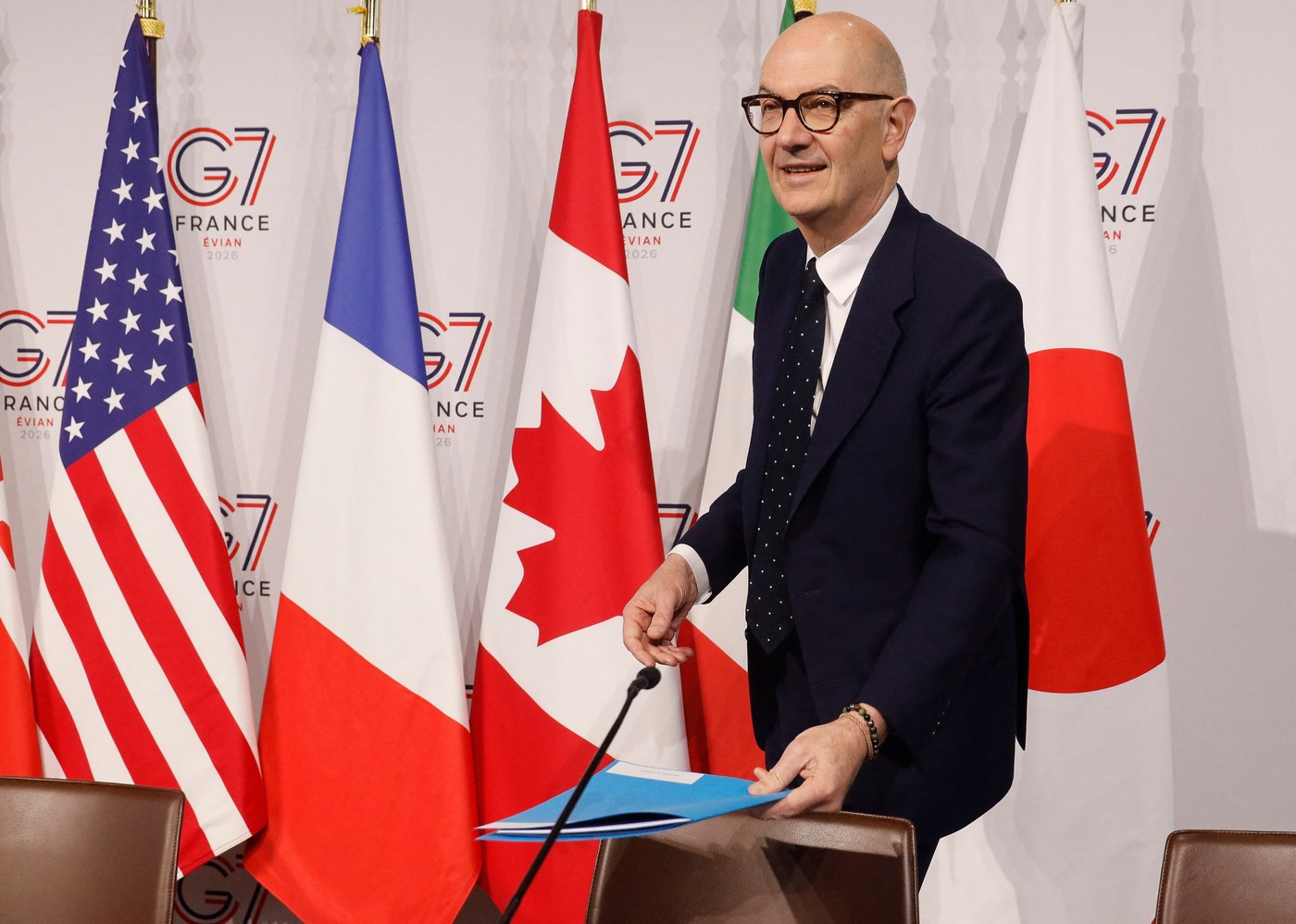
“We will follow the situation closely, we are ready to take all the necessary measures, including using strategic oil reserves to stabilize the market,” but “we are not at that point yet,” French Minister Roland Lescure told reporters, calling his G7 counterparts on a video conference to review the situation.
Earlier in the morning, Emmanuel Macron had indicated that “the use of strategic reserves is an option under consideration.”
These buffers, an important tool for cushioning oil and economic shocks related to supply chain disruptions, are set up in many countries, including France. Libération explains how they work.
What are strategic reserves?
Since the creation of the International Energy Agency (IEA), one year after the oil shock of 1973, member states keep part of the oil they import or produce in strategic reserves, intended to compensate for situations of critical instability caused by major economic and geopolitical upheavals. In the event of a crisis, the member states of the agency can collectively decide to introduce part of these reserves into the oil market. Each member country's effort becomes proportional to its share of total IEA oil consumption.
The agency, which brings together some thirty states, including France since 1992, obliges its members “to hold oil stocks equivalent to at least ninety days of net oil imports,” which can be mobilized in the event of a crisis. These “may include stocks held exclusively for emergency situations, as well as stocks held for commercial purposes”, be it crude oil or refined products, the IEA states. The agency also allows “stocks held in other countries” through bilateral agreements.
In 2025, world stocks exceeded 8.2 billion barrels, constituting “an important security buffer in the face of possible disruptions”, according to the IEA. The planet consumes about 100 million barrels of oil per day. As for IEA members, they hold “over 1.2 billion barrels of public emergency stockpiles” as well as “approximately 600 million additional barrels of stocks held by industry under government obligations.” In France, the government has stressed that there is no risk of a shortage at the moment. In total, the country has the equivalent of 118 days of net imports, according to the Ministry of Economy.
Does Romania also have strategic oil reserves?
Romania has both strategic oil reserves (in the form of crude oil and fuels) and technical reserves, constituted according to European and national legislation.
Romania has strategic reserves of about 2 million tons of fuels (gasoline and diesel), to which are added about 1.2 million tons of technical reserves.
According to the Minister of Energy, these stocks can cover domestic fuel consumption for approximately 5 months, in a hypothetical scenario in which they would no longer be refined or imported at all.
At the level of oil resources (deposits), Romania has reserves of about 0.6 billion barrels of oil and ranks first in the EU in terms of oil reserves, according to the aggregated data in the BP report for 2020
How are they managed in France?
Since 1925, a law aims to guarantee the existence of an oil stock in France, considered since then an extremely strategic resource for the country. National management of strategic reserves is mixed. Oil companies, particularly refiners and distributors, have a legal obligation to store the equivalent of 29.5% of their sales from the previous year, so that these quantities can be mobilized in case of need.
These reserves are then managed by the Professional Committee of Strategic Petroleum Stocks, created in 1993, which brings together private and public actors and under which the Security Stock Management Anonymous Society (Sagess) operates.
Created in 1988, Sagess is a non-profit company whose mission is to build and preserve strategic stocks of petroleum products. Oil operators can transfer all or part of their storage obligation. The entire system is overseen by the Directorate-General for Energy and Climate.
To ensure efficient distribution throughout France, the reserves are divided between 98 sites: 89 commercial warehouses, eight refineries and a reserve located at Manosque, in the Alpes-de-Haute-Provence department, near several strategic infrastructures and the large seaport of Marseille. The site is home to approximately thirty underground saline cavities, where nearly 9 million cubic meters of oil can be stored.
Have these stocks already been used?
Recourse to strategic oil reserves remains rare among IEA member states. Such a collective decision has been taken only five times: before the Gulf War in 1991, after hurricanes Katrina and Rita in 2005, during the Libyan civil war in 2011, and twice after Russia's invasion of Ukraine in 2022. Then it was to send “a unified and strong message to the world oil markets that there will be no shortage of supply as a result of the invasion of Ukraine by Russia”, according to the agency.
France has also unilaterally drawn on its own stockpiles on several occasions. The last time was in October 2022, when a massive strike shut down oil refineries and warehouses for several weeks, causing a drop in fuel supplies and gasoline plumes.
Can the use of strategic reserves reduce prices?
According to Olivier Appert, adviser to the Ifri Center for Energy and Climate, such a measure primarily allows “to calm public opinion about the risk of shortages. It also stabilizes the markets, so yes, it has an impact on prices.” However, this is a “totally different” maneuver from price capping or subsidies at the pump, the expert points out, according to whom “it is more about easing tensions on the world market by collectively releasing stocks.”
On its website, the AIE confirms that this mechanism “is not a price intervention tool nor a long-term structural supply management tool”. Therefore, it cannot be used outside of crisis episodes as a market regulation tool.
Before the start of the conflict, the world oil market was in a surplus situation. “So we were in a relatively comfortable position, but things can change”, remembers Olivier Appert, considering that resorting to strategic reserves would allow “buying time” in the face of the “major uncertainty” represented by the “duration of the war”. And, implicitly, the pressure on the price of hydrocarbons. (Material produced with the support of Rador Radio Romania)