'We will reach the limits of adaptation': Experts' stark warning for a Europe ignoring the extreme climate scenario

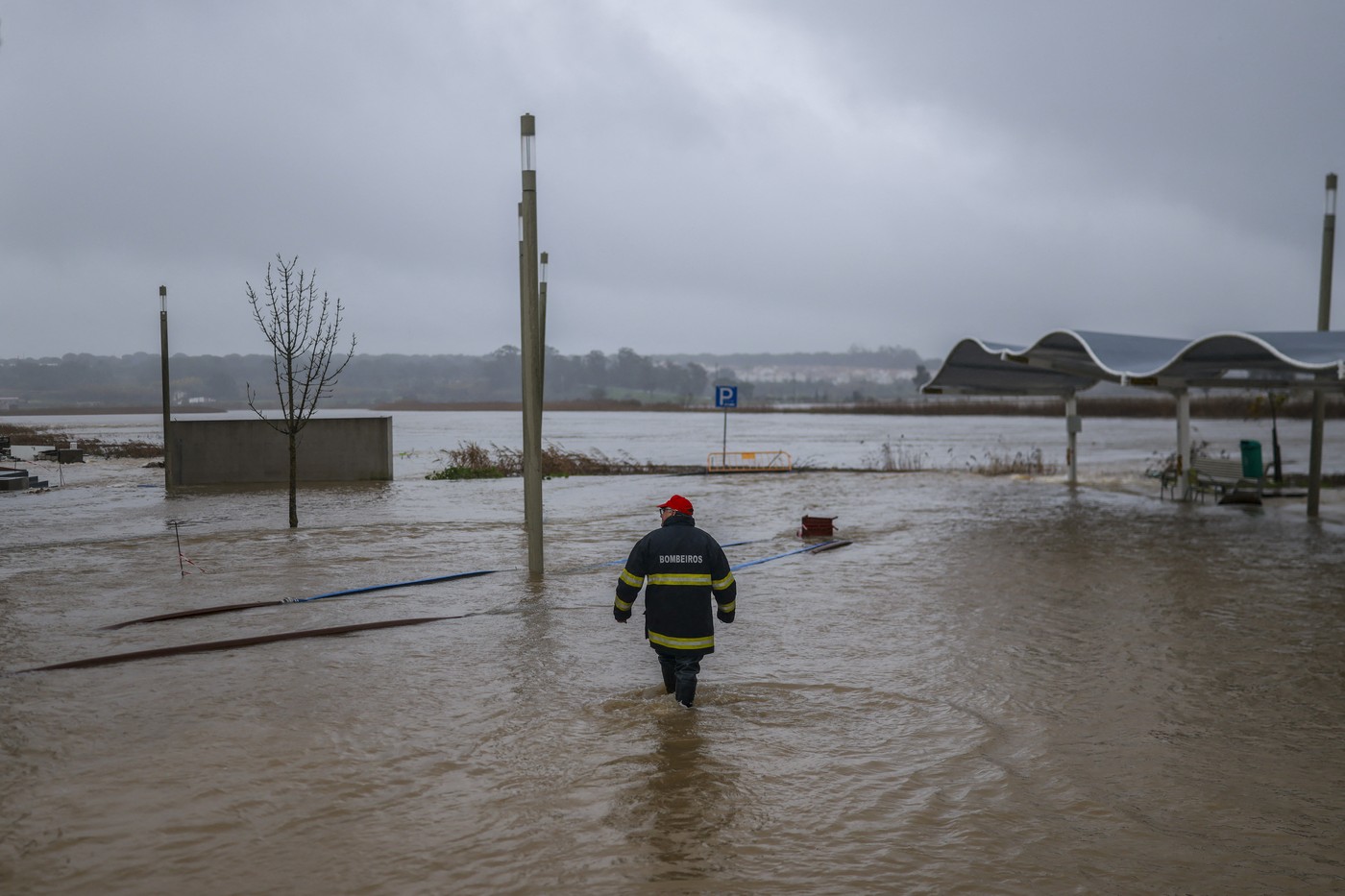
A firefighter monitors flooded streets in Portugal during Storm Leonardo, February 2026. Credit line: PATRICIA DE MELO MOREIRA / AFP / Profimedia
European countries are being urged by the EU's climate science forum to prepare for catastrophic global warming of 3°C, warning that member states' current adaptation efforts are “insufficient and often too late”, according to The Guardian.
The ESABCC (European Scientific Advisory Board on Climate Change) committee explains in a recent report that current adaptation efforts are “insufficient, largely incremental and often late”.
The institute recommends that officials test warming scenarios of up to 3.3°C by 2100, warning that Europe is already vulnerable to extreme weather events beyond its historical experience.
To counter these risks, the scientific forum proposes the imposition of mandatory climate risk assessments and the integration of resilience into all EU policies. At the same time, ESABCC emphasizes the need to attract private funds for protection, warning that delaying measures will inevitably lead to the moment when “we will reach the limits of adaptation”.
Maarten van Aalst, ESABCC committee member and director of the Royal Netherlands Meteorological Institute (KNMI), says adapting to a warmer future is largely “a matter of common sense and an easily achievable goal”.
Although he describes the task as daunting, the researcher points out that protecting Europe is “not a complicated science” but requires real work to improve early warning systems. But he warns that, despite preparedness measures, the critical message remains to avoid extreme warming.
The expert points out that Europe is particularly vulnerable to unknown historical conditions, a fact demonstrated by the recent series of unprecedented storms in Portugal, which caused 775 million euros in damage. At the same time, extreme phenomena have become more lethal: torrential rains killed 134 people in Germany in 2021 and 229 in Spain in 2024.
In addition to flooding, extreme heat causes tens of thousands of deaths on the continent each year, with studies attributing the majority to fossil fuel pollution. At the same time, wildfires reached a record high last year, destroying more areas than ever recorded in the history of scientific monitoring.
The final point of the ESABCC report emphasizes that, while adaptation is necessary, it cannot replace drastic reductions in emissions. Maarten van Aalst warns that without a limit on global warming, society will reach a point where physical and economic barriers will make protection impossible.
“This is a very problematic future, with rapidly increasing risks. And for a number of risks, we will reach the limits of adaptation,” says the expert.