
INTERVIEW. Thinking of my mother. An actress from Romania, awarded in Germany, fulfilled her dream after seven years: “My goal was to bring a film like Romania does not have”

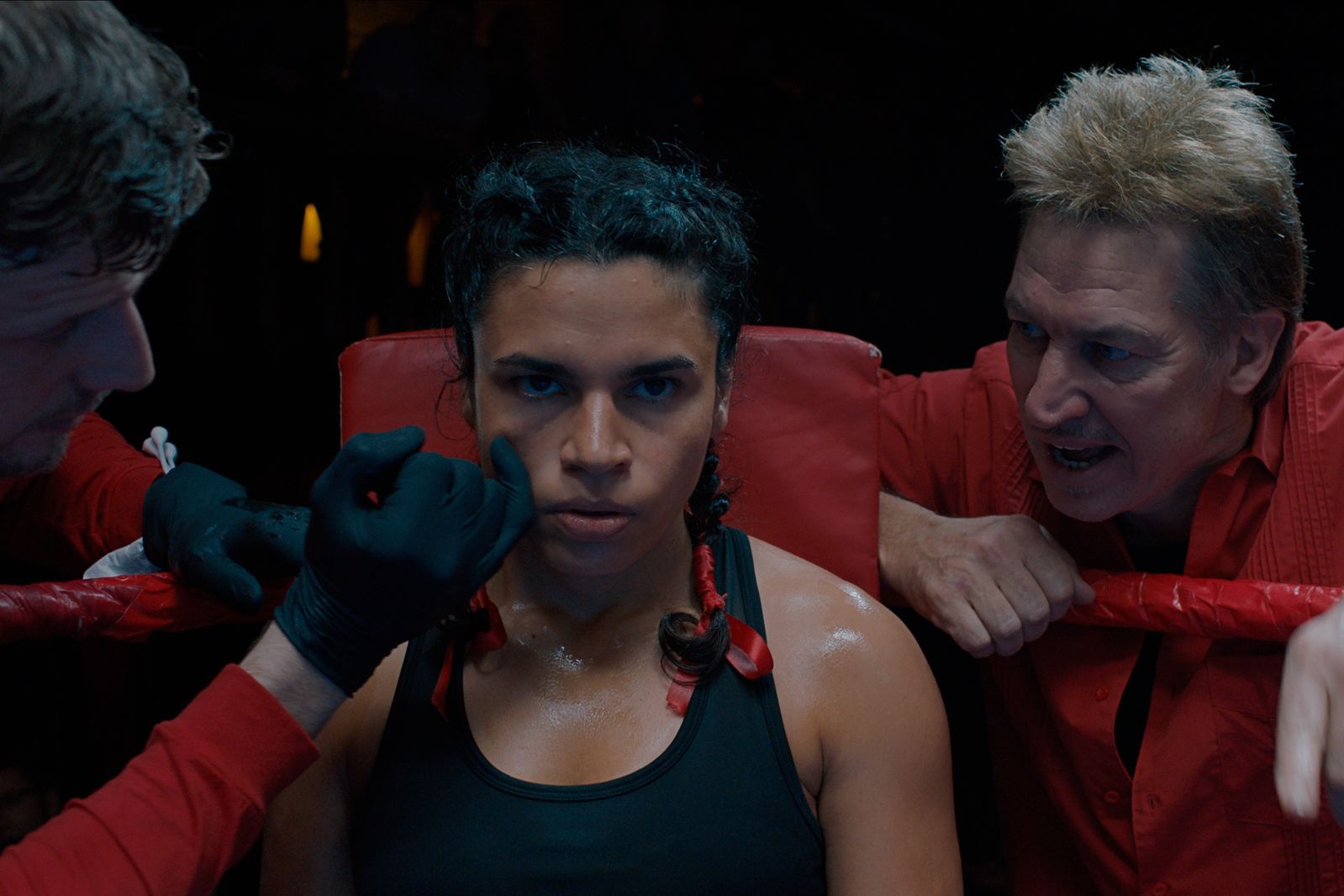
“I thought about my mother and many mothers who fight”, says Alina Șerban, who plays the role of Ali in “Gipsy Queen”. Rejected by other distributors and labeled as “an old film”, the actress tells HotNews that it was almost impossible to bring the film to Romania, hitting various “patterns”. “Gipsy Queen” (2019) talks about the life of an emigrant woman, comparing it to the struggle from a boxing ring, where only there are rules.
For the role, Alina Șerban trained alongside world champions and, despite warnings that it could be fatal, filmed the longest boxing scene: 5 minutes in the ring, alongside Maria Lindbergh, with whom she trained for months. After this film, Germany awarded her with the title of Best Actress, not being a German speaker.
- Alina Șerban tells how this social inequality is maintained by the political factor, because “the people in power don't speak their mind, they don't get down among them, and the gap between us is very big”.
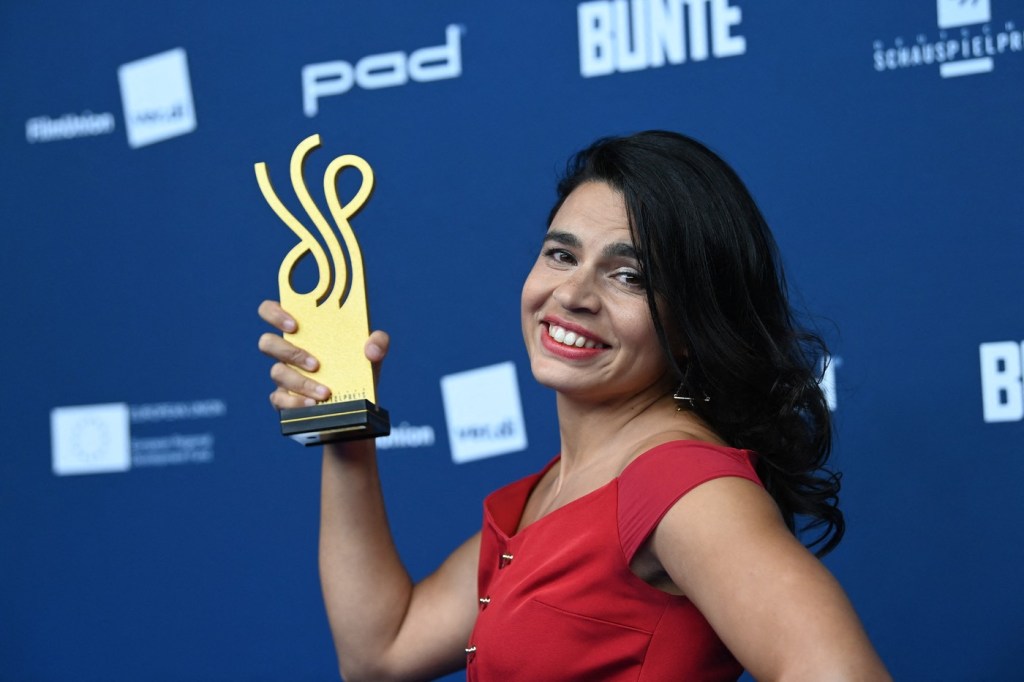
- In 2020, for her role in Gipsy Quenn, Alina Șerban received the award for best actress at the German Actors Guild Awards.
- The money collected from the tickets is donated through the Untold Stories Association to two placement centers in Bucharest: Casa Sf. Iosif and Sf. Marcelin.
Hotnews: Was it difficult to bring “Gipsy Queen” home, 7 years after its release?
Alina Şerban: It was almost impossible to bring him to Romania. Firstly, I don't have the experience to do this, secondly, I had to find the financial resources, to look for partners who believe in a film like we don't have. I was getting this response from experienced film distributors, who had good intentions, by the way: “no way, it's impossible, because it's an old film”. But when I am told that something is impossible, I respect the opinion of experienced people and try myself, to know that I tried. I was happy to meet Ileana Cecanu, and we both got into this boat, which crossed a turbulent sea, and we did the impossible: “Gipsy Queen” is playing in 39 cinemas in 24 cities and is for everyone. The character I play could be anyone who has difficulty allowing himself to dream sometimes. And I hope from the bottom of my heart that this film is given a chance, which, i hope it brings some healing and closeness.
“When I go to ask people for support to do something atypical, I need them to understand that the procedures are written by other people, and that our lives are not according to templates”
-For someone who doesn't know exactly what a distributor does, how complicated was it to get into distribution rights?
– It's a long story; the film was bought by someone else in the country, people with good intentions, they were going to release the film, but the pandemic came, then that company changed its field of activity, and the film remained in a drawer. I had to coordinate contracts between myself, that firm and the big distributor. I'm grateful that I found people on my way who told me “it's not possible”, but who also understood that we need to understand atypical cases. When I go to ask people for support, I need them to understand just this: the procedures are written by other people and our lives are not set in stone. It's worth trying to do things differently than they're written, you know? Only together do we bring change to society. My goal was to bring a film that Romania does not have. It's not his fault that the pandemic buried him and he became “old”. I hope that the people who have decision-making power will help me take the film to as many people as possible to create a change.
– Do you remember all the way you had to get the casting?
– At the time of the casting, I was in London and I was only doing capoeira, but I had nothing to do with boxing. I had a pretty hard life then, I had finished the Royal Academy of Dramatic Art, I was just getting my work permit too, because at that time we were not in the European Union completely, and that took a very long time. I suffered a lot until I became equal, as a European, with others there. And at the moment Hüseyin Tabak wrote to me, I finally had my documents in order, I wasn't working illegally, as I did for a while. I had made an actress profile on a site called Casting Call Pro, I put a picture and wrote in English «I am Roma and I have overcome all the obstacles in my life», inspired by the title of the first article about my work. And I got a message there, and the subject line said Gypsy Queen. I thought it was stupid, because the title seemed exotic and full of stereotypes. Look, do you see me judging before I know? But it's good that I opened that message in which Hüseyin Tabak introduced himself and told me that he was making a film about a Roma woman, single mother, emigrant in Germany, who fights a lot for the future of her children and ends up fighting even in the boxing ring. He just described the movie to me and every cell in my body told me it was for me.
For casting it was very nice for me to see that a production pays to go to Vienna for casting. I received the text two days before the test and learned German phonetically. At the boxing test, I'm glad that he didn't tell me beforehand who I was testing with, that I might have gotten emotional, then I found out that it was none other than the European boxing champion from Austria. Since then there has been an incredible string of meetings with boxing stars and it has been flattering for me. After Hüseyin put the script on the table and told me that I got the part, they have various physical tests.
– Did you think about quitting during filming because of the physical pressure?
– In the ring I didn't have a double, and on the other side I had Maria Limberg, world champion. I had learned that the film is dedicated to Hüseyin's mother who fought a lot for him and his sister in Germany, she being an emigrant of Turkish-Kurdish origin. I thought of my mother and many mothers who struggle. Then, unfortunately, 2 months before filming, Hüseyin's mother died suddenly of cancer. Her job was at a plastics factory. In the moments when people told me “give up because it's very dangerous for me, you don't realize what those blows can do to you”, even the stuntmen left the project, there was also the situation with Hüseyin's mother, all I had to say was that I won't give up. And I kept that promise. It seems that everything I had done up until then had helped me, nothing you learn is accidental in life, I had already directed some of my shows. I asked Hüseyin to write each round for us so I could understand what story each was telling.
“Boxing was a metaphor for how unequal our struggle is in society”
Let me first explain what this means: in a scene you usually stop and change the camera, but this time the camera was moving continuously for the entire 4-5 rounds. You couldn't fool the shots, you know everything is visible, and you have to endure all those minutes. It was over 5 minutes of boxing. It would be interesting if I had time to get down to it and write to Guinness to research the topic further. When people took a break on the weekends, I would train with Maria Lindbergh anywhere, from the hotel room, reception, park, living room, anywhere. I was trying to understand this language and make you believe me. Apart from me and Tobias Moretti, everyone was a boxer in this scene, only I felt like a dummy there.
I remember that at one point, even though I couldn't breathe anymore, I still didn't stop and thought that it would be a weaker version, but I'm not allowed to stop, I continue with the sincerity of a man who is in this situation. When I stopped, Hüseyin Tabak was very happy, but I was very angry, because I thought I was weak, I had to do it perfectly. Only when I saw the film did I understand that it wasn't about boxing, boxing was a metaphor for how unequal our fight is in society, that only in the ring maybe we still have some chance of equality.
“It doesn't just describe me the suffering I've gone through or the injustices I've been a victim of”
– Did you feel like your life was like a boxing ring, where you always had to fight and resist?
– I have emotions to refer to boxing even as a metaphor for my life, because I respect this sport so much and I don't know if I would allow myself. I understand what Hüseyin Tabak meant by this metaphor and find it true, in that many of us are not born with the best of chances. But my focus is not that I didn't have like others. I didn't have time to focus only on what was bringing me down; I had to look for solutions to cope, to make room for myself, to create opportunities for myself. I am grateful for what I got, even if it was impossible. It doesn't just describe me the suffering I've been through or the injustices I've been a victim of.
– Why are you still fighting in the cultural sector, when it is not a priority of the Government?
– This has always been a struggle, culture has always been the first victim. No matter how many rejections I get or how bad things get, I'll keep going. My existence is a resistance. There were people who told me at the beginning that what I do is not art, why post these stories, stop saying you are Roma, do Chekhov too. It's understandable, people are not open to new things. But what did we all resort to during the pandemic? Also in art. This is my way of changing the world.
“I believe that a child is raised by a whole village, not just by parents”
– How do you see discrimination impacting your career and how could it be stopped?
– There is a lot to say, first of all, racism and discrimination will only stop with a systemic change of what it means to have opportunities for education and decent living conditions for all. As for me, yes, I would like to not be seen only as a Roma, I want to be seen as an actress, as a complex human being, not only through the prism of my past, which I am not ashamed of. But it's not just the pain I've been through that defines me, just like it's not just my awards. I hope that there will come a time in my life when I will give birth to stories that are not necessarily related to my ethnicity.
– Why do those from disadvantaged communities choose to support Conservative politics?
– Because we don't speak the way people understand, because we live in very tight bubbles. Many people are unfortunately victims of lack of information, lack of empathy and lack of solidarity. So it's very easy to judge those who voted one way. The people in power don't speak their mind, they don't get down among them, and the gap between us is very big. That's why I don't agree to judge people easily, but to understand how we got here. That's what the discussion should be about: the fact that we don't talk to each other and that we fail to create equal access for everyone, that creates these extreme polarizations.
I believe that a child is raised by a whole village, not just by parents. This means a school where the child is not put on the last bench, that teacher has decent living and working conditions, his colleagues learn from his parents that it is not good to judge, that when he turns on the television, that child finds out that he is good and beautiful as he is, he sees himself represented in different stories and products.
It boils down to a system that should bring into the lives of these children a decent living, equal access to education and sports. Speaking of the campaign we are doing through the Gypsy Queen movie. Education and sports saved me. Sports and education saved me. If there hadn't been people to give me a helping hand, to finish high school, to let me train in karate for free, that I didn't have the money to pay a high school subscription. I understood that school was my only chance and sport was my oasis of healing at different stages of life and still is.


