Fear in the cradle of German motoring. Residents fear for their jobs. The far right turns it into electoral fuel


Residents of Baden-Württemberg – the southwestern state of around 11 million people where Mercedes-Benz and Porsche are headquartered – will head to the polls on Sunday to take part in the first of a series of five major regional and numerous local elections this year.
The election, which Germans call Superwahljahr, or “super election” year, is widely seen as a key test of public sentimentespecially as the far-right Alternative for Germany (AfD) is competing for first place in nationwide polls with Chancellor Friedrich Merz's conservatives.
While much attention has been paid to the AfD's rise in the former East Germany – where the party is well ahead of its rivals in polls ahead of the region's elections scheduled for September – the party's growing popularity nationally is largely due to its progress in the more populated western part of the country. This includes Baden-Württemberg, where – according to polls – the AfD has a chance to double its support and take third place behind the conservatives and the Greens.
That could make the state the far-right's strongest base outside its traditional strongholds in eastern Germany, showing how the AfD has been able to exploit growing economic concerns to expand its popularity.
During the election campaign, AfD leader Alice Weidel appeared outside the largest Mercedes-Benz plant near Stuttgart together with the party's leading candidate in the state, Markus Frohnmaier, with the express intention of taking advantage of the growing anxiety of workers in the automotive industry.
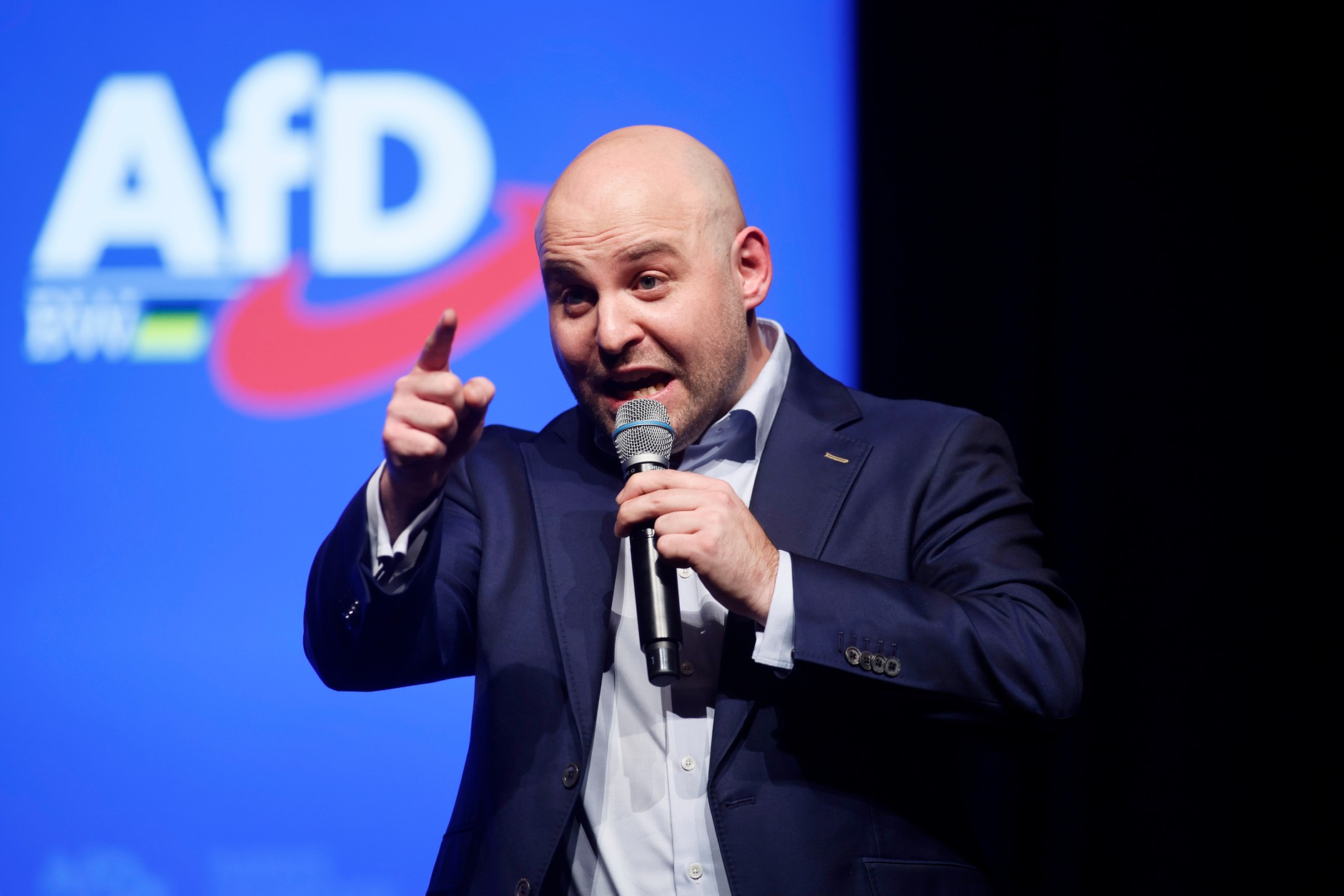
Markus Frohnmaier speaks to supporters during an AfD election rally in Aalen, February 20, 2026.Johannes Simon/Getty Images/Getty Images
“Employees are afraid for their jobs,” Weidel said in an online video. — Jobs are being eliminated here. Production is limited. Why? Because the costs are too high here. And these costs are political and caused by our own actions.
This message is proving increasingly effective in a federal state with half a million jobs is related to the automotive industryaccording to data from the federal state's economy ministry. However, increasing competition from China and a delayed switch to electric vehicles have taken a toll on the situation, with carmakers cutting jobs.
The latest major layoffs in the industry include auto parts supplier Bosch, which announced plans to eliminate 20,000 jobs. jobs by 2030, and Mercedes-Benz, which offers severance packages for approximately 40,000 employees as part of cost reduction activities.
Overall, according to a study conducted in 2025 for the German Ministry of Economics, by 2030 approximately 100,000 will disappear in Germany. positions, i.e. about 8 percent. jobs in the automotive sector.
A disturbing signal
Despite the growing popularity of the AfD, the composition of the current Baden-Württemberg government is unlikely to change significantly after the elections.
The state is currently governed by the Greens – who are much more popular and conservative than in other parts of Germany – in coalition with Merza's Christian Democrats. Although the latter may take first place this time, with polls showing they have a slight lead, they are likely to maintain a coalition with the Greens, who are in second place.
However, no party has gained as much as the AfD – currently enjoying around 19 percent support. in Baden-Württemberg – which is a disturbing signal for centrist politicians in a federal state long known for its prosperity and high standard of living.
The AfD is also expected to perform relatively well in Sunday's local elections in Bavaria. According to the latest poll, the party could triple its support to 14 percent, becoming the largest party after the long-dominant Conservatives, who lead with 33 percent.
Although the AfD has long been a single-issue party with an anti-immigration message, it is increasingly attacking mainstream parties for Germany's decline in industrial production. Experts say that in Baden-Württemberg this approach seems to be gaining popularitybecause support for the party stems from fears that the future will not be as rosy as the past.
— Due to inflation, a large part of the population feels that they work all their lives and all they get from it are low wages and low pensions, notes pollster Klaus-Peter Schoppner from Mentefactum. He adds that this reluctance is often linked to the belief that immigrants come to Germany and “get everything for free.”
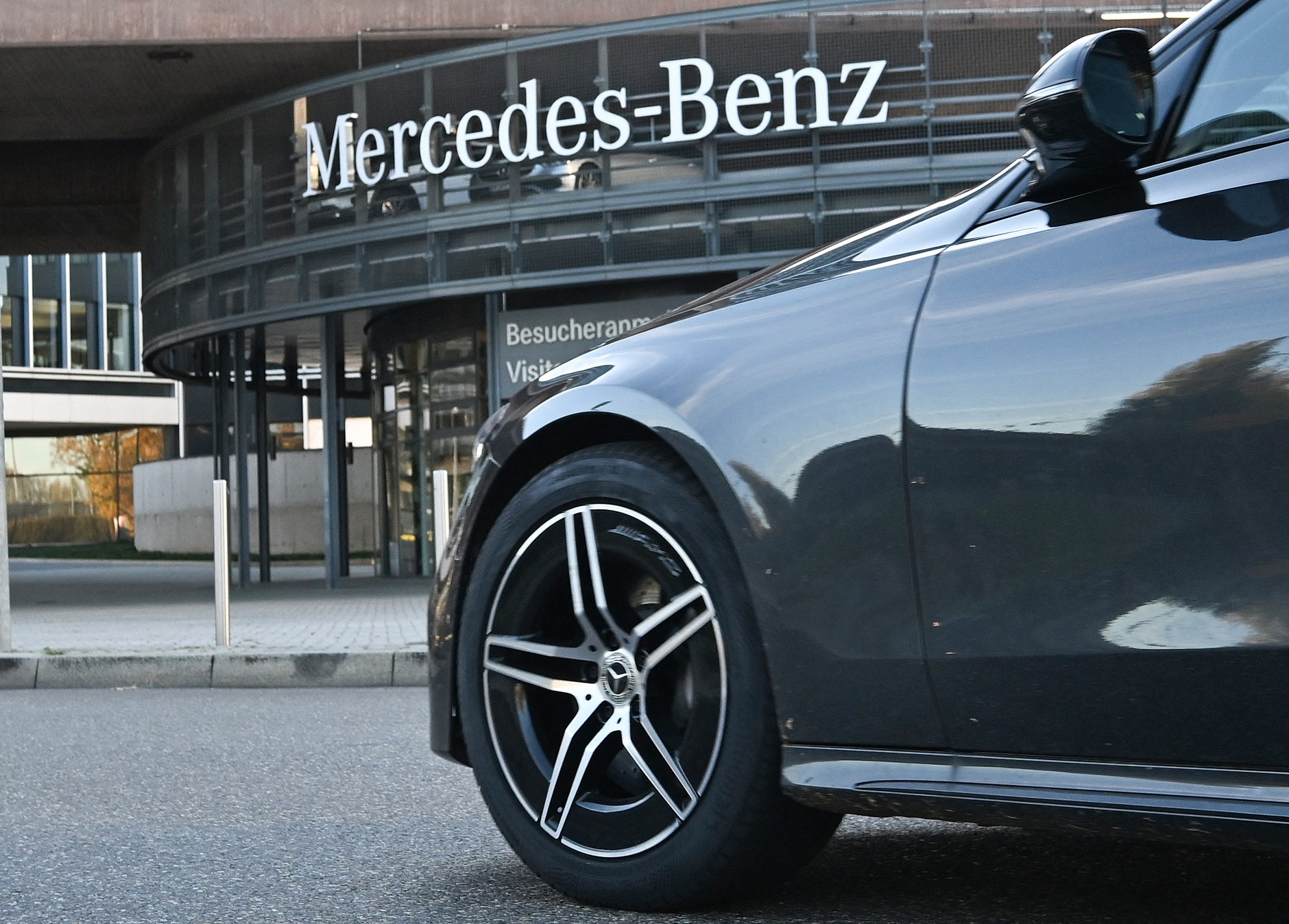
Mercedes-Benz headquarters in Stuttgart, Germany, October 29, 2025.BERND WEISSBROD / DPA / dpa Picture-Alliance via AFP / AFP
Such concerns were evident one afternoon as workers left the Mercedes plant near Stuttgart and rushed to their cars. Many of them said the mood at the company was getting worse as it cut jobs — though they declined to give their names for fear of alienating their employers.
One man leaving the building said his biggest concerns were migration and the economy. When asked which party he would support in Sunday's elections, he replied: – I won't tell you. But you can guess.
A challenge for conservatives
The AfD's leading candidate in the state, Frohnmaier, has repeatedly said that mainstream parties have destroyed the former glory days. “The promise that everyone who works hard will eventually own their own house or apartment, that you can work for the same company in the same industry for 30 or 40 years, simply no longer exists,” Frohnmaier argued in an online interview with a right-wing influencer last month.
— For a long time, people could say: my house, my garden, my car and my holidays. And if you had those four things, you were pretty apolitical. And now suddenly it doesn't work anymore, he said.
This poses a challenge for German conservativeswho have long believed that the best way to stop the growing popularity of the AfD is to tighten immigration policy and thus eliminate the main issue raised by the party.
However, many of them now see a new front in the fight against the far right: the economy. — We will not be able to stop the current increase in AfD popularity or reverse this trend if the economic situation in the country does not change, emphasizes Yannick Bury, a conservative MP from Baden-Württemberg.